Quick verdict
Most dog injuries on walks are small — a cut paw pad, a thorn between the toes, a bee sting on the nose — but a small injury miles from home becomes a big problem fast if you have nothing to deal with it. A dog first-aid kit for walks does not need to be a paramedic's bag: a palm-sized pouch with gauze, saline, a tick remover, tweezers, self-adhesive bandage, and a clean cloth covers almost everything you are likely to meet on a walk or a hike. The kit is not a substitute for a vet. Its job is to stop bleeding, keep a wound clean, protect a sore paw for the walk home, and buy you time until a professional can take over. Build it once, keep it in the same place as the lead, and check it every few months so nothing in it is expired or dried out when you actually need it.
Why a walk kit is different from a home kit
A home first-aid kit can live in a cupboard and hold everything, because you never carry it. A walk kit has to earn its place in your pocket or your dog's backpack, so every item in it needs a reason to be there. The injuries are different too. At home you deal with the occasional kitchen accident; on a walk you deal with the ground itself — broken glass on pavements, sharp stones on trails, thorns and burrs, stinging insects, ticks in long grass, and heat. The walk kit is really a kit for paws, skin, and stings, plus a way to get a hurt dog home comfortably.
The other difference is time. A cut paw at home is a five-minute job with a sink and a towel drawer. The same cut on a trail means no running water, no clean surfaces, and a dog that would rather keep walking than stand still. That is why the walk kit leans on things that work without a tap or a table — saline pods instead of a bottle, self-adhesive wrap instead of tape, a boot or a sock instead of a bandage that needs two hands to hold in place.
The core kit: what to pack
Start with a small waterproof pouch or zip bag, about the size of a sandwich bag. Everything below fits in one, and the whole kit weighs less than a phone.
Saline pods or a small bottle of sterile saline. For flushing dirt and grit out of a cut or a grazed pad. Saline is gentler than tap water on open skin and comes in single-use pods that stay sterile until you open them. A travel water bottle works as a backup flush — our water bottle guide is about carrying water on hikes, and the same bottle earns its place here.
Sterile gauze pads and a roll of gauze. For pressing on a bleeding cut and for covering a cleaned wound. Pads are faster than a roll when the dog is fidgeting, so pack both: a few pads for the first press, and a roll to wrap around a paw.
Self-adhesive bandage wrap. This sticks to itself, not to fur, which is exactly what you want on a dog. It holds gauze on a paw without tape, and it comes off without pulling hair. One roll is enough. Do not wrap it tight — you should be able to slip a finger under it, and a wrapped paw should never be left on for more than a couple of hours without checking for swelling.
Tweezers and a tick remover. Tweezers pull out thorns, splinters, and grass seeds. A tick remover — the small forked plastic kind — twists ticks out cleanly and is far more reliable than fingers. If you walk anywhere with long grass or woodland, the tick remover is the single most-used item in the kit.
A clean cloth or a small towel. For drying a flushed wound, wiping muddy paws so you can see what you are dealing with, and wrapping a dog that is shivering after a swim. A bandana works in a pinch, but a small microfibre cloth is lighter and dries faster.
Styptic powder or a styptic pencil. For a nail that has been clipped or broken too short and will not stop bleeding. A pinch of powder pressed on the nail tip usually stops it in a minute or two. It is cheap, tiny, and the one item most owners wish they had packed the first time a nail breaks on a walk.
Blunt-tipped scissors. For cutting bandage and trimming matted fur away from a wound so you can see it. Blunt tips matter — a wriggling dog and sharp scissors are a bad combination.
A few treats and your vet's number. Treats keep a hurt dog still while you work, and they make the whole experience less frightening. Save your vet's number and the nearest emergency vet's number in your phone before you need them, and tape a paper copy inside the kit in case your phone dies.
A spare lead or slip lead. If a collar or harness breaks, or you need to keep an injured dog from running, a lightweight slip lead is worth its weight. It can also work as a makeshift muzzle in a genuine emergency — a dog in pain can snap at the hands trying to help it — but only if you know how to fit one loosely and safely, and never on a dog that is vomiting or struggling to breathe.
Dealing with the most common walk injuries
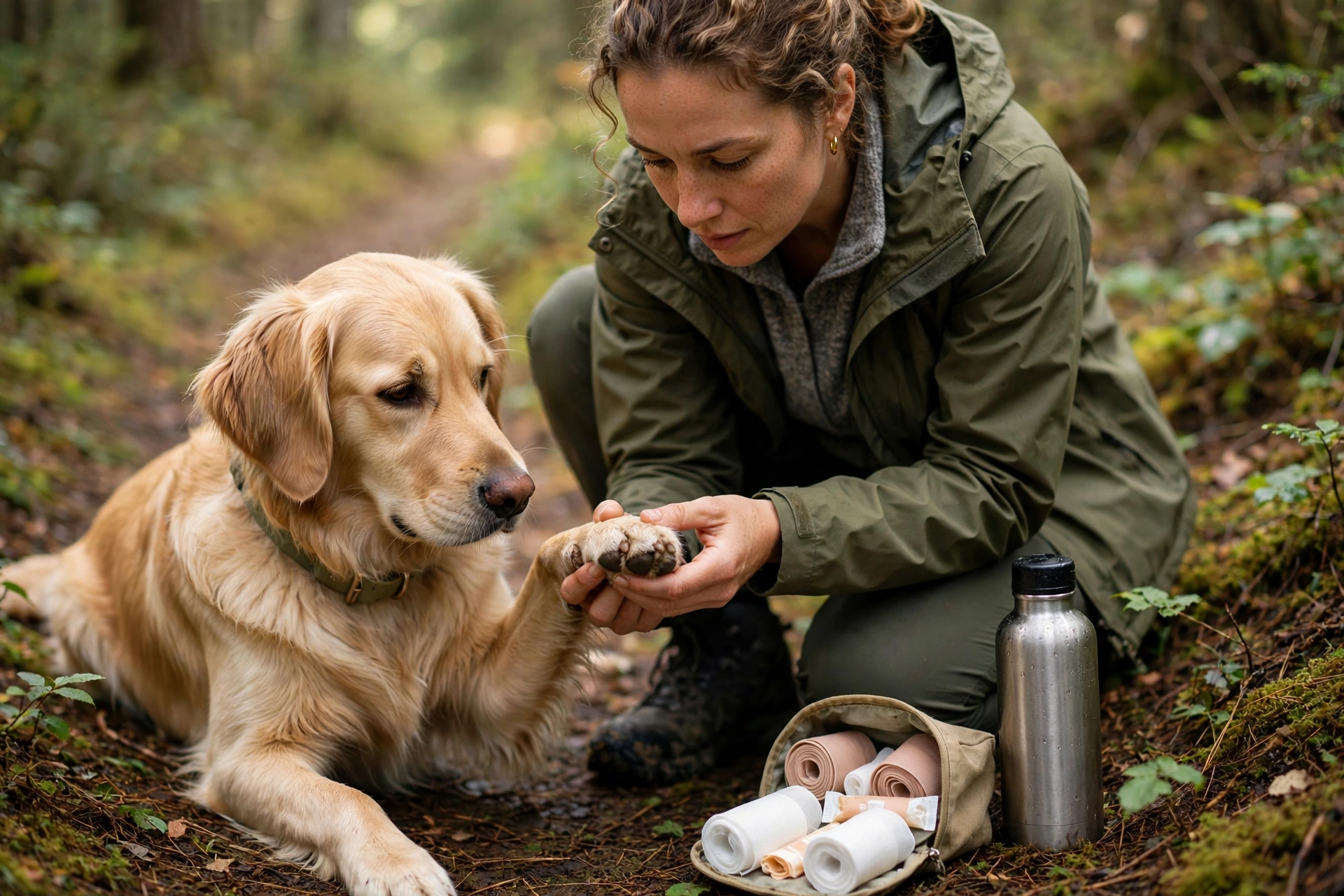
Cut paws. This is the injury you will meet most. Sit the dog down, look at the pad, and flush the cut with saline to wash out grit. Press gauze on it for a few minutes until the bleeding slows. Then cover it with a gauze pad, wrap it loosely with self-adhesive bandage, and put a dog boot or a thick sock over the top to protect it on the walk home. Our paw care guide covers boots and balms in more detail. If the cut is deep, gaping, or still bleeding after ten minutes of pressure, skip the walk home and head to the vet.
Thorns, splinters, and grass seeds. Hold the paw still, spread the toes, and look between them — most thorns hide there, not on the pad itself. Pull the thorn out with tweezers in the direction it went in, then flush the spot. Grass seeds are trickier: they have tiny barbs that work their way inward, so if you cannot see the seed or the dog keeps licking the spot after you have removed it, let a vet check it. A seed left inside a paw can turn into an abscess within days.
Bee and wasp stings. Stings usually land on the face, muzzle, or paws. A sting is painful but most dogs cope with one: remove the stinger by scraping it out with a card or your fingernail rather than squeezing it with tweezers, and cool the spot with a damp cloth. Watch the dog for the next hour. Swelling of the face, hives, vomiting, or any trouble breathing means an allergic reaction — that is an emergency, and you should go to the vet immediately, not wait to see if it passes.
Ticks. Grasp the tick as close to the skin as you can with the remover, twist gently, and pull it out whole. Check that the head came out with the body. Clean the bite with saline and keep an eye on the spot for the next few days. Note the date and where you walked — if your dog develops a fever, lethargy, or a limp in the following weeks, that information helps your vet enormously.
Heat. On a hot day, the kit is not the answer — prevention is. But if a dog is panting hard, drooling, and unsteady, get it into shade, offer small amounts of cool water, and wet its belly, paws, and ears. Never use ice water or ice packs directly on a dog, and do not force it to drink. Heatstroke can turn serious quickly, so cool first and get to a vet.
What to skip
A walk kit gets worse the bigger it gets, because a heavy kit stays at home. Leave the full medicine cabinet behind. Skip cotton wool — it sheds fibres into open wounds. Skip hydrogen peroxide for cleaning wounds; it damages healing tissue and most vets now advise against it. Skip adhesive plasters, which do not stick to fur and come off in minutes. Skip any medication unless your vet has specifically told you to carry it — that includes human painkillers, which can be dangerous for dogs. And skip the big pre-packed pet first-aid kits: most are stuffed with items you will never use on a walk and too bulky to carry. Build your own, keep it small, and you will actually take it with you.
How to carry it
The kit needs to live where the lead lives, or it will not come on the walk. A small pouch clipped to the lead, a pocket in a dog backpack, or a waist pouch you wear every walk all work — what matters is that it is always in the same place. Our treat pouch guide covers the kind of pouch that doubles as a kit carrier on short walks. For longer hikes, put the kit in the dog's backpack or your own daypack, and keep the saline pods and the bandage wrap in an outside pocket where you can reach them without unpacking everything.
Check the kit when the seasons change: saline pods expire, self-adhesive wrap loses its grip after a hot summer in a car, and tweezers rust if the pouch gets damp. A five-minute check four times a year is all it takes.
PupFlask Travel Water Bottle by Tuff Pupper
Best for: Hikers and road-trippers
- 40 oz capacity with attached bowl tray per specs
- One-hand operation design
- Carabiner clip included
What we like
- Big capacity for long outings
- Unused water drains back — no waste
- Clips to a pack or belt
Tradeoffs
- Larger capacity models are bulky in a daypack
- Cap mechanism needs a rinse after muddy trails
Based on published specifications · Last checked 10/08/2026
Dog Boots (4-pack) by QUMY
Best for: Snow, ice, and hot pavement
- Water-resistant fabric per product specs
- Reflective straps
- Rugged anti-slip soles
What we like
- Real protection where wax isn't enough
- Stay on better than cheap alternatives
- Reflective for night walks
Tradeoffs
- Dogs need a break-in period (funny walk at first)
- Sizing between sizes can be tricky
Based on published specifications · Last checked 10/08/2026
Pooch Pouch by Dexas
Best for: Everyday training sessions, Trainers who want a wipe-clean pouch
- Wide stay-open mouth for fast one-handed treat access per manufacturer specs
- Food-safe, wipe-clean lining per manufacturer specs
- Belt clip plus optional waist strap per manufacturer specs
What we like
- Stays open during sessions, closes against self-serving
- Easy to rinse clean after greasy treats
- Light and unobtrusive on the hip
Tradeoffs
- Single main compartment — minimal organization
- Belt clip fits standard belts best
Based on published specifications · Last checked 10/08/2026
FAQ
How often should I check my dog first-aid kit?
Every three months is a good rhythm — the same time you swap the seasons. Check expiry dates on saline pods and styptic powder, make sure the bandage wrap still sticks to itself, and replace anything that has been used or got wet. A kit that has been raided and never restocked is worse than no kit, because you expect it to be there.
Can I use my own human first-aid kit for my dog?
Some of it, yes: gauze, saline, tweezers, scissors, and bandage wrap work the same way. But human kits usually contain cotton wool, adhesive plasters, and medicines that are wrong for dogs, and they rarely include a tick remover or styptic powder. Take the useful items, add the dog-specific ones, and keep it separate so you are not digging through your own kit on a trail.
What should I do if my dog is badly injured on a walk?
Stay calm, keep the dog still, and stop the bleeding with firm pressure from gauze or a clean cloth. Do not try to treat a fracture, a deep wound, or a dog that is in shock by yourself — cover the wound, keep the dog warm and still, and get to a vet as fast as you can. Call ahead if you can so the clinic is ready. If you have to carry the dog, support its body and avoid putting pressure on the injured area.
Do I need a different kit for hikes than for city walks?
The core is the same, but hikes earn a few extras: more saline pods, an extra roll of bandage wrap, a dog boot for a cut paw, and enough water for both of you. For evening hikes, add a light — our LED collar guide covers night visibility, which matters even more when you are walking a hurt dog home in the dark.
The bottom line
A dog first-aid kit for walks is a small pouch, a few pounds, and ten minutes to put together — and the first time you need it, you will be glad it was there. Pack saline, gauze, self-adhesive wrap, tweezers, a tick remover, styptic powder, blunt scissors, a cloth, and your vet's number. Skip the cotton wool, the peroxide, the plasters, and any medicine your vet has not approved. Keep it where the lead lives, check it every season, and remember what it is for: not to replace the vet, but to keep a small problem small until you can get there.
More in Walk Gear
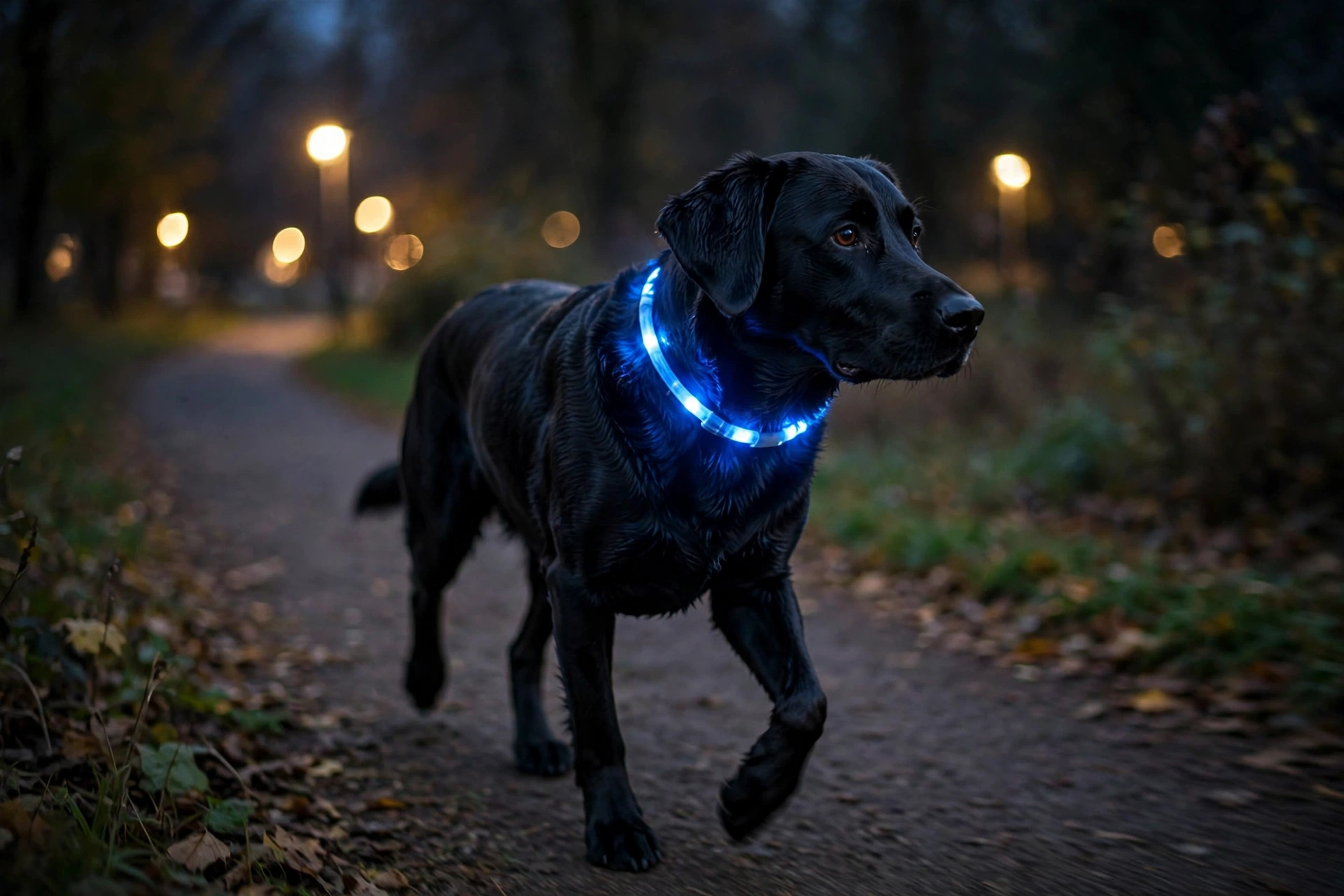
LED Dog Collars for Night Walks: Are They Safer Than Reflective Gear?
An LED collar makes your dog visible in total darkness from every direction — exactly where reflective gear fails. Battery types, fit, and the LED-plus-reflective setup compared.
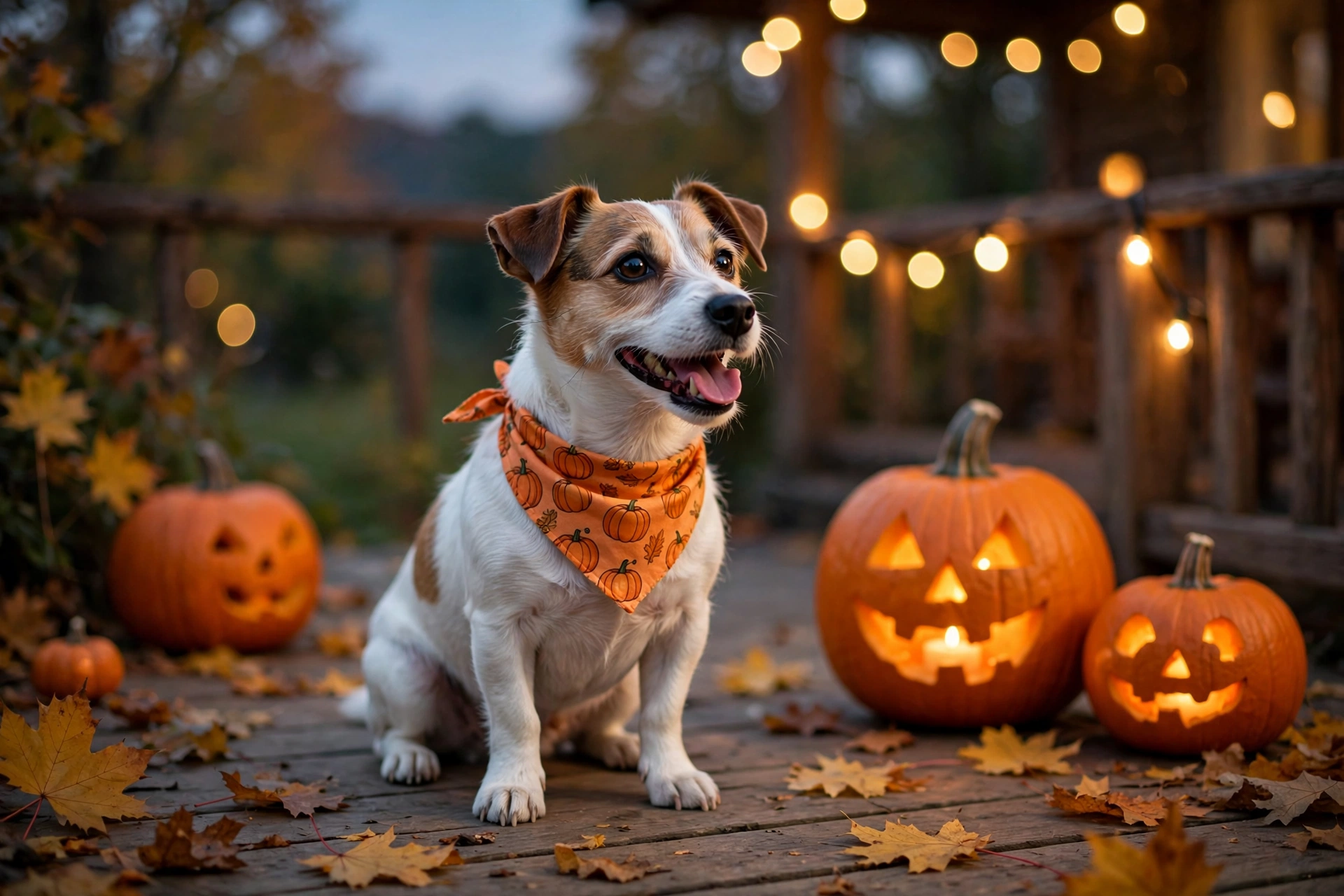
Dog Halloween Costumes: Cute vs Safe — What to Check Before You Buy
A costume is fine fun for fifteen supervised minutes — if it passes the safety checklist. Fit, breathing, chewable parts, stress signs, and the night's bigger hazards.
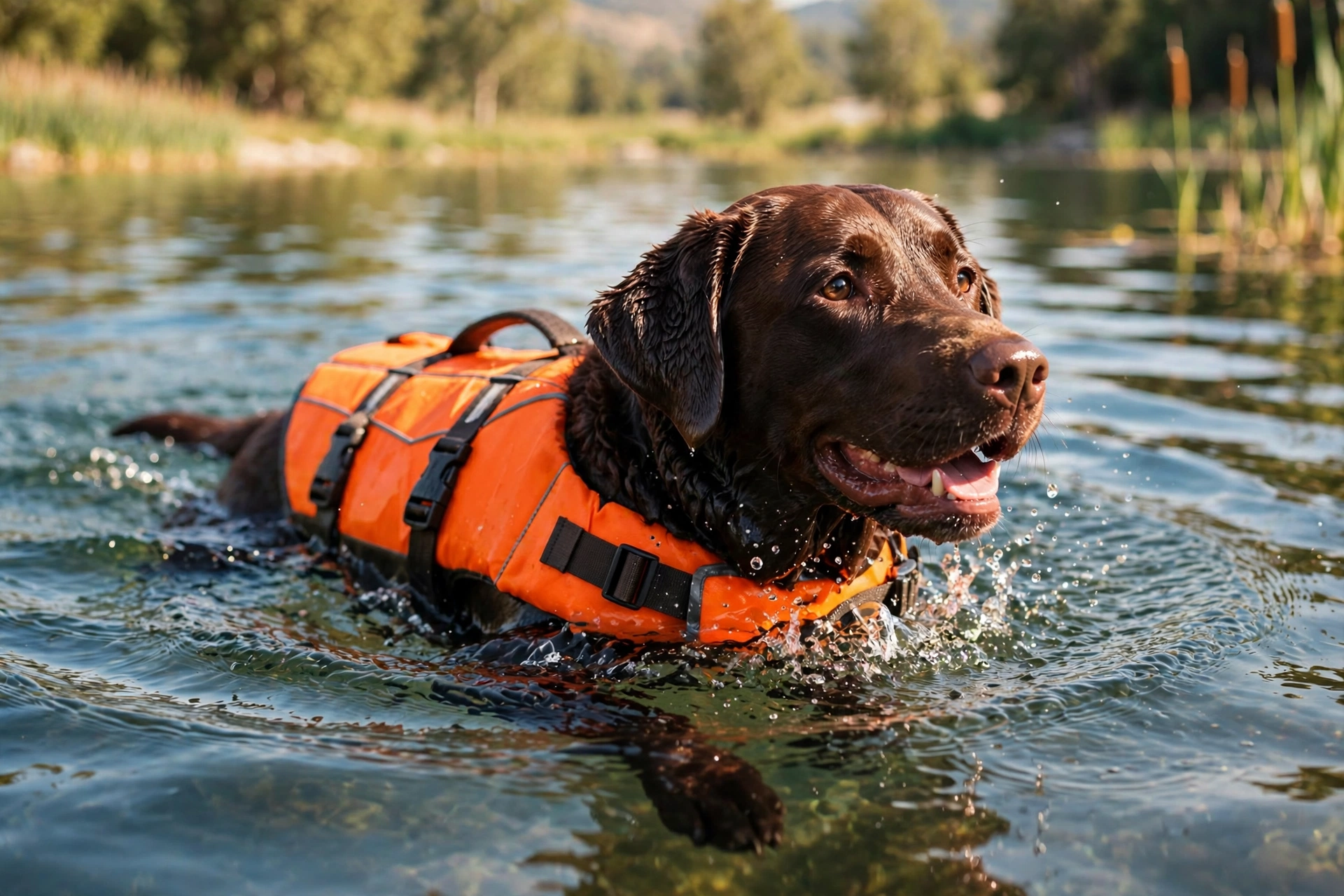
Dog Life Jackets: What Matters for Swimming Safety
Most dogs can swim, but not all swim well. Fit, buoyancy distribution, and a sturdy grab handle are what separate a real life jacket from a costume.