Quick verdict
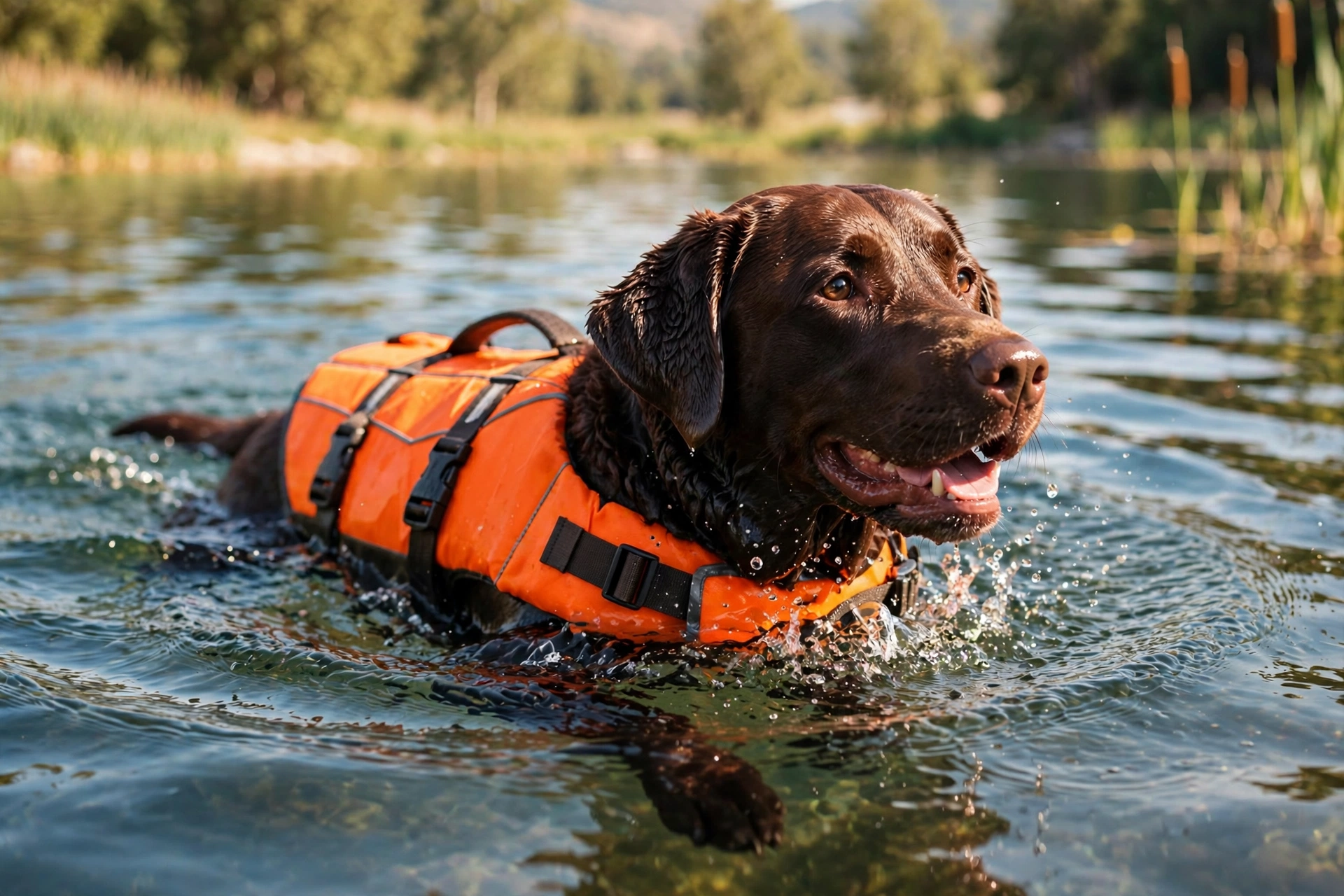
Most dogs can swim, but not all dogs swim well — and even strong swimmers tire, panic in current, or disappear in chop. A well-fitted life jacket buys buoyancy, visibility, and a grab handle that turns a rescue into a lift instead of a wrestling match. Fit is everything: a jacket that rides up, rotates, or chafes is worse than none at all. Look for a secure multi-strap belly system, a sturdy top handle positioned over the shoulders, and bright colors with reflective trim. It's not a substitute for supervision or for teaching water confidence — it's the backup that matters when the plan meets the lake.
The real-life scenario
First lake trip of the summer. Your dog charges straight in — of course they do — and swims out with total confidence for about five glorious minutes. Then you notice the rhythm change: the paddling gets frantic, the head rides lower, and they're working noticeably harder to stay in the same place against a mild current they didn't respect on the way out. Or the older dog who used to swim for an hour now tires in fifteen minutes and struggles to find the dock steps. Or the puppy who launches off the dock before learning that water has no edges.
Nobody plans the moment a fun swim turns worrying. The current is stronger than it looked, the far shore is farther than it looked, the dog is more tired than they looked. A life jacket doesn't prevent any of that — but it changes the math completely when it happens, keeping the dog's head up and giving you a handle to work with instead of grabbing at a panicked, slippery animal.
How it works
A dog life jacket is a vest with closed-cell foam panels distributed around the torso — typically along the back and under the belly — that add buoyancy and help keep the dog in a natural horizontal swimming position instead of the exhausting vertical thrash that tired dogs default to. Based on published specifications, the designs that perform best share a few traits: an adjustable strap system around the ribcage and belly that locks the jacket in place, a strong grab handle on top positioned over the shoulders (the lift point you'd actually use), and a D-ring for leash attachment.
Some designs add a chin rest or neck float to help keep the head up, and most quality jackets use bright colors with reflective trim — because spotting a dark dog in dark water at dusk is genuinely hard. The dogs who benefit most are the ones you'd guess: puppies still learning, seniors losing stamina, brachycephalic breeds with their front-heavy build, lean low-body-fat breeds that ride low in the water, any dog new to swimming, and every dog on a boat, where falling overboard means cold water and distance from help.
A few honest notes before you buy:
- Fit beats features. The fanciest jacket in the wrong size is a liability — it rides up, rotates sideways, or restricts the shoulders. Measure the chest girth and follow the manufacturer's size chart, not the breed label.
- It's a backup, not a plan. A life jacket doesn't teach swimming, doesn't replace supervision, and doesn't make rough water safe. The owner watching attentively is still the primary safety device.
- Introduce it on land first. Strap it on at home, treats and praise, short wear — then shallow water. A dog's first experience of the jacket shouldn't be mid-crisis.
What to look for before you buy
Fit and adjustability. Measure around the widest part of the ribcage and match it to the manufacturer's size chart — between sizes, most experienced owners size by the actual measurement rather than the breed suggestion. Look for multiple adjustment points (neck, chest, belly) so you can dial in a snug fit: snug enough that the jacket doesn't rotate or ride forward, loose enough to slide two fingers under the straps. Test in shallow water before the real swim.
Buoyancy distribution. Panels under the belly as well as along the back keep the dog level; back-only flotation can tip a tired dog nose-down. Based on published specifications, jackets designed with wraparound or under-belly panels — like the Ruffwear Float Coat's arrangement — are built specifically to hold swimming position.
The grab handle. This is the feature you'll actually use in an emergency, so treat it seriously: wide, strongly stitched, positioned over the shoulders where the dog's center of mass sits. A flimsy decorative handle is worse than none because you'll trust it. Lift-test it on land before you need it in water.
Visibility. Bright orange, yellow, or red with reflective trim. This isn't fashion — it's how you spot your dog in chop, at dusk, or from a boat. Dark colors look sleek and disappear in dark water.
D-ring and drainage. A leash D-ring on top keeps the dog connected on docks and boats. Quick-dry materials and drainage-friendly construction, per the manufacturer, mean the jacket doesn't become a soggy weight after the swim.
Saltwater and maintenance. Rinse the jacket with fresh water after use — especially after salt water or chlorine — per the manufacturer's care guidance, and let it dry fully before storage. Foam panels last far longer when they're not stored damp.
Hydration matters as much as flotation on a long water day — our travel water bottle guide covers keeping drinking water handy on the trail and the shore.
Ruffwear Float Coat Dog Life Jacket by Ruffwear
Best for: Boating and open-water swimming, Dogs that need maximum buoyancy support
- Strategically placed closed-cell foam panels, per manufacturer specs
- Strong low-profile handle for lifting, per manufacturer
- Telescoping neck closure for a secure fit, per manufacturer
- Reflective trim for visibility
What we like
- Excellent buoyancy distribution
- Sturdy handle inspires confidence on boats and docks
- Adjustable fit across a wide size range
Tradeoffs
- Premium price point
- Bulkier than minimal swim vests — fit check matters
Based on published specifications · Last checked 2026-10-08
Outward Hound Granby Dog Life Jacket by Outward Hound
Best for: Lake days and pool swims, First-time life jacket buyers
- Foam panels for buoyancy, per manufacturer specs
- Top grab handles for easy lifting, per manufacturer
- Adjustable straps and quick-release buckles, per manufacturer
- Bright colors with reflective accents
What we like
- Affordable entry point
- Easy on/off with quick-release buckles
- Good visibility in the water
Tradeoffs
- Less structured fit than premium options
- Sizing worth double-checking against the size chart
Based on published specifications · Last checked 2026-10-08
FAQ
Do all dogs need a life jacket?
No — a fit adult retriever swimming in calm, familiar water under supervision is fine without one. The strong candidates are puppies, seniors, brachycephalic breeds, lean breeds that swim low, weak or beginner swimmers, and any dog on a boat or near current. When in doubt, the jacket is cheap reassurance.
How should a life jacket fit?
Snug but not restrictive: you should be able to slide two fingers under the straps, the jacket shouldn't rotate around the torso, and it shouldn't ride forward over the shoulders when the dog moves. Measure the chest girth and use the manufacturer's size chart. Always do a shallow-water test before open water — five minutes wading reveals fit problems that a living-room try-on won't.
Can my dog swim in it for a long session?
The jacket reduces fatigue but doesn't eliminate it. Watch for the same signs you'd watch without one — frantic paddling, head riding low, reluctance to keep going — and call regular rest breaks. Also check for chafing under the straps after longer swims, especially on short-coated dogs.
How do I care for it after saltwater swims?
Rinse thoroughly with fresh water after every swim, per the manufacturer's guidance — salt and chlorine degrade fabrics and hardware over time. Hang to dry fully before storing; storing a damp jacket invites mildew and shortens the foam's life.
Will a life jacket help a dog that's afraid of water?
It can help with confidence — the buoyancy makes staying afloat easier, which makes the experience less scary. But it's not a cure for fear: introduce water gradually, keep sessions short and positive, and never throw or push a frightened dog in. The jacket supports the training; it isn't the training.
The bottom line
A life jacket is the cheapest rescue equipment you'll ever buy for your dog: buoyancy for the tired swimmer, visibility for the dark water, and a handle for the moment things go sideways. Get the fit right, test it shallow first, rinse it after, and never let it substitute for watching your dog. The best swim safety device is still an attentive owner — the jacket is just excellent backup.
More in Walk Gear
Treat Pouches for Training: What Trainers Actually Use
Trainers wear one on every session for a reason: a treat pouch fixes reward timing. What separates a good pouch from a pocket.
Biodegradable Poop Bags and Dispensers
Certified compostable versus merely biodegradable, scented versus unscented, and the dispenser that keeps bags on the leash: the honest comparison for 700+ bags a year.
Dog Raincoats: Staying Dry on Wet Walks
Belly coverage, leg freedom, and the right warmth level — what actually matters when choosing a raincoat your dog will forget it's wearing.