Quick verdict
A good dog travel bottle does three things: holds enough water for the outing, dispenses one-handed while your other hand holds the leash, and doesn't leak in your bag. For long hikes, you want real capacity and a drain-back design that wastes nothing — the Tuff Pupper PupFlask's 40 oz capacity and attached tray fit that bill. For everyday walks and errands, a compact valve bottle like the Lixit Travel Water Bottle is plenty. Skip anything you can't operate with one hand.
The real-life scenario
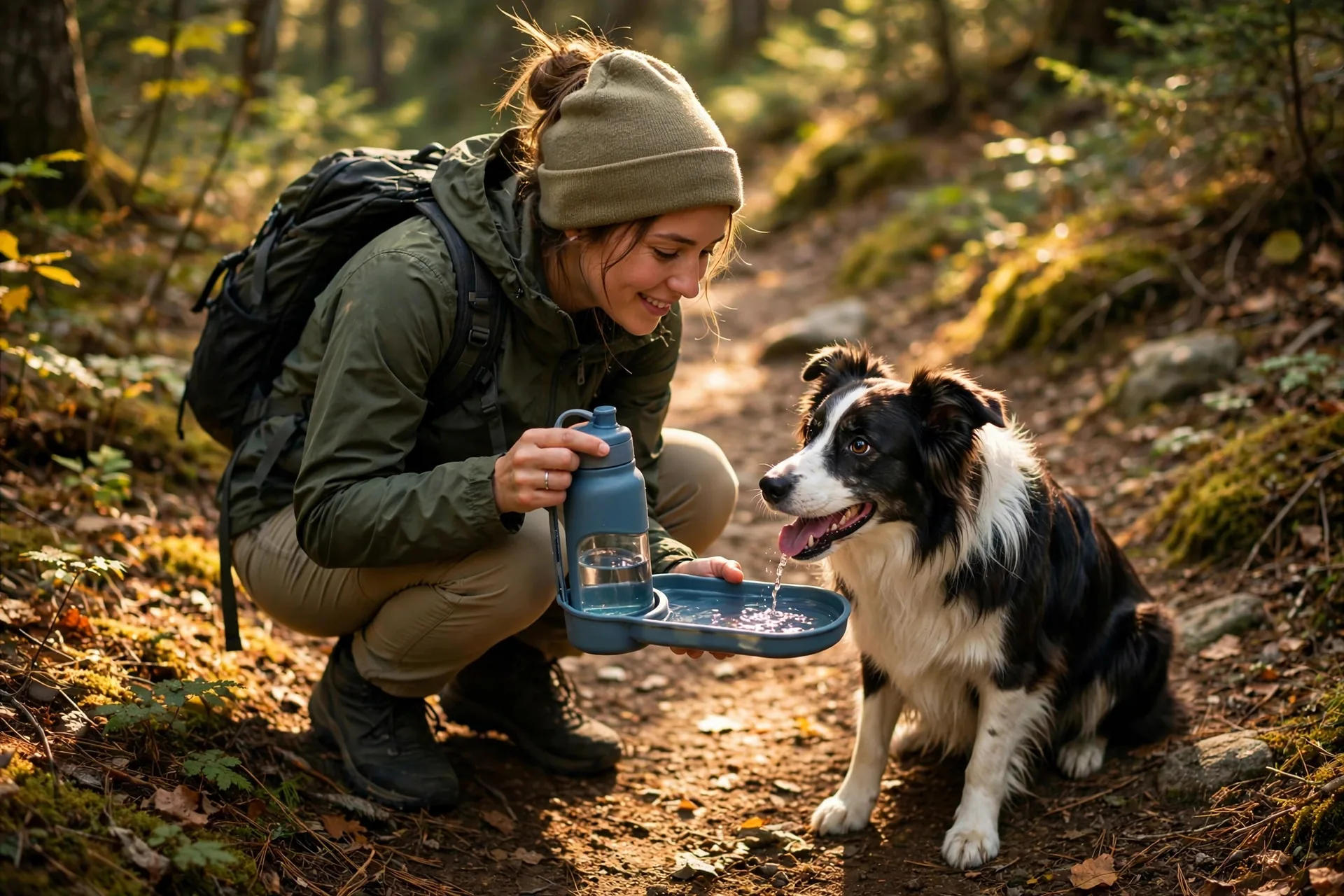
Mile four of the trail, sun higher than the forecast promised, and your dog is doing that exaggerated pant — tongue out to the side, deep betrayal in the eyes. You brought water. It's in your pack. Which means: stop, take off the pack, dig out the bottle, find the collapsible bowl that's migrated to the bottom, pour, hold the bowl while the dog drinks half and steps in the rest, then repack everything.
Or the road-trip version: rest stop off the interstate, dog whining in the back seat, and you're pouring from a standard bottle into a cupped hand while the dog headbutts your elbow. Half the water ends up on your shoes.
Dogs dehydrate faster than people when exercising — all that panting is moisture leaving with every breath. On any outing longer than a casual neighborhood loop, bringing water isn't optional. The right bottle turns a five-minute production into a ten-second pause.
How to choose
Capacity first, honestly. A medium dog on a warm hike drinks a surprising amount — plan roughly ½ to 1 oz per pound of body weight for a few hours of activity, more in heat. A 40 oz bottle isn't overkill for a 60-pound dog on a half-day hike; it's about right. For a 20-minute neighborhood walk, 12 oz is plenty. Buy for your longest regular outing, not your shortest.
One-hand operation is non-negotiable. Your other hand has the leash. Full stop. Whatever mechanism the bottle uses — squeeze valve, fold-down tray, trigger release — you should be able to work it while holding a leash and standing on uneven ground. If a product needs two hands and a flat surface, it's a home bottle, not a travel bottle.
Leak-proofing matters more than marketing claims suggest. A bottle that dribbles in your daypack soaks everything. Look for a locking mechanism or a positive-seal cap, not just a friction fit. Valve bottles like the Lixit can drip if stored on their side — that's a known quirk of the design, so store it upright or in an outside pocket. Test any new bottle over the sink before trusting it in a bag.
Drain-back saves water and hassle. The cleverest feature on trail bottles is the ability to return undrunk water to the reservoir. Dogs are sloppy drinkers — three laps and they walk away, leaving half the tray. Without drain-back, that water is gone. The PupFlask's design returns unused water to the reservoir, stretching your supply where there's no refill.
Attachment and carry. A carabiner clip that hooks to a pack strap or belt loop beats anything that has to live inside the bag. If you run with your dog, check our hands-free leash guide — the same "keep your hands free" logic applies, and a clipped bottle plus a waist leash is a good system.
Cleaning. Narrow mouths and valve mechanisms grow biofilm. If you can't fit a bottle brush inside or disassemble the drinking parts, it'll get funky. Wide-mouth designs win. Rinse after every outing; deep-clean weekly for daily-use bottles.
Material. BPA-free plastic is the standard and keeps weight down — meaningful when you're already carrying water weight. Metal bottles are tougher but heavier and rarely offer the integrated tray designs that make dog bottles convenient.
What not to overpay for
Filtration and "purifying" features. Unless you're regularly filling from backcountry sources with no alternative, a filter adds cost, weight, and cleaning complexity. For tap-water fill-ups, it's theater.
Insulation. It keeps water cold for about the first hour; after that, physics wins. Dogs need water, not iced water — don't pay a premium for it.
Gigantic capacity "just in case." Water weighs roughly 2 pounds per quart. A bottle sized for an all-day expedition becomes a burden on the 45-minute walks you actually do daily. Match the bottle to the outing; owning two sizes (trail and everyday) beats one enormous compromise.
PupFlask Travel Water Bottle by Tuff Pupper
Best for: Hikers and road-trippers
- 40 oz capacity with attached bowl tray per specs
- One-hand operation design
- Carabiner clip included
What we like
- Big capacity for long outings
- Unused water drains back — no waste
- Clips to a pack or belt
Tradeoffs
- Larger capacity models are bulky in a daypack
- Cap mechanism needs a rinse after muddy trails
Based on published specifications · Last checked 2026-10-08
Travel Water Bottle by Lixit
Best for: Everyday walks and short trips
- Valve-controlled water flow per product specs
- Compact pocket-friendly size
- BPA-free bottle per manufacturer
What we like
- Inexpensive enough to keep one per bag
- Simple squeeze-valve operation
- Light and packable
Tradeoffs
- Smaller capacity than hiking bottles
- Valve can drip if stored on its side
Based on published specifications · Last checked 2026-10-08
FAQ
How much water should I bring for my dog on a hike?
A reasonable rule of thumb is ½ to 1 oz per pound of body weight for a few hours of moderate activity — so a 50-pound dog needs roughly 25–50 oz for a half-day hike, more in heat or at altitude. Bring extra beyond the estimate; running out is the failure mode you can't fix on the trail. And don't forget that you need your own water separately.
Can my dog drink from streams and lakes instead?
Sometimes, but it's a gamble. Standing water can harbor giardia, leptospirosis, and blue-green algae — the last genuinely dangerous. Flowing streams are safer than ponds, but "safer" isn't "safe." Carry clean water; let the dog swim, not drink.
How do I get my dog to drink from a travel bottle?
Most dogs figure it out within a few tries if you introduce it at home first — squeeze a little water into the tray and let them investigate without pressure. Reluctant dogs often do better with the tray-style bottles (like the PupFlask) than valve styles, because the tray looks like a tiny bowl. Never force the valve against their mouth.
How often should I clean the bottle?
Rinse it after every outing and let it air-dry with the cap off. Once a week, wash with warm soapy water and a bottle brush, getting into the valve or tray mechanism. If you see slime or smell anything off, it's overdue — biofilm builds fast in warm, wet plastic.
Are collapsible bowls a better option than integrated bottles?
They're a fine budget alternative, especially silicone ones that pack flat. The tradeoff is convenience: bottle plus separate bowl is two items to manage, and you still need to carry the water itself. Integrated bottle-tray designs win on speed at rest stops; collapsible bowls win on packability. For road trips where space isn't tight, either works.
The bottom line
The best dog travel bottle is the one you'll actually bring — easy to carry, one-hand operable, and genuinely leak-proof. Size it to your longest regular outing, favor drain-back designs for hikes, and keep a compact valve bottle stashed for everyday walks.
More in Feeding & Treats
Pet Water Fountains: Encouraging Healthy Hydration
Moving, filtered water stays fresher and draws dogs to drink more. We cover how fountains work, the maintenance they demand, and which materials hold up best.
Dog Food Storage Containers: Keeping Kibble Fresh for Weeks
Kibble starts going stale the moment the bag opens. Here's how airtight containers work, what makes a seal actually airtight, and how to size one to the bag you buy.
Slow Feeder Bowls for Dogs Who Inhale Dinner: Do They Actually Work?
Does a maze bowl actually slow down a dog that inhales dinner? We break down how slow feeders work, when they help, and which designs suit which dogs.