Quick verdict
Start easier than you think — a dog that solves a puzzle in two minutes comes back excited; a dog that stares at an impossible box for twenty minutes learns puzzles are boring. Begin with a wide-open, forgiving toy like the West Paw Toppl or a loosely stuffed KONG Classic, then level up to frozen fillings and sliding-panel boards like the Outward Hound Nina Ottosson puzzles. Match the puzzle to your dog's style, supervise every session, and keep sessions short. Confidence first, difficulty later.
The real-life scenario
It's raining for the third straight day, your terrier has bounced off the sofa approximately four hundred times, and the "tired dog" you were promised by the evening walk is nowhere in sight. You remember the puzzle toy in the closet — the fancy one with sliding panels and flip lids, bought with great intentions. You load it with treats, set it down, and your dog sniffs it, paws it once, looks at you with deep betrayal, and walks away to chew the remote instead. You handed a beginner the final exam. Puzzle toys work brilliantly, but only when the difficulty curve respects the dog. The fix is simple — shelve the hard one, start with something your dog can solve in minutes, and watch the lightbulb moment happen.
How to choose
Start at level zero, even for smart dogs. The best first puzzle is barely a puzzle at all: a KONG Classic stuffed loosely with kibble that falls out with a nudge, or a West Paw Toppl with treats sitting in its wide opening. Your only goal for the first sessions is teaching the concept — "this object pays out when you interact with it." A dog that wins fast will offer more effort next time. A dog that fails checks out. You can always make it harder; you can't undo the first impression of frustration.
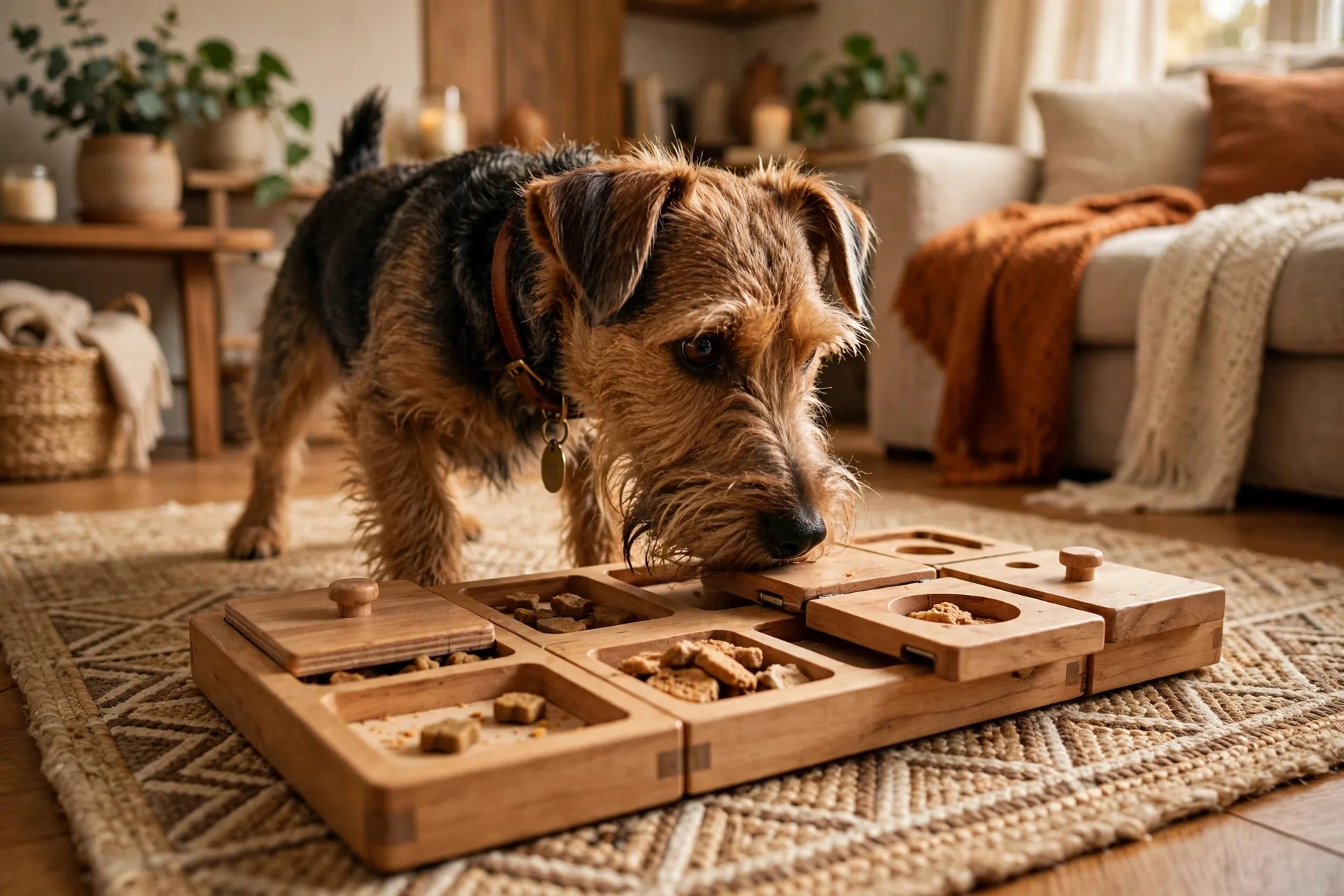
Level up in stages, not leaps. Once your dog empties the easy version confidently, increase difficulty one notch at a time: smear peanut butter inside, then freeze it (a frozen KONG can occupy a dog for half an hour), then introduce a sliding-panel board like the Nina Ottosson designs with just one or two compartments loaded. The Outward Hound puzzle line spans multiple difficulty levels, which makes it a natural second step — but start at level 1 even if your dog is clever. Puzzle veterans who find level 1 too easy will tell you within a day; beginners who start at level 3 just quit.
Match the toy to your dog's working style. Nose-driven dogs love snuffle-style and sliding puzzles where sniffing pays off — snuffle mats are a great parallel track. Paw-oriented dogs enjoy batting, flipping, and spinning mechanisms. Heavy chewers need durable rubber puzzles rather than plastic boards, and every plastic puzzle session needs supervision.
Think about cleanup before you buy. You'll use a puzzle toy ten times more often if it's easy to clean. The Toppl's wide opening rinses clean in seconds and it's top-rack dishwasher safe per the manufacturer — that matters when you're smearing peanut butter and yogurt in it daily. Narrow-neck toys with fiddly compartments are fine occasionally, but the daily driver should be the one you'll actually wash.
Keep sessions short and end on a win. Ten to fifteen minutes is plenty for a beginner. If your dog is struggling, make it easier mid-session (tip the toy, reveal a treat) rather than letting them fail. Always let them get the last treats — the session should end with the dog feeling clever, not defeated.
What not to overpay for
The hardest puzzle in the store. Difficulty is not quality. An expensive level-4 puzzle gathering dust because your dog finds it stressful is worse than a cheap level-1 toy your dog loves. Buy for the dog you have today, not the puzzle champion you imagine.
A whole collection up front. You need one beginner toy, not a shelf of them. Dogs don't get bored of a puzzle the way humans get bored of a video game — changing the filling (kibble today, frozen banana and yogurt tomorrow) makes the same toy feel new. Add a second toy only when your dog has genuinely outgrown the first.
Electronic and app-connected puzzles. Motorized treat dispensers look impressive, but for a beginner they add noise, batteries, and failure modes to something that should be simple. A rubber toy you stuff yourself costs less, never needs charging, and teaches the same problem-solving.
"Indestructible" puzzle claims. Puzzle toys are enrichment tools, not chew toys — even the tough ones. If your dog is a power chewer, read our guide to tough toys for aggressive chewers and keep puzzle sessions supervised and separate from chew time.
Toppl Puzzle Toy by West Paw
Best for: Beginners and easy cleanup
- Zogoflex recyclable material per manufacturer specs
- Top-rack dishwasher safe
- Squeezy wide opening
What we like
- Wide opening is beginner-friendly
- Rinse-clean in seconds
- Gentle on teeth vs hard plastic puzzles
Tradeoffs
- Smaller opening than KONG for big stuffing jobs
- Premium price
Based on published specifications · Last checked 2026-10-08
Nina Ottosson Puzzle Toy by Outward Hound
Best for: Smart dogs that solve easy puzzles fast
- Nina Ottosson design with sliding compartments per specs
- Multiple difficulty levels in the line
- BPA-free plastic per manufacturer
What we like
- Teaches problem-solving in short sessions
- Replaceable parts available
- Good price for the engagement
Tradeoffs
- Plastic pieces need supervision
- Too easy for puzzle veterans at level 1
Based on published specifications · Last checked 2026-10-08
KONG Classic by KONG
Best for: Stuffing, freezing, and fetch
- Natural red rubber formula per manufacturer specs
- Hollow center for stuffing
- Vet-recommended design per brand claim
What we like
- Endlessly stuffable — kibble, peanut butter, frozen mixes
- Bounces unpredictably for fetch
- Dishwasher safe
Tradeoffs
- Black 'extreme' version needed for power chewers
- Rubber smell when new (fades)
Based on published specifications · Last checked 2026-10-08
FAQ
My dog ignores the puzzle toy. What am I doing wrong?
Almost certainly the difficulty is too high or the reward is too low-value. Drop back to the easiest possible version — treats practically falling out — and use something your dog genuinely loves (real chicken beats dry kibble). Some dogs also need you to "play" with the toy first: nudge it, let treats fall out, and let them see that it pays. Most dogs come around within a few sessions once the concept clicks.
How long should a puzzle session last?
For beginners, 10–15 minutes. Mental work is genuinely tiring — that's the point — and an overtired dog gets frustrated faster. End while your dog is still engaged and successful. As your dog gains experience, you can extend sessions by increasing difficulty (freezing, more compartments) rather than just adding time.
Are puzzle toys a replacement for walks?
No — they're a complement. Puzzles tire the brain; walks and play tire the body and provide sniffing and sensory experiences no toy can replicate. The magic combination for a rainy day is a shorter walk plus a puzzle session, not a puzzle instead of a walk.
Can puppies use puzzle toys?
Yes, and they're great for puppies — with two caveats. Keep it very easy (puppy attention spans are short and frustration tolerance is low), and size the toy appropriately so a puppy can't get a jaw stuck or swallow pieces. Soft rubber stuffables like a small KONG or Toppl are ideal starter puzzles for young dogs.
The bottom line
The secret to puzzle toys isn't the toy — it's the trajectory. Start embarrassingly easy, celebrate the wins, and raise the difficulty only as fast as your dog's confidence grows. Do that, and the rainy-day maniac becomes a focused, satisfied problem-solver. Skip the curve, and you've just bought an expensive paperweight.
More in Toys & Enrichment
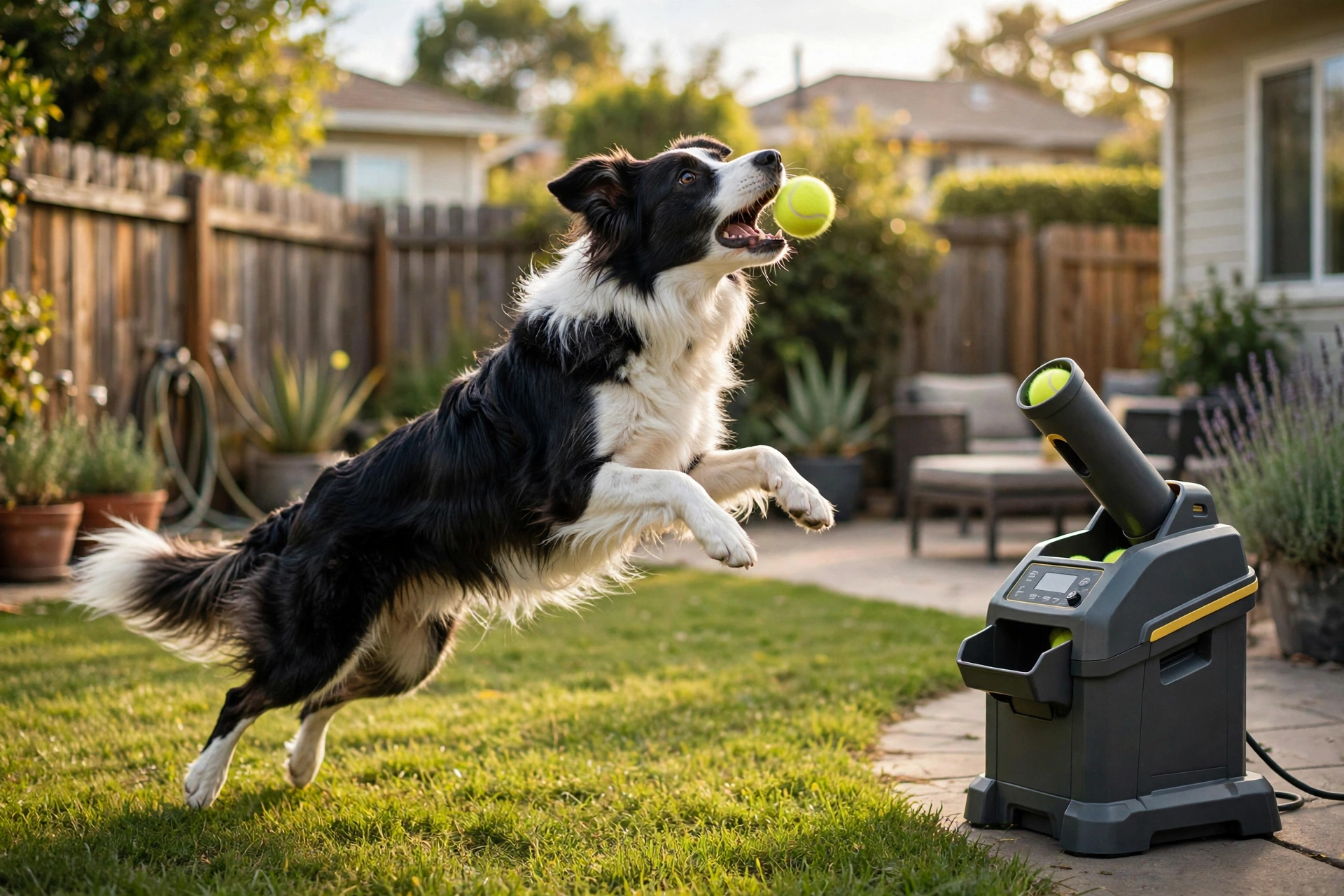
Automatic Ball Launchers for High-Energy Dogs
For the dog that would play fetch until your arm gives out: how automatic launchers work, who they suit, and the safety rules that matter.
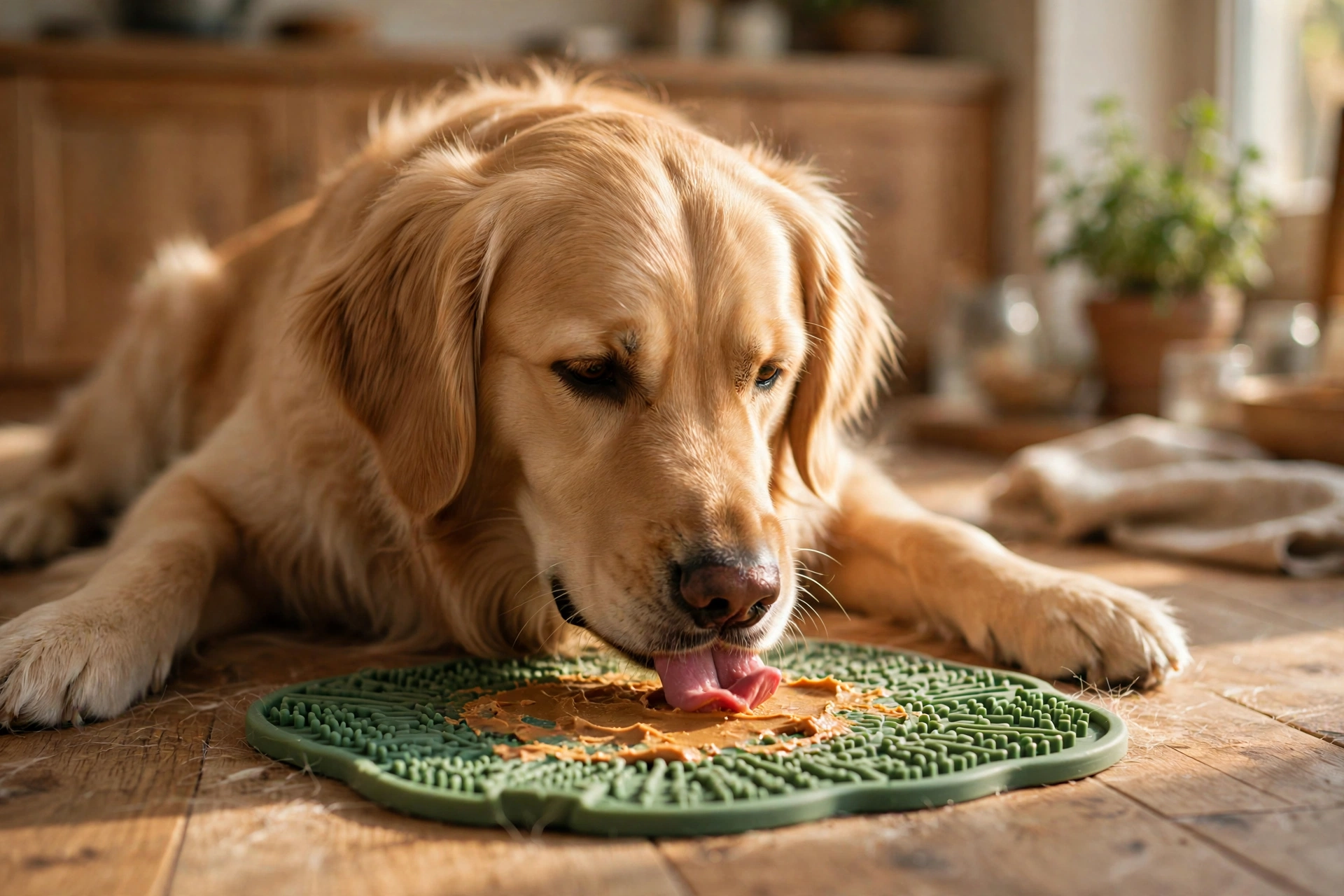
Lick Mats for Dogs: Calm Enrichment That Actually Works
A few dollars of textured silicone that buys calm on demand. How lick mats settle anxious dogs, what to smear on them, and why freezing is the best trick in the category.
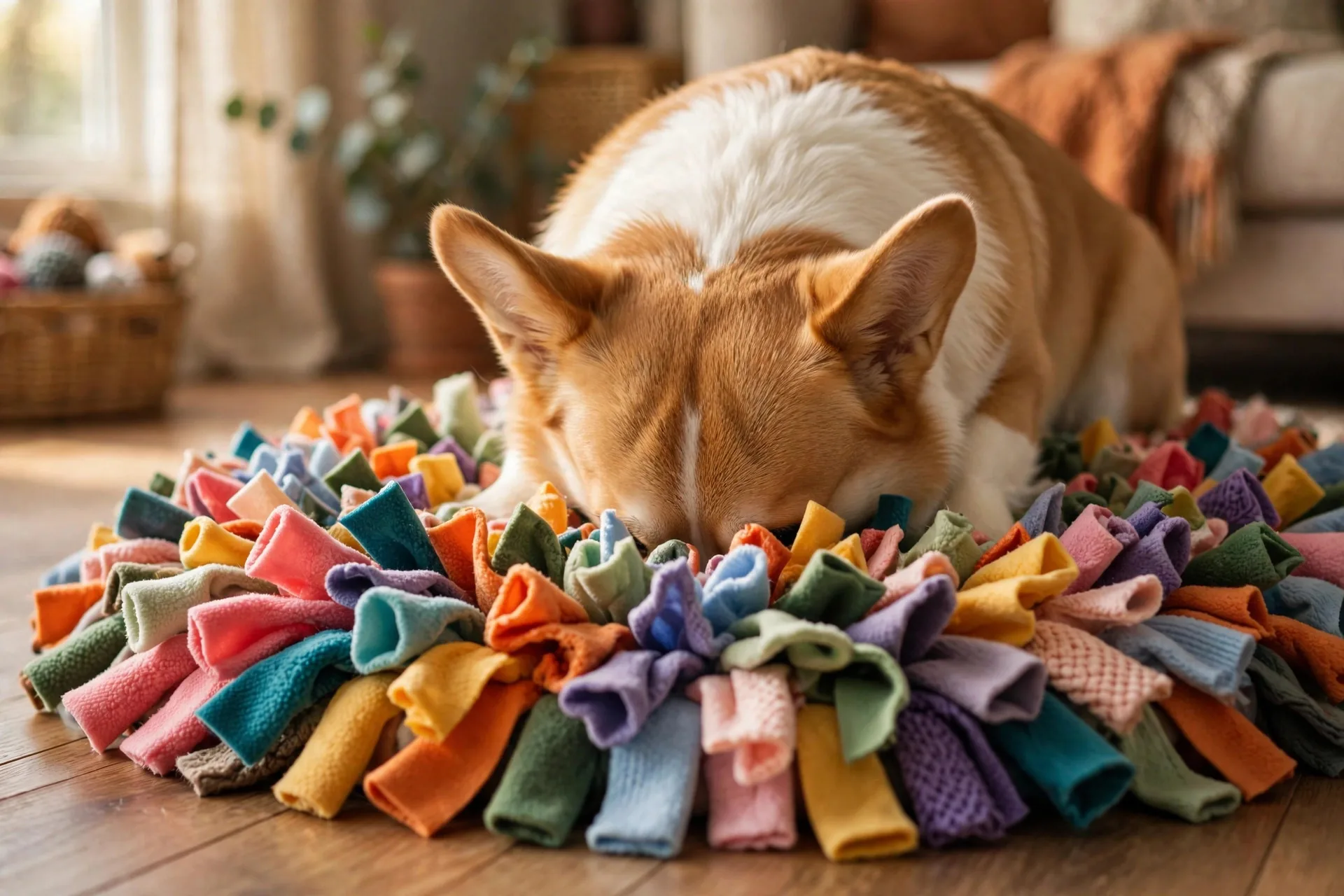
Snuffle Mats: Turning 10 Minutes of Sniffing Into a Tired, Happy Dog
Ten minutes of sniffing can do what an hour of fetch can't. How snuffle mats work, how to introduce one, and what to look for.