Quick verdict
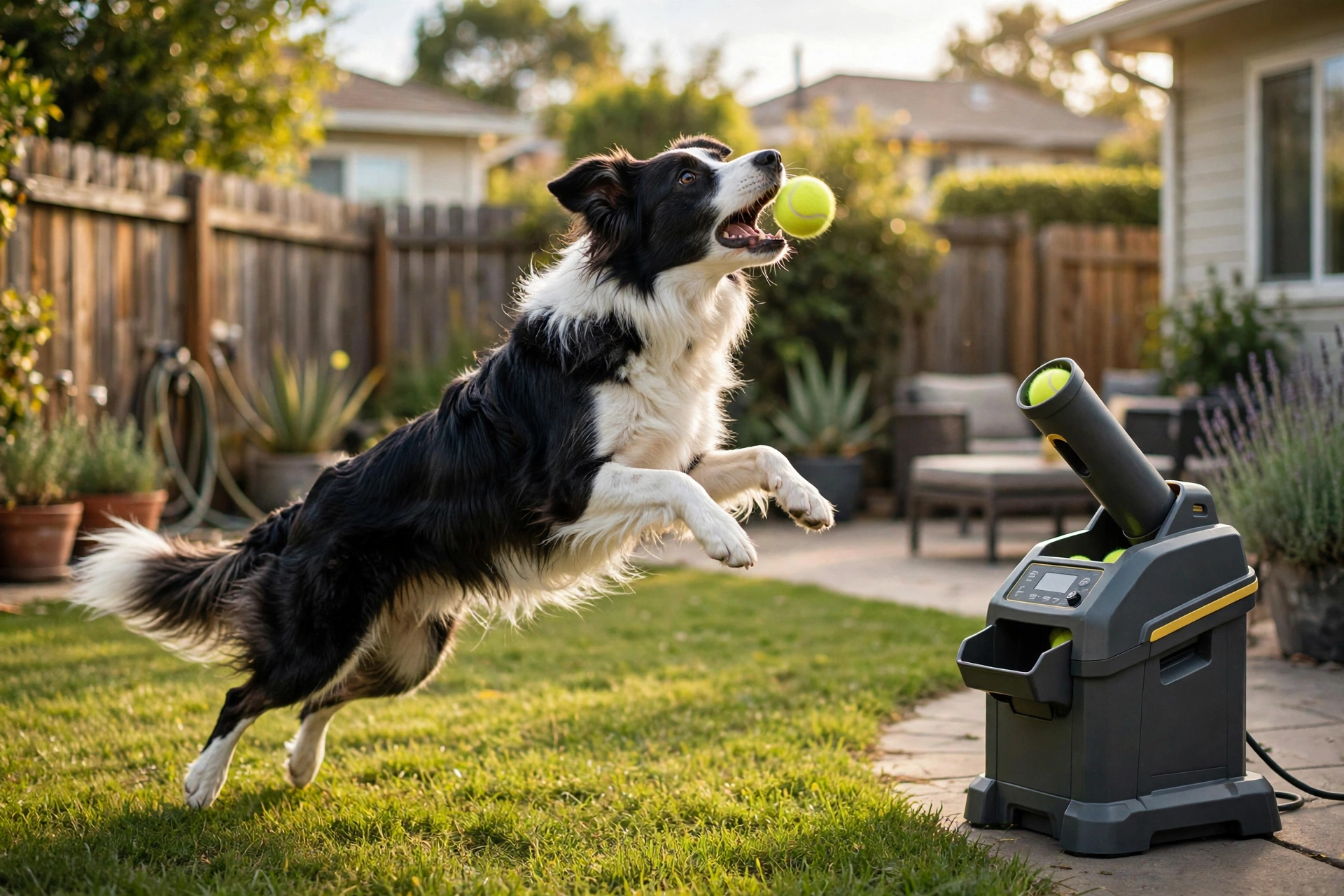
For the dog that would play fetch until your arm files a complaint, an automatic ball launcher is a genuinely good buy — with one big caveat: it's a supplement to your throwing, not a replacement for it. The best use case is the independent fetcher that learns to drop the ball back into the machine, buying you twenty minutes of peace while the dog self-exercises. They work best indoors or in small yards at short distances; they're not a substitute for real runs. And supervision is non-negotiable — this is a powered machine with moving parts, not a toy you leave running while you leave the house.
The real-life scenario
Your border collie has brought the ball back 47 times. Your shoulder is making a sound it didn't make in your twenties. It's Tuesday, you've got a call in twenty minutes, and the dog is staring at you with the ball, then at your hand, then at the ball, performing a stare so intense it should be illegal. You need the dog tired, you need your arm intact, and you need both in the next half hour.
That's the exact gap an automatic launcher fills. You load the balls, set the distance, and the machine does the throwing while you answer email — or, if your dog is one of the clever ones, the dog learns to reload it solo and you just supervise. It doesn't replace the long weekend hike or the game of tug. But for the daily energy top-up on a busy schedule, it turns "I can't play right now" into "the machine has it covered."
How it works
An automatic ball launcher is a motorized unit — roughly the size of a small bucket — that fires tennis-ball-sized balls at adjustable distances, typically from a few feet up to 30+ feet depending on the model and settings, per the manufacturers' published specifications. Most designs share the same loop:
- The ball drops into the top hopper (by you, or by the dog).
- A sensor detects it and, after a short delay with a warning tone on better models, the motor fires it.
- The dog chases, retrieves, and — if trained — drops it back in.
Distance adjustability is the key spec: short settings for hallways and small yards, long settings for open lawns. Many models include multiple balls sized to the machine — this matters because standard tennis balls are abrasive on teeth with heavy use, so purpose-made balls (smoother, non-abrasive felt) are worth using even if they're pricier. Power options vary: mains adapters for consistent indoor use, batteries or rechargeables for the park.
The training curve is real. Some dogs figure out the reload loop in a day; others never connect "drop ball in hole" with "ball flies out" and need you as the permanent loader. Both outcomes still exercise the dog — only one gives you your coffee break.
What to look for before you buy
Distance range and adjustability. Match the machine to your space, not your aspirations. A launcher that fires 40 feet is a liability in a 20-foot yard — balls over the fence, balls into the neighbor's garden. Adjustable distance with a genuinely short minimum is the most useful spec on the sheet.
Ball size compatibility. Small launchers use mini balls (safer for small breeds, a choking risk mismatch for big ones); full-size units take standard-size balls. Check that the included balls are non-abrasive per the manufacturer — heavy fetch with standard tennis balls wears tooth enamel over time, and a dog using a launcher daily racks up serious reps.
Noise and the warning tone. The launch mechanism makes noise, and some dogs are sound-sensitive. A model with a pre-launch tone trains the dog to expect the throw (and stand clear); a sudden loud launch startles timid dogs. If your dog is noise-wary, this category needs a careful introduction regardless of model.
Indoor versus outdoor design. Some launchers are built for both; others are indoor-only and will not survive rain. Be honest about where it'll live — a machine that lives on the patio needs weather resistance, and any machine needs to come inside in real weather.
Supervision and safety. This is a motorized device with a firing mechanism. The manufacturer's guidance is consistent: supervise, don't leave it running unattended, keep small children clear of the launch path, and store it unplugged or powered off. A power-chewer that attacks the machine itself is not a candidate for solo play — and if destruction is your dog's hobby, our indestructible dog toys guide is the more relevant read.
iFetch Too Ball Launcher by iFetch
Best for: Medium and large fetch-obsessed dogs, Owners who want adjustable distance
- Adjustable launch distance (short indoor to long outdoor settings) per manufacturer specs
- Uses non-abrasive mini or standard balls depending on model per manufacturer specs
- Rechargeable battery for cord-free park use per manufacturer specs
What we like
- Clever dogs learn to reload it themselves
- Good distance range for yards and parks
- Smoother balls are gentler on teeth than tennis balls
Tradeoffs
- Dogs must be trained to reload; many never learn
- Louder than hand-throwing — may startle noise-sensitive dogs
Based on published specifications · Last checked 2026-10-08
PetSafe Automatic Ball Launcher by PetSafe
Best for: Indoor fetch in hallways and small rooms, First-time launcher buyers
- Multiple distance settings including very short indoor throws per manufacturer specs
- Safety sensor pauses launching when a dog or person is in front per manufacturer specs
- Includes purpose-made non-abrasive balls per manufacturer specs
What we like
- Shortest distance setting suits apartments and hallways
- Front safety sensor is a genuine plus
- Simple to operate and clean
Tradeoffs
- Shorter max distance than larger launchers
- Not weatherproof — indoor or dry-patio use only
Based on published specifications · Last checked 2026-10-08
FAQ
Can my dog really learn to reload it alone?
Many do — border collies, labs, and other fetch-obsessed breeds often learn within days, especially with treat rewards for dropping the ball in the hopper. But plenty of dogs never make the connection and happily use it as a you-powered launcher. Both are fine; adjust your expectations to your dog, not the marketing.
Is it safe to leave running while I'm out?
No. Every manufacturer's guidance says supervise. Moving parts, a firing mechanism, a power source, and an unsupervised dog is a combination nobody should test. Use it when you're home and can intervene — the dog gets the exercise, you get the safety margin.
Will it work for small dogs?
Yes, if you buy the right size. Mini launchers with smaller balls suit small breeds; a full-size launcher's balls are too big for a small dog's mouth and the launch distance overwhelms a small yard. Match machine size and ball size to the dog — the specs make this clear, so check before buying.
How loud are they?
Louder than a hand throw, quieter than a vacuum — roughly. The motor whir plus the launch pop is the sound profile. Most dogs habituate in a session or two; sound-sensitive dogs may not. If yours startles at new noises, introduce it powered-off first, then at the shortest distance.
Do the balls wear out my dog's teeth?
Standard tennis balls do — the felt is abrasive and traps grit, and heavy daily fetch accelerates enamel wear. Purpose-made launcher balls are smoother and non-abrasive per the manufacturers. Use the balls designed for the machine; it's a small cost against dental bills.
The bottom line
An automatic ball launcher is the best busy-weekday answer for a fetch-obsessed dog: adjustable distance, repeatable throws, and — for the clever ones — a self-serve game that tires them out while you get on with your day. Buy for your actual space, use the right balls, supervise every session, and keep it as one tool in the exercise kit rather than the whole kit.
More in Toys & Enrichment
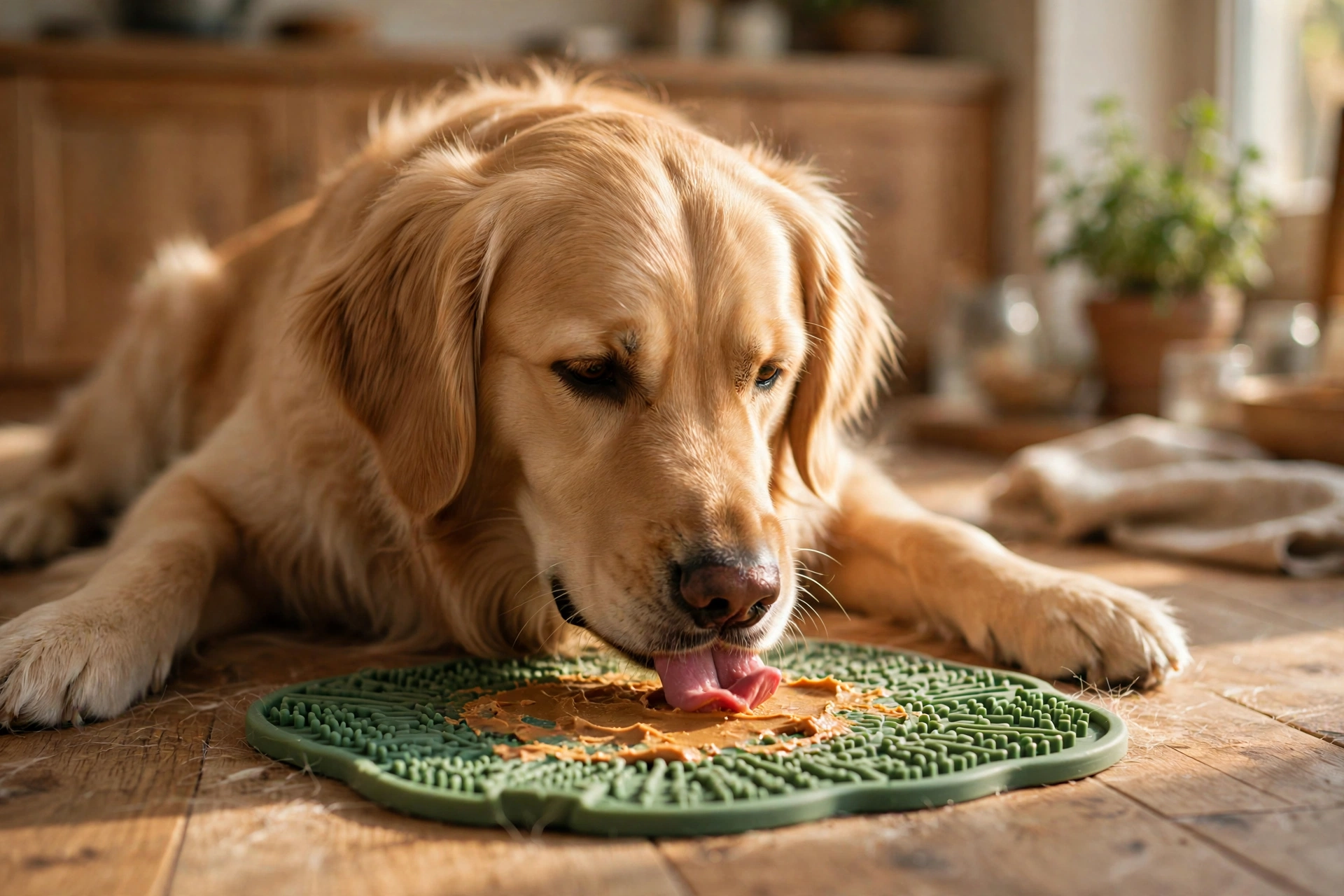
Lick Mats for Dogs: Calm Enrichment That Actually Works
A few dollars of textured silicone that buys calm on demand. How lick mats settle anxious dogs, what to smear on them, and why freezing is the best trick in the category.
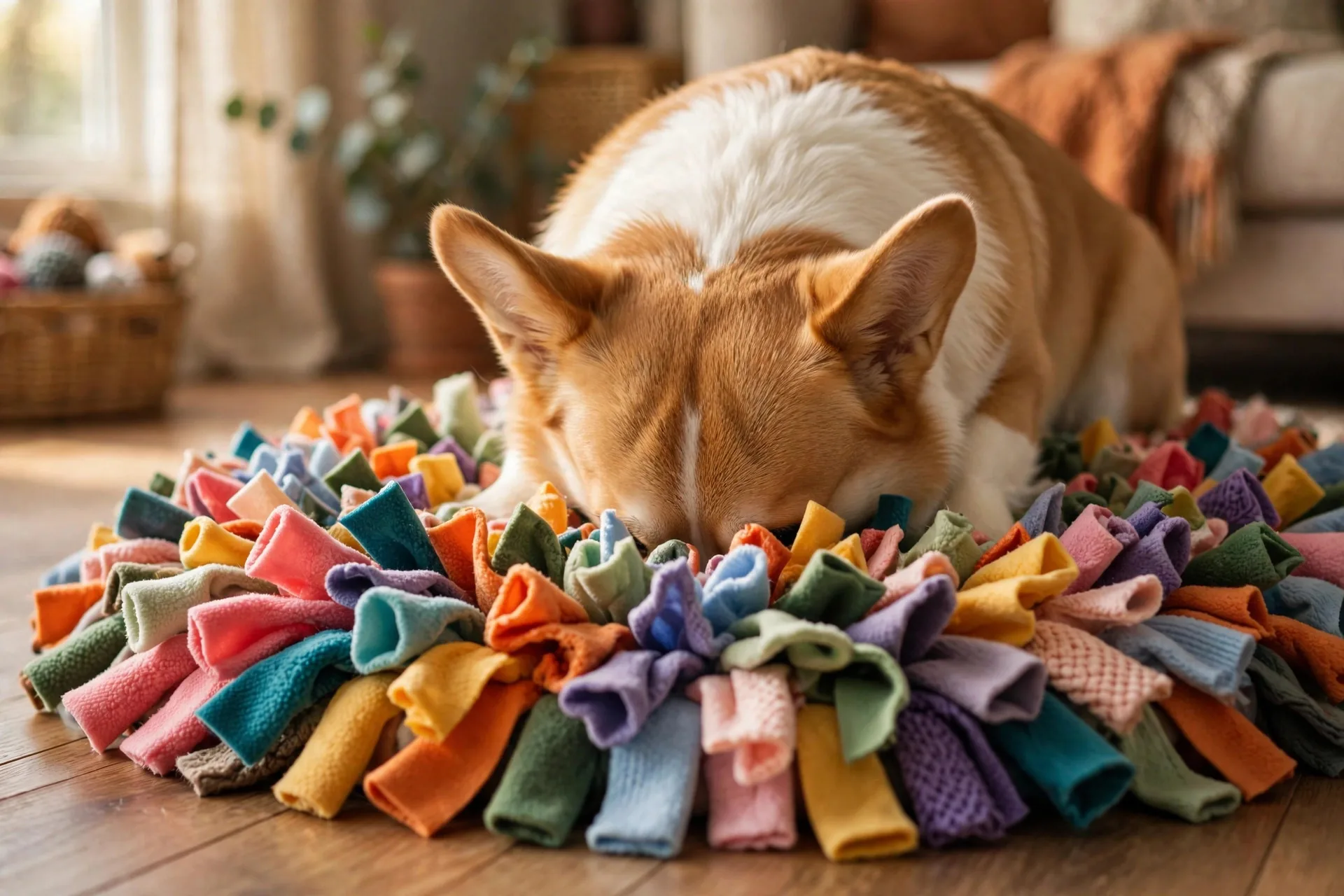
Snuffle Mats: Turning 10 Minutes of Sniffing Into a Tired, Happy Dog
Ten minutes of sniffing can do what an hour of fetch can't. How snuffle mats work, how to introduce one, and what to look for.
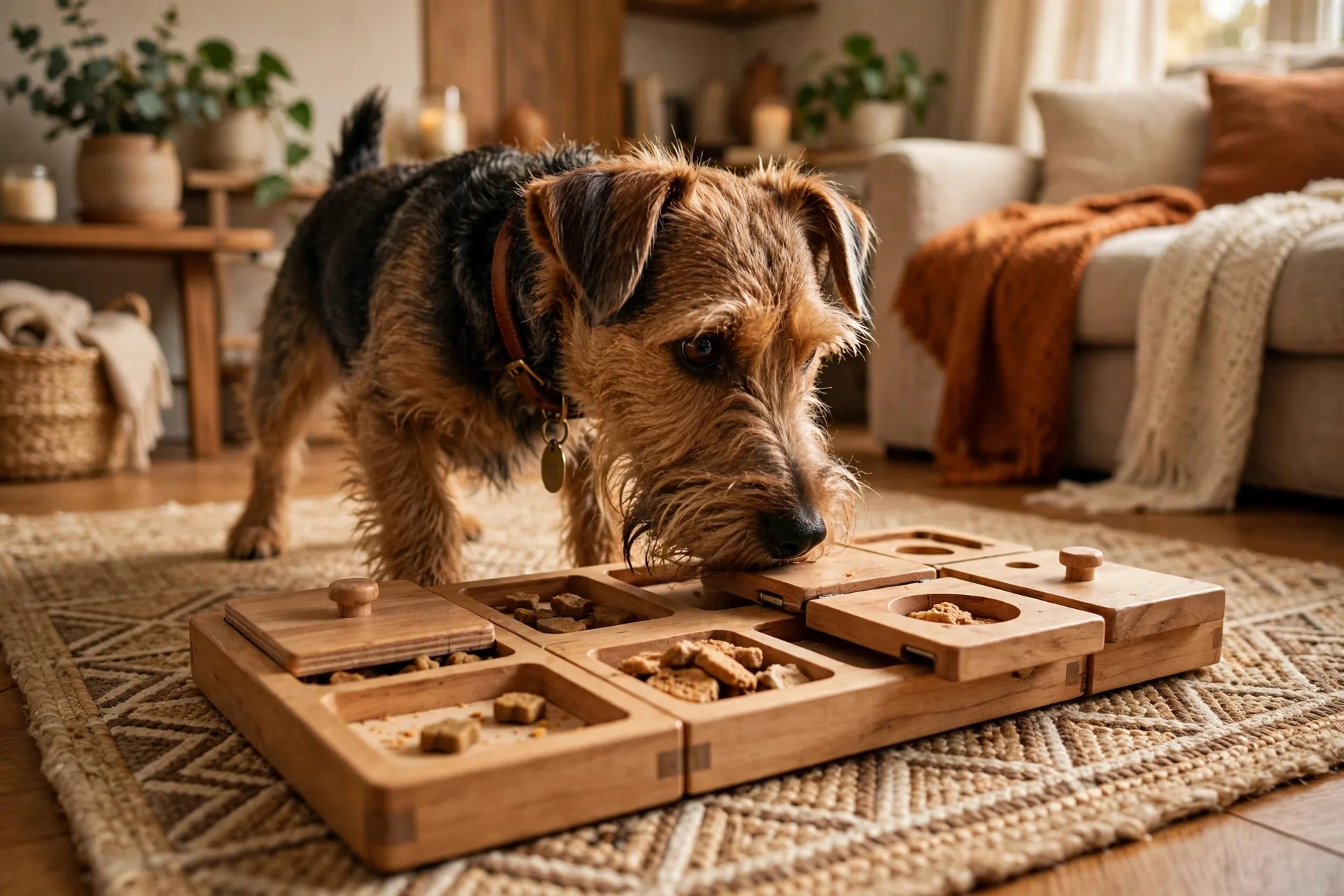
Puzzle Toys for Beginners: Where to Start Without Frustrating Your Dog
Start too hard and your dog quits. Here's a level-by-level path into puzzle toys that builds confidence instead of frustration.