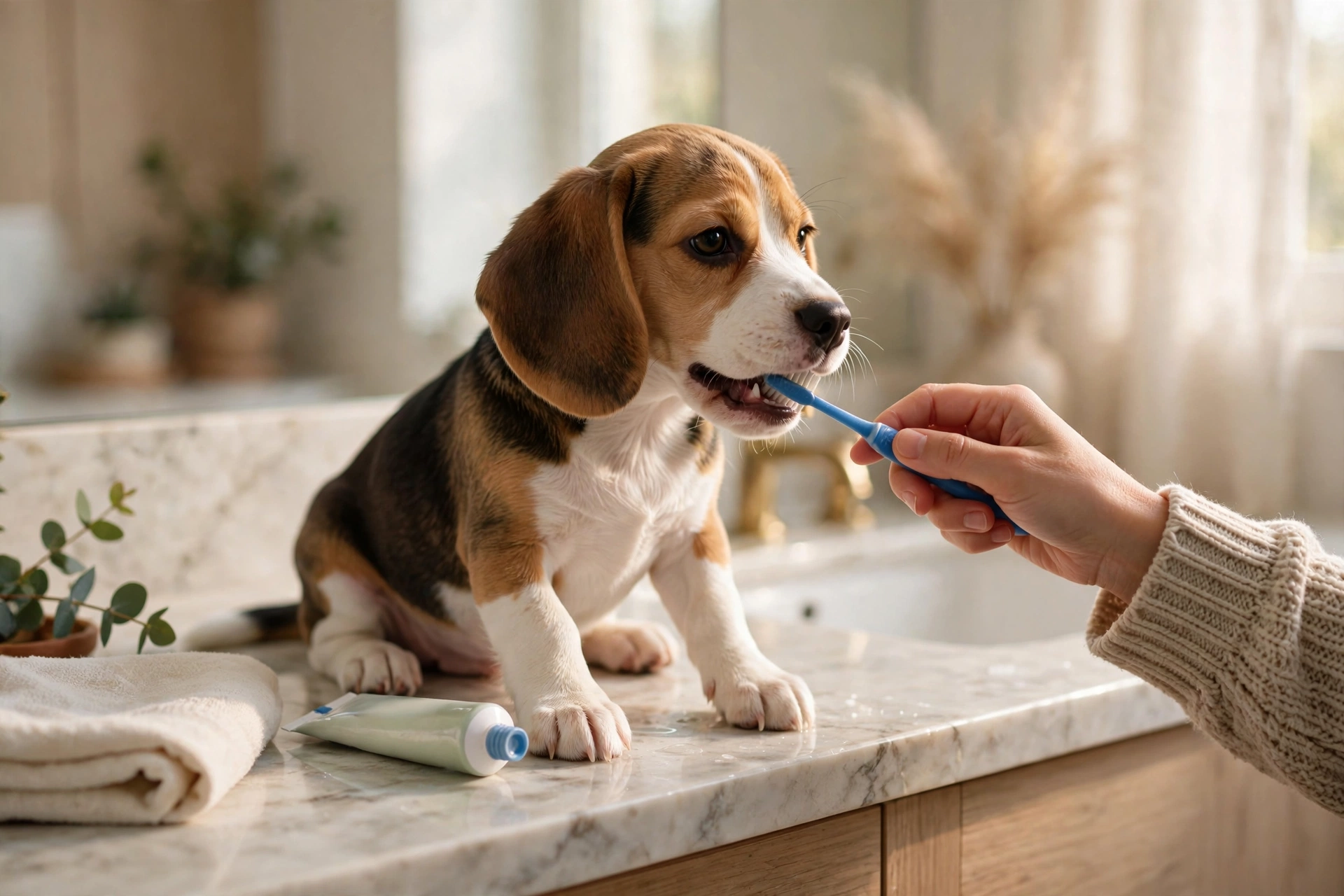
Quick verdict
If you can brush, brushing wins. A toothbrush with enzymatic toothpaste physically removes plaque before it hardens into tartar, and nothing else does that job as directly. Dental chews are the realistic backup plan: their texture scrubs teeth through chewing action, and most dogs consider them treats, which means compliance is nearly automatic. The honest answer for most households is both — brush when you can, chews on the days you can't (or for the dogs who won't tolerate a brush). Neither replaces professional dental cleanings once tartar has already hardened; that's a vet job, full stop.
The real-life scenario
You catch a whiff of your dog's breath at cuddle distance and physically recoil. At the checkup, the vet lifts a lip, points at the brownish buildup along the gumline, and says "keep an eye on the teeth." You nod like someone with a plan. Then you stand in the pet aisle facing a wall of options — toothbrushes, finger brushes, enzymatic pastes in poultry flavor, dental chews in seventeen shapes — and realize you have no idea which of these actually matters.
Here's the uncomfortable context: by age three, most dogs show some sign of periodontal disease, and it doesn't stay in the mouth. Chronic gum inflammation is linked to broader health issues, and a professional dental cleaning under anesthesia costs real money — the kind of money that makes a $8 tube of toothpaste look like the bargain of the century. The question isn't whether dental care matters. It's which approach you'll actually stick with.
How it works
The enemy is plaque — the soft bacterial film that forms on teeth daily and hardens into tartar within a couple of days if left alone. Tartar can't be brushed or chewed off; only a professional cleaning removes it. So the entire game is disrupting plaque while it's still soft.
Toothbrushes do this mechanically and directly. Brushing with a soft brush and a dog-safe enzymatic toothpaste (like Virbac's C.E.T. line — enzymatic, flavored for compliance, no rinsing needed per the manufacturer) physically sweeps plaque off the tooth surface and gumline. Enzymatic formulas add a chemical assist: the enzymes keep working on plaque after the brushing session ends. Technique matters less than consistency — even imperfect daily brushing beats perfect weekly brushing.
Dental chews work through chewing mechanics. As the dog gnaws, the chew's texture scrubs the tooth surfaces, and the prolonged chewing stimulates saliva, which helps wash the mouth. Based on published specifications, the better chews are designed with a texture and shape that maximizes tooth contact, and some — like Greenies — carry the Veterinary Oral Health Council (VOHC) Accepted seal for plaque and tartar control, which is a meaningful third-party signal in a category full of marketing claims. Chews also win on compliance: the dog thinks it's a treat, so there's no training curve.
A few honest mechanics notes:
- Chews add calories. A daily dental chew is part of the diet, not free — size it to the dog and count it, especially for easy keepers.
- Size the chew to the dog. A chew small enough to gulp defeats the purpose and becomes a choking or blockage risk. When in doubt, size up, and supervise.
- Brushing has a training curve. Most dogs don't accept a brush on day one. Finger brushes, tasty toothpaste as a reward, and thirty-second sessions that grow over weeks — that's the realistic on-ramp.
What to look for before you buy
If you're going the toothbrush route: pick a brush sized to your dog's mouth — finger brushes for small dogs and beginners, long-handled soft brushes for bigger mouths. The toothpaste must be dog-formulated: never human toothpaste, which can contain fluoride and xylitol, both dangerous to dogs. Enzymatic formulas from vet-trusted brands are the standard recommendation, and flavor (poultry is the classic) is genuinely functional — it's what makes the dog hold still.
If you're going the dental chew route: look for the VOHC Accepted seal as your quality filter — it's the closest thing this category has to an independent standard. Check that the chew is sized for your dog's weight range per the manufacturer, read the calorie content, and prefer chews from established brands with published digestibility information. Avoid anything rock-hard that could crack a tooth; a dental chew should give under chewing pressure.
If you're doing both (recommended): brush daily or as often as your dog tolerates, and use a VOHC-accepted chew on the days brushing doesn't happen. The two approaches stack — brushing handles the gumline directly, chews handle the chewing surfaces and keep the habit alive on busy days.
And if bath time is already a negotiation in your house, you may appreciate our sensitive-skin shampoo guide — grooming compliance is a whole-house project.
Virbac C.E.T. Enzymatic Dog Toothpaste by Virbac
Best for: Owners starting a brushing routine, Dogs that need a tasty incentive to cooperate
- Dual-enzyme system, per manufacturer specs
- No rinsing required — safe if swallowed, per manufacturer
- Poultry and other dog-friendly flavors
- Designed for use with a soft brush or finger brush
What we like
- Flavor most dogs accept readily
- Enzymatic action keeps working after brushing
- Vet-trusted brand
Tradeoffs
- Brushing compliance still depends on training
- Tube runs out fast with large dogs
Based on published specifications · Last checked 2026-10-08
Greenies Original Dental Treats by Greenies
Best for: Dogs that won't tolerate brushing, Daily plaque-control backup
- Chewy texture designed to scrub teeth down to the gumline, per manufacturer specs
- VOHC Accepted seal for plaque and tartar control
- Highly soluble and digestible ingredients, per manufacturer
- Sized by dog weight
What we like
- Near-automatic compliance — dogs think it's a treat
- VOHC acceptance is a meaningful quality signal
- Easy daily habit
Tradeoffs
- Adds daily calories — size and count matter
- Not a substitute for brushing or professional cleanings
- Must be sized correctly to avoid gulping
Based on published specifications · Last checked 2026-10-08
FAQ
How often should I brush my dog's teeth?
Daily is the gold standard, since plaque starts hardening within a couple of days. Realistically, even brushing a few times a week meaningfully reduces plaque versus doing nothing. Start with short sessions and build up — a cooperative thirty seconds beats a wrestling match that makes the dog dread the toothbrush.
Are dental chews enough on their own?
They help — a VOHC-accepted chew given daily does measurably reduce plaque and tartar buildup. But chews can't match the direct gumline cleaning of a brush, and they can't reach every tooth surface evenly. Think of chews as the best backup plan, not the full plan.
Can I use human toothpaste on my dog?
No. Human toothpaste can contain fluoride and xylitol, both of which are dangerous to dogs — and dogs can't spit, so they swallow whatever you use. Dog-formulated enzymatic toothpastes are designed to be swallowed safely and come in flavors dogs actually accept.
My dog won't let me near their mouth. What now?
Start smaller than you think: let the dog lick toothpaste off your finger for a few days, then a finger brush for ten seconds, building up with treats and praise. Most dogs come around within a couple of weeks of patient sessions. In the meantime, a daily dental chew keeps some plaque control going while you train the brushing habit.
When is it a vet visit instead of a home-care question?
Bleeding gums, loose or broken teeth, persistent bad breath that doesn't improve with brushing, drooling, pawing at the mouth, or reluctance to eat hard food — any of these warrant a vet dental exam. Once tartar has hardened onto the teeth, no brush or chew will remove it; that's a professional cleaning under anesthesia.
The bottom line
Brushing is the most effective thing you can do for your dog's teeth, and dental chews are the most effective thing you'll actually do every day. Use the toothbrush as often as your dog allows, keep a VOHC-accepted chew in the daily rotation for the rest, and let the vet handle what's already hardened. Your dog's breath — and their long-term health — will thank you.
More in Grooming & Care
Dog Shampoos for Sensitive Skin: Ingredients That Matter
Oatmeal, aloe, pH balance — how to read a dog shampoo label, which ingredients soothe itchy skin, and when itching is a vet visit.
Nail Grinders vs. Clippers: Trimming Nails Without the Drama
Grinders are gradual and forgiving; clippers are fast and final. How to choose based on your dog's nerves, nails, and your confidence.

Deshedding Tools for Shedding Season: A Practical Look
Shedding season turns sofas into fur coats. How deshedding tools work, which coat types they suit, and how to use them safely.