Quick verdict
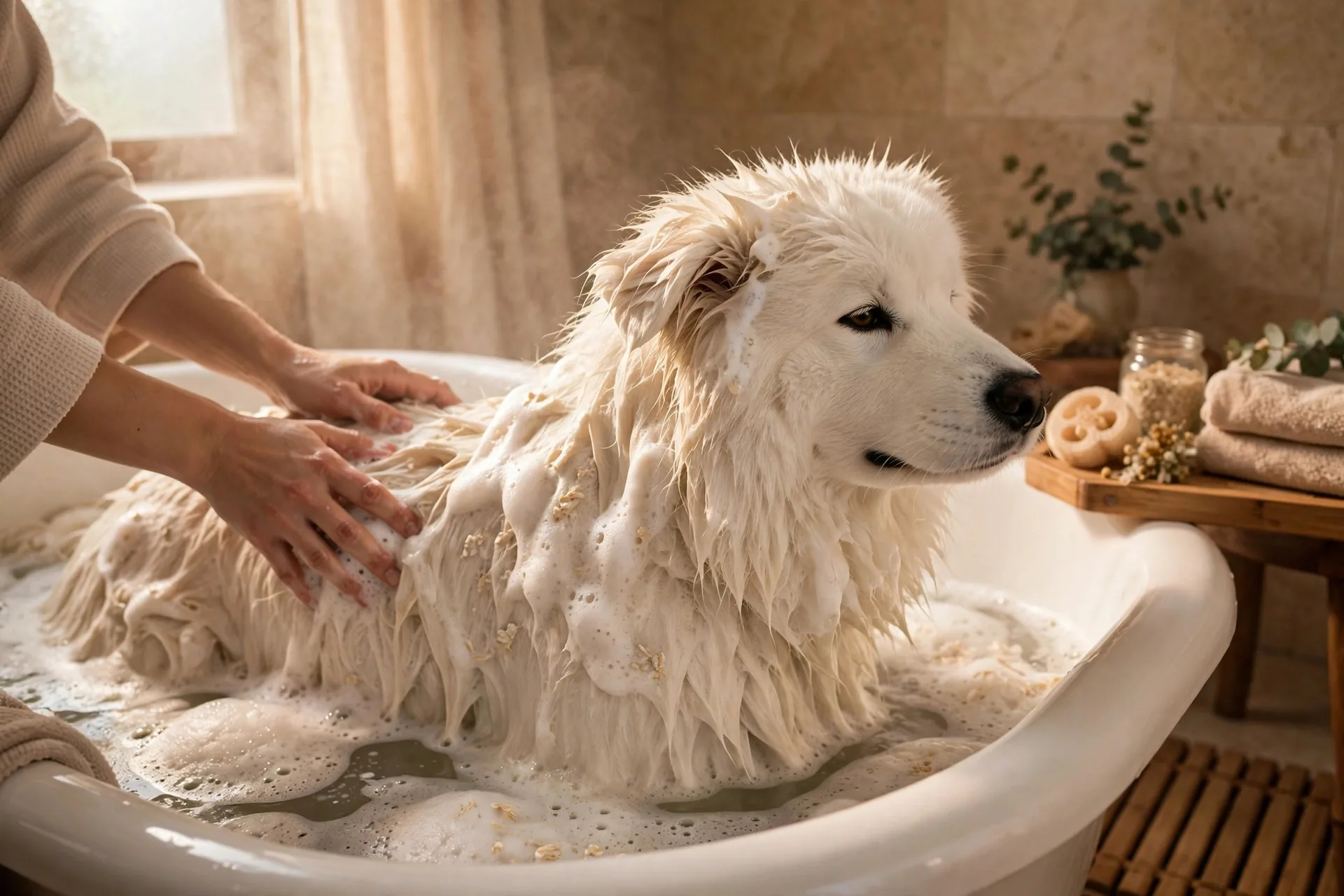
For itchy, sensitive dogs, the label matters more than the brand: look for colloidal oatmeal and aloe, a soap-free and pH-balanced-for-dogs formula, and no harsh fragrances or dyes. Bathe no more often than the coat truly needs it, rinse thoroughly, and remember that persistent itching is a vet conversation, not a shampoo problem. A gentle oatmeal shampoo handles most everyday sensitivity just fine.
The real-life scenario
Your dog has been scratching behind the ears for a week. Then the belly-rub spot goes pink. Then you're up at 2 a.m. listening to the thump-thump-thump of a hind leg against the floorboards. You bathe her with the shampoo you already own — the one that smells like a tropical vacation — and the next day the scratching is somehow worse.
That tropical shampoo is often the problem, not the solution. Heavily fragranced shampoos can strip a dog's skin barrier and leave it drier and itchier than before, because dog skin sits at a different pH than ours. The fix isn't more bathing — it's the right bottle, used the right way.
How to choose
Start with the soothers: oatmeal and aloe. Colloidal oatmeal is the most consistently recommended ingredient for itchy dog skin — it forms a protective film that calms irritation, and it's backed by genuine veterinary use, not just marketing. Aloe vera adds a second layer of soothing, especially for mild hot spots and dry patches. A formula built around these two, like Earthbath's Oatmeal & Aloe Shampoo, covers the most common everyday itchiness.
Insist on pH-balanced for dogs. This phrase on a label actually means something: dog skin is more alkaline than human skin, and a shampoo formulated for human pH can disrupt the skin's acid mantle, leading to dryness and vulnerability to bacteria. Any shampoo marketed for sensitive dog skin should state pH balance for dogs explicitly. If it doesn't say so, assume it isn't.
Go soap-free and fragrance-light. "Soap-free" means the formula uses gentler synthetic detergents rather than traditional soap, which is less stripping. Heavy synthetic fragrance is one of the most common irritants in pet shampoos — a mild or unscented formula is a feature, not a drawback, for a sensitive dog. Dyes are similarly pointless; clear or naturally colored is what you want.
Match the formula to the situation. Everyday mild sensitivity and dry skin: an oatmeal-based gentle shampoo is the workhorse. But if the itching is constant, the skin is broken or oozing, or there are bald patches — that's not a shampoo decision anymore. That's a vet visit. Skin issues can signal allergies, infections, or parasites that no bottle will fix.
Read the whole label, not just the front. Front labels say "natural," "gentle," and "soothing" on nearly everything. Flip the bottle: look for short, recognizable ingredient lists, oatmeal and aloe near the top, and no parabens, sulfates (SLS/SLES), or synthetic dyes. Cruelty-free and responsibly made are nice-to-haves that brands like Earthbath and Burt's Bees both claim.
Don't over-bathe. Even the gentlest shampoo strips some natural oils. Most dogs need a bath every four to eight weeks; over-bathing a sensitive dog to "treat" the itch usually makes it worse. Between baths, a damp cloth wipe-down of paws and belly after walks handles most dirt — and our paw care guide covers that routine in detail.
What not to overpay for
Designer fragrance. A shampoo that smells like a spa does nothing for your dog — dogs don't care, and fragrance is a top irritant. You're paying extra for the thing most likely to cause problems.
"Medicated" claims without a diagnosis. Antifungal, antibacterial, and anti-itch shampoos with active drugs have real uses — but only when a vet has identified the problem they're treating. Buying a medicated shampoo to guess at a skin issue wastes money and can mask symptoms your vet needs to see.
Human shampoo, even the gentle baby kind. Baby shampoo is pH-balanced for human babies, not dogs. It's better than dish soap in an emergency, but as a routine choice for a sensitive dog it's a false economy — the wrong pH undoes whatever gentleness you're paying for.
Bulk "oatmeal" shampoo with oatmeal as decoration. If oatmeal sits near the end of a long ingredient list, behind fragrances and dyes, it's marketing. The soothers need to be prominent ingredients, not garnish.
Ultra-premium pricing for basic needs. Sensitive-skin care doesn't require the most expensive bottle on the shelf. Burt's Bees Oatmeal Dog Shampoo, for example, delivers an oatmeal-based, pH-balanced formula at a genuinely budget-friendly price point — proof that gentle doesn't have to mean premium. Save the premium spend for the vet visit if the itching persists.
For most sensitive dogs, the practical shortlist is simple: Earthbath Oatmeal & Aloe as the thorough, gentle workhorse for itchy skin, or Burt's Bees Oatmeal as the budget-friendly everyday option. Both are built around oatmeal, both claim pH balance for dogs and cruelty-free production, and neither leans on heavy fragrance.
Oatmeal & Aloe Shampoo by Earthbath
Best for: Itchy, sensitive skin
- Colloidal oatmeal and aloe per product specs
- Soap-free, pH-balanced for dogs per manufacturer
- Cruelty-free per brand claim
What we like
- Gentle enough for frequent baths
- Noticeably soothing for itchy dogs
- No harsh fragrances
Tradeoffs
- Premium price per ounce
- Scent is mild — not for fragrance lovers
Based on published specifications · Last checked 2026-10-08
Oatmeal Dog Shampoo by Burt's Bees
Best for: Budget sensitive-skin care
- Oatmeal and honey formula per product specs
- pH balanced for dogs per manufacturer
- Cruelty-free per brand claim
What we like
- Very affordable
- Mild and tearless-ish formula
- Widely available
Tradeoffs
- Thinner lather than premium shampoos
- Bottle size is modest
Based on published specifications · Last checked 2026-10-08
FAQ
Can I use human shampoo on my dog in a pinch?
Once, in a genuine emergency, a mild human shampoo won't cause catastrophe — rinse extremely well. But don't make it a habit. The pH mismatch dries and irritates dog skin over time, and a sensitive dog will show it first. Keep a proper dog shampoo on hand instead.
How often should I bathe a dog with sensitive skin?
Less often than you think — typically every four to eight weeks, or when genuinely dirty. Over-bathing strips the oils that protect sensitive skin. Between baths, spot-clean with a damp cloth. If your dog needs frequent baths for medical reasons, ask your vet which formula to use.
My dog smells bad even after a bath. What gives?
Persistent odor despite bathing can signal a skin infection (yeast or bacterial), ear issues, or dental problems — none of which shampoo fixes. If a proper bath with a gentle shampoo doesn't resolve the smell within a day, see your vet rather than bathing more aggressively.
Are "natural" or "organic" shampoos automatically safer?
Not automatically. "Natural" isn't a regulated term on pet products, and some natural ingredients can irritate sensitive skin. Judge by the specific ingredient list — short, recognizable, oatmeal-forward — not by the word "natural" on the front.
The bottom line
Sensitive skin needs less, not more: an oatmeal-and-aloe, soap-free, pH-balanced shampoo with minimal fragrance, used only as often as the coat truly needs. Read the ingredient list, skip the fragrance tax, and treat persistent itching as a vet matter rather than a shopping problem. Your dog's 2 a.m. scratching sessions — and yours — should get quieter from here.
More in Grooming & Care
Dog Dental Care: Toothbrushes vs. Dental Chews
Brushing removes plaque directly; chews win on compliance. We compare toothbrushes and dental chews honestly — and explain why most households should use both.
Nail Grinders vs. Clippers: Trimming Nails Without the Drama
Grinders are gradual and forgiving; clippers are fast and final. How to choose based on your dog's nerves, nails, and your confidence.
Deshedding Tools for Shedding Season: A Practical Look
Shedding season turns sofas into fur coats. How deshedding tools work, which coat types they suit, and how to use them safely.