Quick verdict
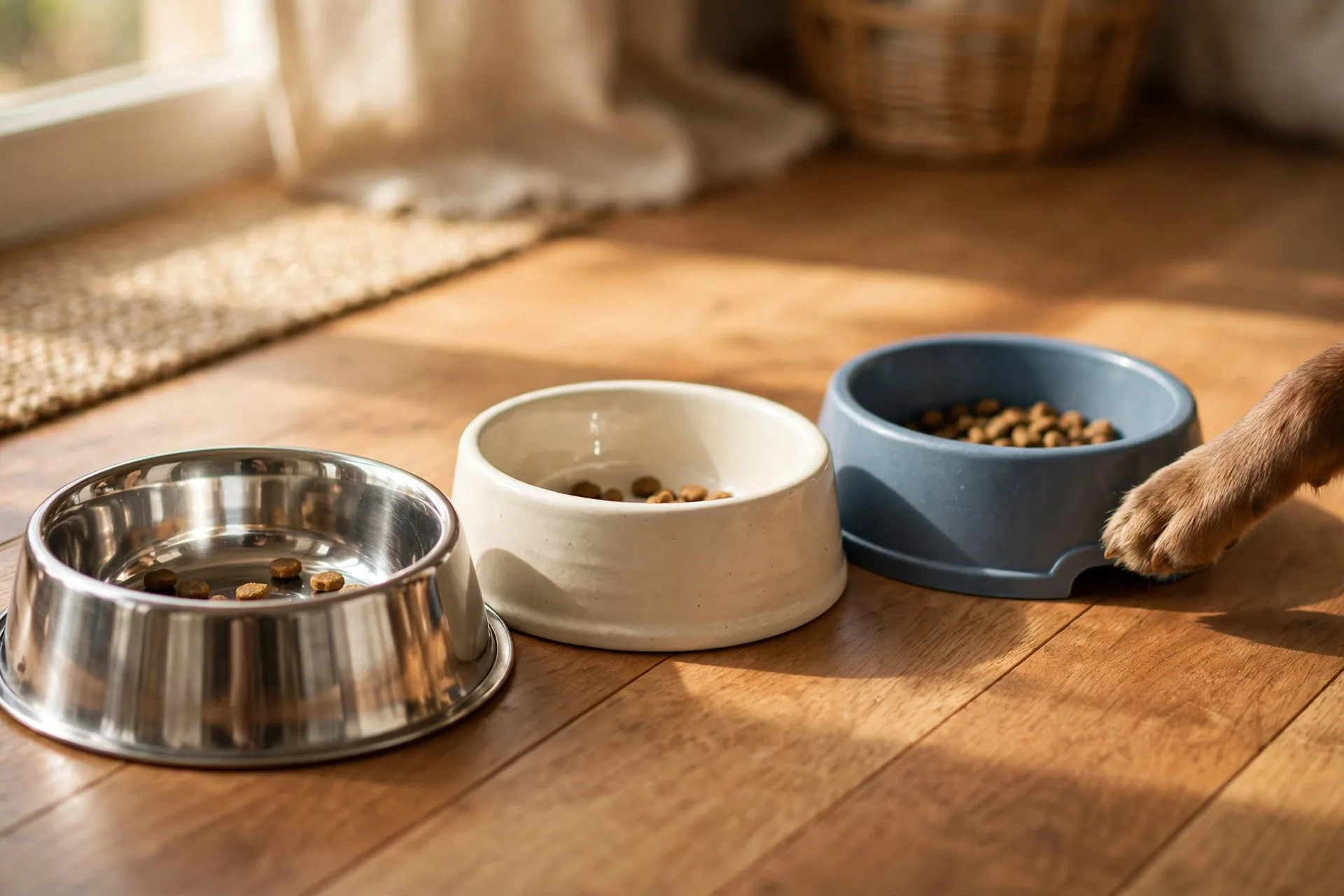
Stainless steel wins on durability and hygiene for most households — it's non-porous, dishwasher-safe, and nearly indestructible in its better forms. Ceramic is the best-looking option and stays put thanks to its weight, but it chips and cracks if dropped. Plastic is cheap and light, but it scratches, harbors bacteria in those scratches, and some dogs develop chin irritation from it. If you want to buy once and stop thinking about bowls, get stainless.
The real-life scenario
Your dog's bowl has lived a hard life. The plastic one from the shelter adoption kit is cloudy with scratches and smells faintly like old food no matter how you wash it. The ceramic one is beautiful — right up until it slipped out of your wet hands and lost a chip the size of a thumbnail, and now you're wondering if that edge is safe. Meanwhile the cheap stainless bowl skates across the kitchen floor every meal like it's training for the luge.
Sound familiar? Bowl shopping feels trivial until you're replacing the same bowl for the third time, or scrubbing something that never quite gets clean. The material matters more than the brand name stamped on the bottom. Here's how the three classics actually compare in daily life — durability, hygiene, and the practical stuff like cleaning and noise.
How they differ
Stainless steel is the workhorse. It's non-porous, so bacteria have nowhere to hide; it goes in the dishwasher without complaint; and quality steel resists dents and rust for years. The downsides are noise (kibble on steel is a morning alarm) and sliding — lightweight bowls migrate unless they have a rubber base. Premium options like the YETI Boomer 8 solve the sliding problem with a weighted, non-slip base and shrug off dents that would crease a thin bowl. Budget steel like the AmazonBasics bowl gets you the same hygienic material for a fraction of the cost, but the thinner steel dents more easily and the lighter build still wanders on slick floors.
Ceramic is the kitchen-beauty pick. A stoneware bowl like the PetRageous Designs bowl is heavy enough to stay put, the lead-free glaze is non-porous and easy to clean, and it looks fine left out on the counter — no shame in a bowl that matches your kitchen. It's dishwasher and microwave safe per the manufacturer. The catch is fragility: drop it on tile and it chips or cracks, and a cracked glaze is no longer non-porous. It's also heavier and less travel-friendly than steel.
Plastic is the budget default — light, cheap, and available everywhere. But scratches are its downfall. Every scratch is a groove where bacteria can settle beyond the reach of a sponge, and that's why old plastic bowls develop that permanent funk. Some dogs also develop chin acne or irritation from plastic; vets commonly suggest switching to steel or ceramic when that shows up. If your dog is a fast eater, note that most slow-feeder maze bowls are plastic — a reasonable tradeoff, but one more reason to replace them when they get chewed or deeply scratched.
| Premium stainless (e.g. YETI Boomer 8) | Budget stainless (e.g. AmazonBasics) | Ceramic (e.g. PetRageous Designs) | |
|---|---|---|---|
| Best for | Owners who want a buy-it-once bowl | Multi-dog households on a budget | Style-conscious kitchens, small dogs |
| Durability | Extremely dent- and rust-resistant | Functional, but thin steel dents | Chips or cracks if dropped |
| Hygiene | Non-porous, simple to sanitize | Non-porous, dishwasher safe | Non-porous glaze until it chips |
| Stays put? | Yes — weighted non-slip base | Decent with rubber base, can slide | Yes — heavy base resists pushing |
| Watch out for | Heavier; overkill for travel | Lightweight, wanders on slick floors | Fragile; inspect glaze for cracks |
| Price tier | Premium | Budget | Mid-range |
Boomer 8 Dog Bowl by YETI
Best for: Owners who want a buy-it-once bowl
- Double-wall, non-insulated stainless steel per manufacturer specs
- BearFoot non-slip ring base
- Dishwasher safe per manufacturer
What we like
- Extremely dent- and rust-resistant
- Stays put thanks to the weighted base
- Simple to sanitize
Tradeoffs
- Premium price for a dog bowl
- Heavier than basic bowls — less ideal for travel
Based on published specifications · Last checked 2026-10-08
Stainless Steel Dog Bowl by Amazon Basics
Best for: Multi-dog households on a budget
- Stainless steel with rubber base per product specs
- Dishwasher safe per manufacturer
- Available in multi-packs
What we like
- Very affordable, easy to own several
- Hygienic non-porous steel
- Rubber base reduces sliding
Tradeoffs
- Lightweight — can slide on slick floors
- Thin steel dents more easily than premium bowls
Based on published specifications · Last checked 2026-10-08
Stoneware Ceramic Dog Bowl by PetRageous Designs
Best for: Small dogs and style-conscious kitchens
- Stoneware ceramic with lead-free glaze per manufacturer specs
- Dishwasher and microwave safe per manufacturer
- Wide stable base
What we like
- Heavy base resists tipping and pushing
- Non-porous glaze is easy to clean
- Looks good left out on the counter
Tradeoffs
- Ceramic can chip or crack if dropped
- Heavier and less travel-friendly
Based on published specifications · Last checked 2026-10-08
FAQ
Is stainless steel really safer than plastic?
For hygiene, yes. Stainless steel is non-porous, so it doesn't develop the micro-scratches where bacteria hide in plastic bowls. It's also dishwasher-safe at high heat, which sanitizes more thoroughly than hand-washing. If your plastic bowl has visible scratches or a lingering smell, it's past its useful life.
My dog gets chin acne — could the bowl be the cause?
It can be a contributing factor. Plastic bowls are the most commonly implicated, and many vets suggest switching to stainless steel or ceramic when a dog develops chin irritation. Wash the bowl daily regardless of material — old food film irritates skin on contact.
Are ceramic bowls safe if the glaze chips?
A chipped glaze is a problem for two reasons: the exposed ceramic underneath is porous and harder to sanitize, and the chip edge can be sharp. Retire a chipped bowl rather than continuing to use it. This is also why it's worth checking secondhand or discount ceramic bowls carefully before use.
Can I put a stainless bowl in the microwave?
No — metal and microwaves don't mix. If you warm your dog's food, use the ceramic bowl or transfer to another container. This is one of ceramic's genuine practical advantages.
How often should I wash my dog's bowl?
Daily for food bowls, ideally. Biofilm — that slimy layer you can feel on an unwashed bowl — builds up fast, and dogs eat from the same surface twice a day. Water bowls can go a couple of days, but a daily rinse keeps them fresher. Whatever the material, the dishwasher is your friend.
The bottom line
Match the material to your reality, not the prettiest product photo. Stainless steel is the best default for durability and hygiene — buy the premium version if you want a bowl you'll never replace, the budget version if you need five of them. Choose ceramic if the bowl lives on your counter and you value looks and stability, and accept that drops happen. Retire plastic bowls when they scratch. And if your dog eats from a raised stand, check our elevated feeder guide — bowl height matters as much as bowl material for some dogs.
More in Feeding & Treats
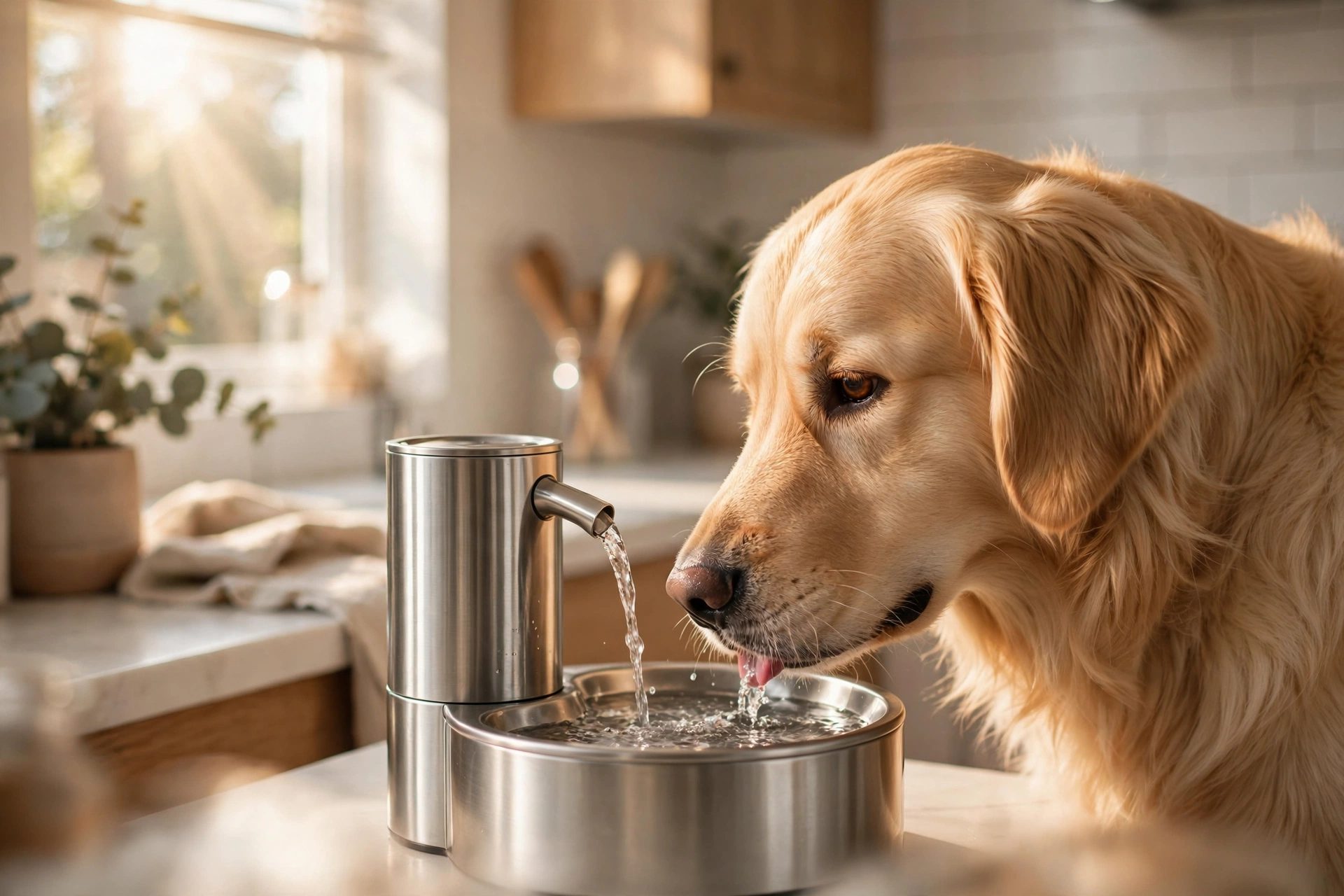
Pet Water Fountains: Encouraging Healthy Hydration
Moving, filtered water stays fresher and draws dogs to drink more. We cover how fountains work, the maintenance they demand, and which materials hold up best.
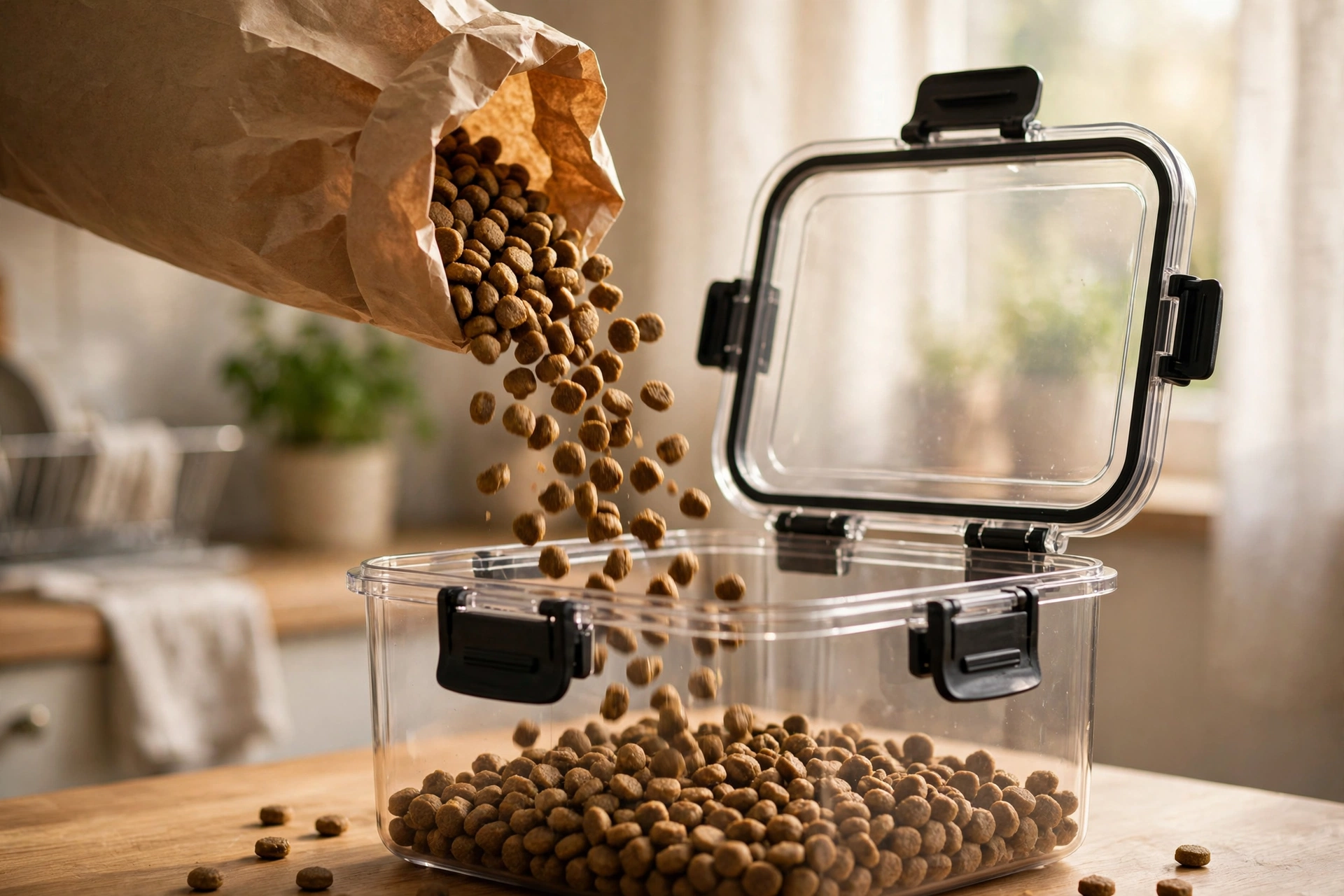
Dog Food Storage Containers: Keeping Kibble Fresh for Weeks
Kibble starts going stale the moment the bag opens. Here's how airtight containers work, what makes a seal actually airtight, and how to size one to the bag you buy.

Slow Feeder Bowls for Dogs Who Inhale Dinner: Do They Actually Work?
Does a maze bowl actually slow down a dog that inhales dinner? We break down how slow feeders work, when they help, and which designs suit which dogs.