Quick verdict
An airtight container is one of those boring purchases that quietly pays for itself. Kibble starts going stale the moment the bag opens — the fats coating it oxidize in air, pick up moisture, and turn rancid, and the smell shifts from rich to dusty. Most dogs notice before you do. A container with a genuine airtight seal keeps kibble noticeably fresher for weeks, keeps pantry pests out, and stops your kitchen smelling like a pet-store aisle. It won't revive a bag that's already stale, and it doesn't override the best-by date — but for anyone buying bags bigger than a week's worth of food, it's cheap insurance.
The real-life scenario
You do the math at the store and the 30-pound bag wins on price per pound, obviously. Week one, the kibble smells rich and your dog inhales it. By week four the bag is folded over with a chip clip in the pantry corner, the kibble has that flat, faintly off smell, and the dog who inhaled it in week one now sniffs the bowl and walks away — the same dog who ate a sock last Tuesday. Or you open the pantry and spot tiny moths circling, and realize the open bag was the invitation.
Stale kibble isn't just a palatability problem. Rancid fats are less nutritious and can upset sensitive stomachs, and an open bag is an open door for pantry moths, ants, and the humidity of a busy kitchen. None of this is dramatic enough to motivate a special trip — it's exactly the kind of slow, invisible quality loss that a good container fixes in the background.
How it works
Kibble is shelf-stable because it's dry and sealed at the factory — the bag's inner liner is doing real work until you tear it open. The moment air gets in, oxygen and moisture start on the fats coating the kibble, which is where much of the flavor and many of the calories live. Heat and light speed the whole process up, which is why the garage in summer is the worst place for the bag.
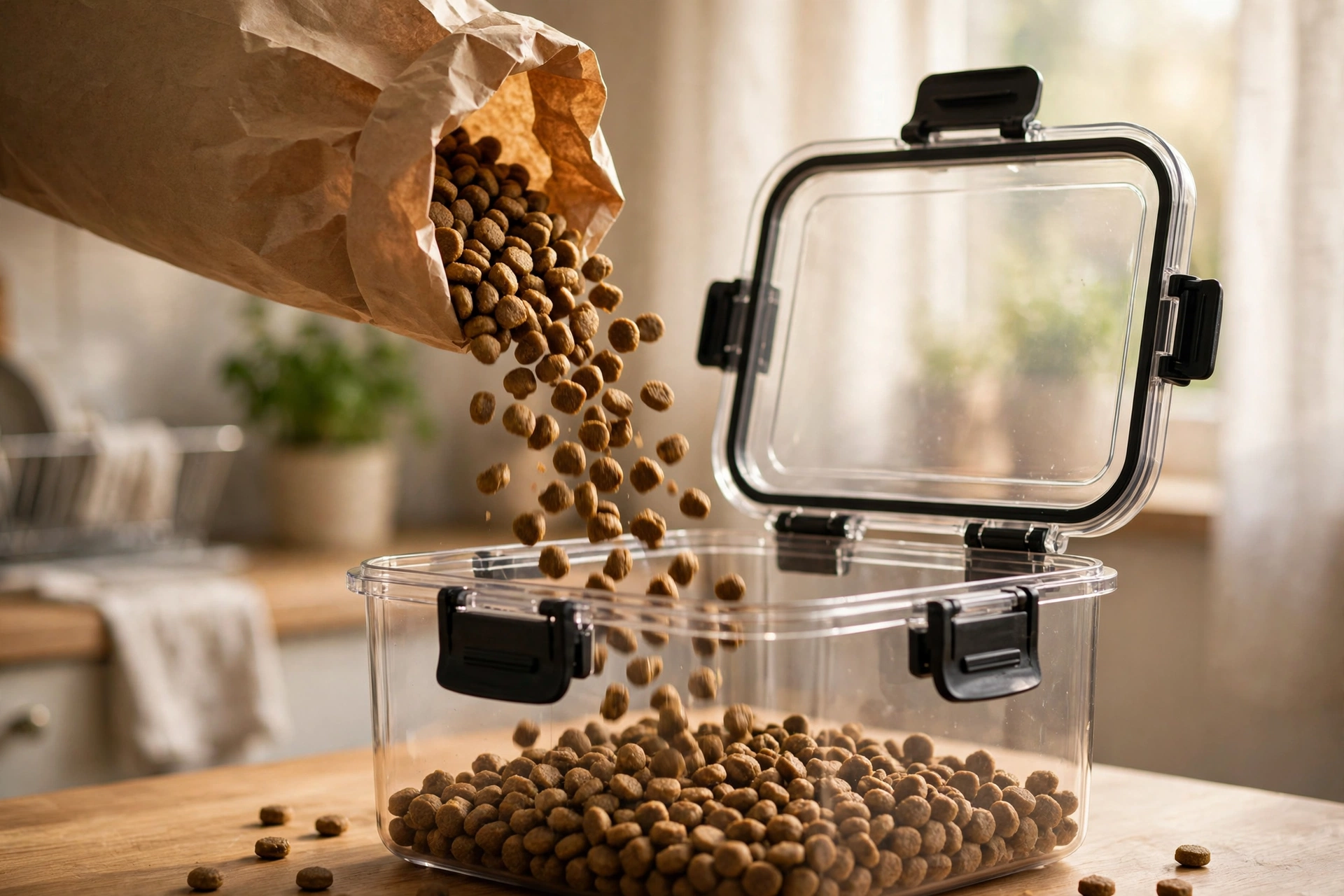
An airtight container recreates the sealed environment. Based on published specifications, the designs that actually preserve freshness share three traits: a lid with a genuine seal — a silicone gasket under a snap-lock lid, or a threaded screw-top like the Gamma2 Vittles Vault, which per the manufacturer twists down to lock air out — opaque or tinted walls that block light, and a wide mouth so you can reach the bottom for cleaning. Some owners keep the kibble in its original bag inside the container, folded shut: you keep the batch code and best-by date for recall purposes, and the container becomes the air barrier. Others pour the food straight in and keep the bag's top panel taped to the lid for the same reason. Both approaches work; the seal does the heavy lifting either way.
A word on what containers don't do: they don't extend the best-by date, they don't make wet or fresh food last longer, and they don't fix food that's already gone stale. Freshness storage starts with fresh food.
What to look for before you buy
Seal quality is the whole game. A container that just rests a lid on top is a storage bin, not a food preserver. Look for a silicone or rubber gasket under a locking lid, or a threaded screw-top design. Based on published specifications, threaded lids are among the most reliable seals in this category — twist-and-lock leaves less to chance than a flap lid whose gasket can wear unevenly.
Size it to your bag, not your ambition. A container that's half empty holds half a container of air working against the food. Check the manufacturer's stated capacity against the actual bag weight you buy — and note that bulky kibble shapes take up more volume per pound than dense pellets. If you buy big bags, two medium containers can beat one giant one: you open one at a time and the second stays sealed.
Bag-in or pour-in. Pouring directly in is tidier and lets you scoop without wrestling the bag. Keeping the bag inside preserves the batch code and best-by date, which manufacturers ask for if there's ever a recall or a quality complaint. A practical middle ground: pour the kibble in, and cut the bag's top panel — with the barcode, batch code, and best-by date — and tape it to the inside of the lid. Either way, wash and fully dry the container between bags; old kibble dust and rancid fat residue at the bottom will taint the fresh batch.
Material and opacity. Food-grade, BPA-free plastic is the standard and keeps things light and affordable. Opaque or dark-tinted walls beat clear ones — light accelerates fat oxidation, so that handsome clear container on the counter is working against you. Stainless steel options exist and sanitize beautifully, but they're heavy and pricey at kibble-container sizes.
The practical details. A wide mouth matters more than you'd think — narrow-necked containers are miserable to clean and to scoop from. Wheels or a handle earn their keep on 30-plus-pound sizes. And if you buy treats in bulk too, a smaller matching container keeps soft treats from drying into hockey pucks.
If your feeding routine could use an upgrade alongside storage, our slow feeder guide covers bowls that slow down the gulp-and-regurgitate cycle.
IRIS USA Airtight Pet Food Container by IRIS USA
Best for: Owners buying standard-size kibble bags, Kitchens that need a tidy, sealed pantry solution
- Airtight snap-lock lid with foam gasket, per manufacturer specs
- BPA-free, food-grade plastic construction
- Slim profile designed to fit narrow pantry spaces
- Matching scoop included, per manufacturer
What we like
- Genuine airtight seal keeps kibble fresher longer
- Wide mouth makes scooping and cleaning easy
- Slim, stackable design saves pantry space
Tradeoffs
- Large-bag owners may need two containers
- Plastic can retain odors over time if not washed between bags
Based on published specifications · Last checked 2026-10-08
Gamma2 Vittles Vault Airtight Pet Food Container by Gamma2
Best for: Owners who buy kibble in bulk, Homes battling pantry pests or humidity
- Threaded screw-top lid, per manufacturer specs
- Heavy-duty HDPE plastic, BPA-free
- Airtight seal locks out moisture and pests, per manufacturer
- Wide-mouth opening for easy scooping
What we like
- Threaded lid gives one of the most reliable seals in the category
- Sturdy enough for garage or mudroom storage
- Keeps odors fully contained
Tradeoffs
- Bulkier footprint than slim pantry containers
- Higher price point than basic storage bins
Based on published specifications · Last checked 2026-10-08
FAQ
Should I pour kibble straight in or keep the bag inside the container?
Both work, and the seal matters far more than this choice. Pouring in is tidier and easier to scoop from. Keeping the bag inside preserves the batch code and best-by date, which manufacturers ask for if there's ever a recall or a quality complaint. A practical middle ground: pour the kibble in, and tape the bag's top panel — barcode, batch code, and best-by date — to the inside of the lid.
How long does kibble stay fresh once the bag is opened?
Most manufacturers suggest using opened kibble within about 4 to 6 weeks — check your specific bag, because guidance varies. An airtight container helps the kibble actually taste like it should across that window instead of fading by week three. Past the best-by date, or once it smells off or dusty, it's done regardless of storage.
Will an airtight container stop pantry moths?
Yes — a genuinely airtight seal keeps moths and their larvae out, and equally importantly keeps them contained if the infestation started at the factory or store, which happens more than anyone likes to admit. If you already have moths in the pantry, the container protects the dog food while you deal with the rest of the pantry separately.
Is plastic safe, or should I get metal?
Food-grade, BPA-free plastic is the standard for this category and is what most of the well-known containers are made from, per the manufacturers. Stainless steel is excellent — non-porous, easy to sanitize, no odor retention — but heavy and expensive at the sizes that hold a full bag. Either way, opaque beats clear for freshness, since light degrades fats.
Can I store wet food or fresh food in these?
Opened wet food belongs in the fridge in a covered container and gets used within a couple of days — a dry-food container at room temperature is not a substitute. Same for fresh or raw food: cold-storage rules apply. These containers are for dry kibble and dry treats.
The bottom line
If you buy kibble in bags that last more than a week or two, an airtight container is one of the highest-value boring purchases in dog ownership: fresher food, fewer pests, no pantry smell. Prioritize the seal, size it to the bag you actually buy, and wash it between bags. Your dog's nose will notice the difference before you do.
More in Feeding & Treats
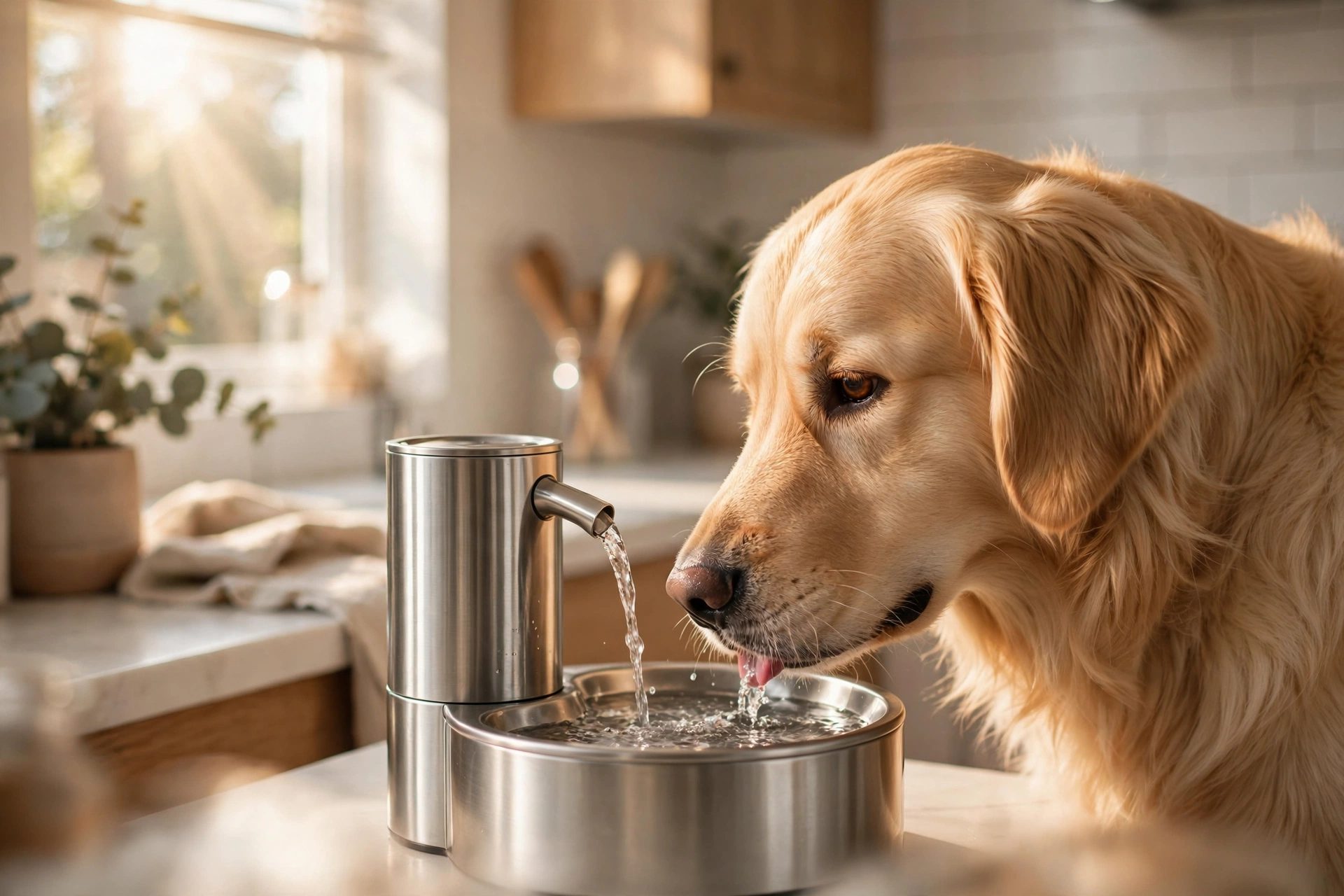
Pet Water Fountains: Encouraging Healthy Hydration
Moving, filtered water stays fresher and draws dogs to drink more. We cover how fountains work, the maintenance they demand, and which materials hold up best.
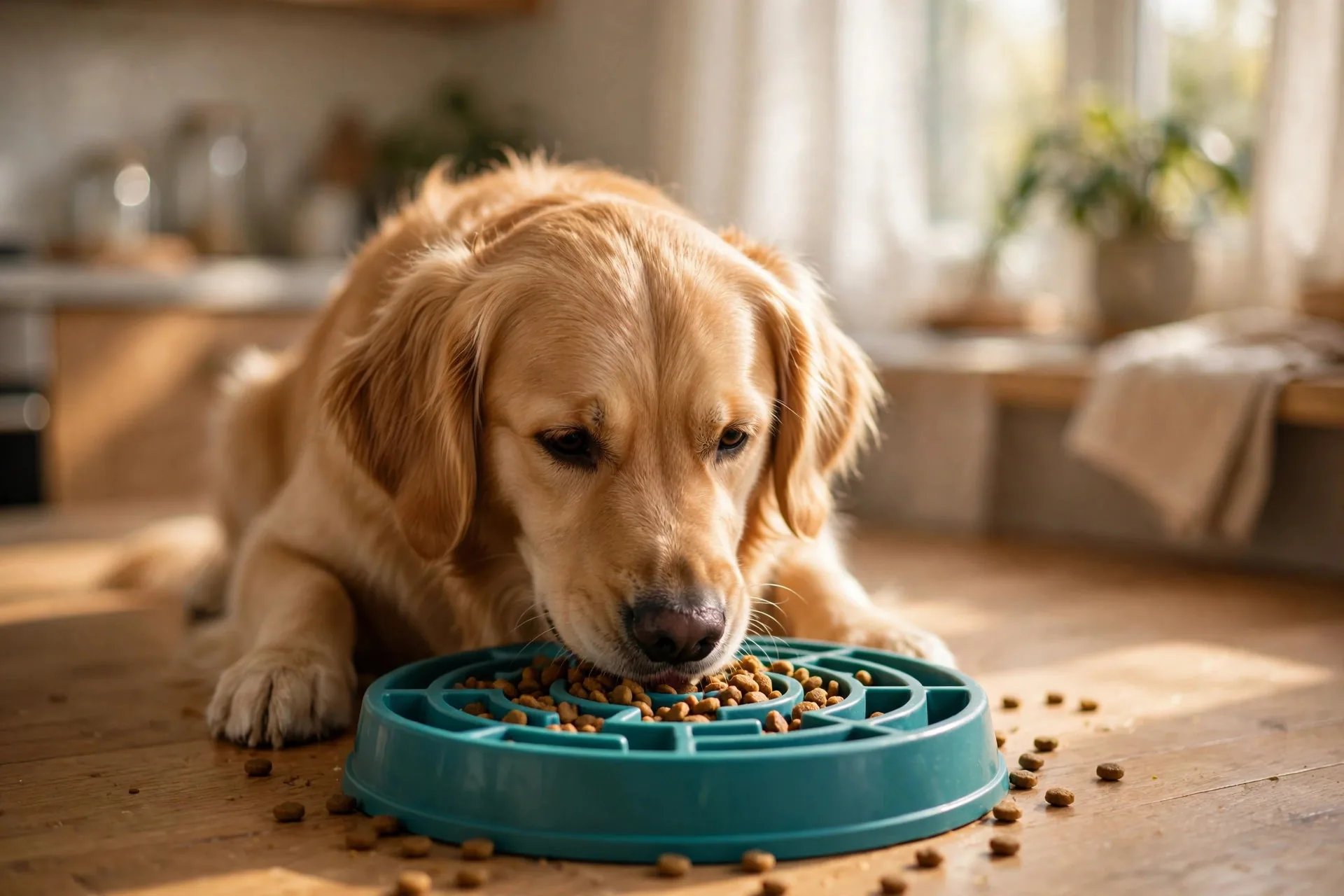
Slow Feeder Bowls for Dogs Who Inhale Dinner: Do They Actually Work?
Does a maze bowl actually slow down a dog that inhales dinner? We break down how slow feeders work, when they help, and which designs suit which dogs.
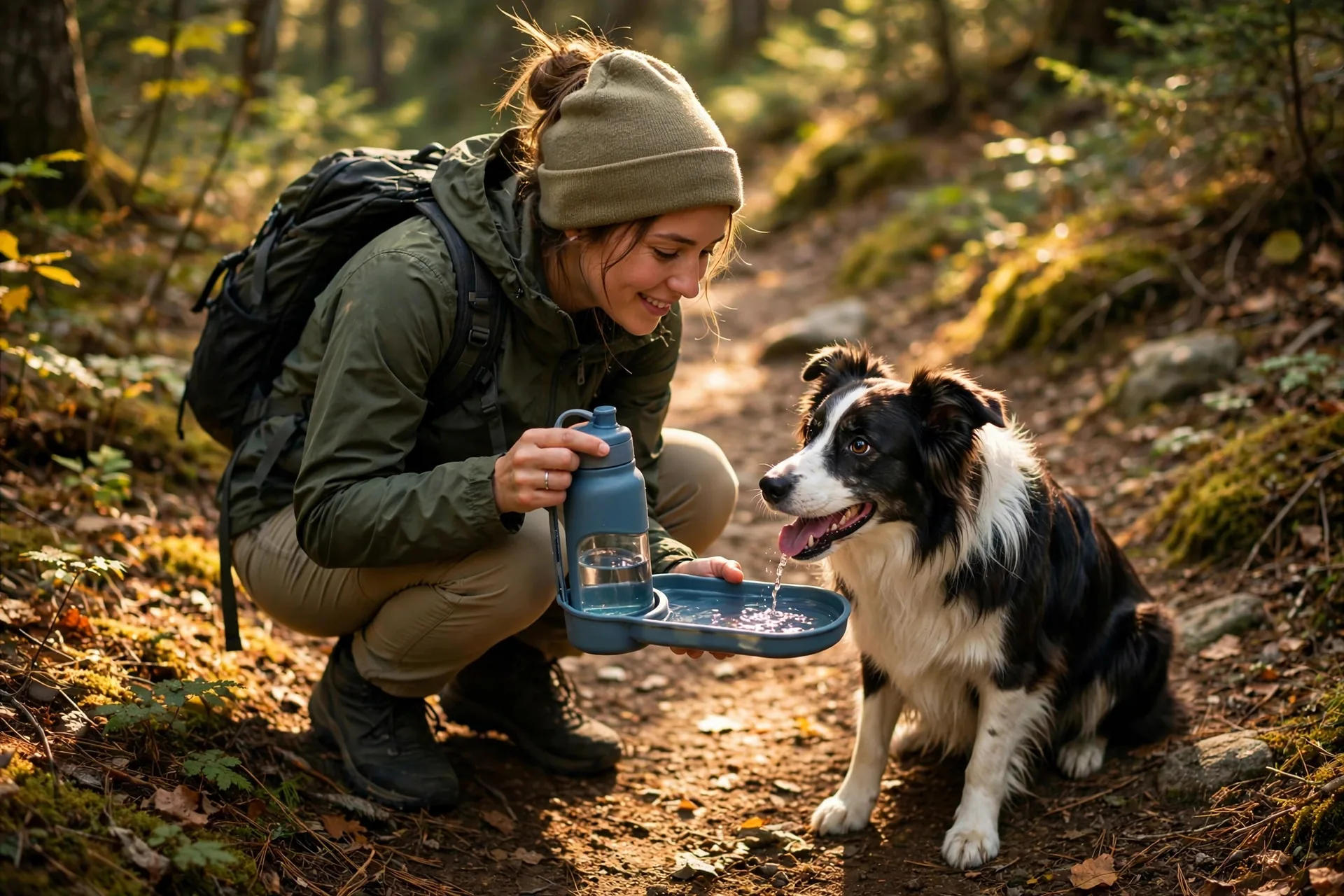
Dog Travel Water Bottles: What Actually Works on Hikes and Road Trips
Leak-proof, one-hand operation, enough capacity for the trail — here's what separates a good dog travel bottle from a soggy backpack.