Quick verdict
Salted sidewalks are the real winter enemy for paws — not just the cold. For everyday walks on treated pavement, a paw wax like Musher's Secret forms a breathable barrier most dogs tolerate far better than booties. For deep snow, fresh rock salt, or pavement below about 15°F, booties like the QUMY 4-pack give protection no wax can match. Either way, the routine matters more than the product: protect before the walk, rinse or wipe after, and keep the fur between the pads trimmed all winter.
The real-life scenario
It's mid-January, the first week the city has really salted the sidewalks. Halfway around the block, your dog starts the three-legged hop — lifting one paw, then another, chewing at them the moment you're home. The pads look red and rough. That evening you learn rock salt and many chemical de-icers sting cracked skin, and some are unsafe for dogs to lick off.
This is the part of dog ownership nobody warns you about in October. Winter paw care isn't complicated, but it is a system: what goes on the paws before the walk, what comes off after, and the small maintenance habits that keep pads resilient from December through March.
How to choose
Start with the wax-or-booties decision. For most dogs on most winter days — slushy sidewalks, light salt, temps in the 20s and 30s — a paw wax is the path of least resistance. Musher's Secret is the category classic: a food-grade wax blend (per manufacturer specs) that you rub into the pads before the walk, forming a breathable barrier against salt and ice. Dogs accept it because it doesn't change how their feet feel; there's no break-in period, no funny walk, no booties kicked off in a snowbank. The honest tradeoff: wax needs reapplying on long outings, and it can leave waxy smudges on floors right after application. One tin lasts a long winter, which is part of its appeal.
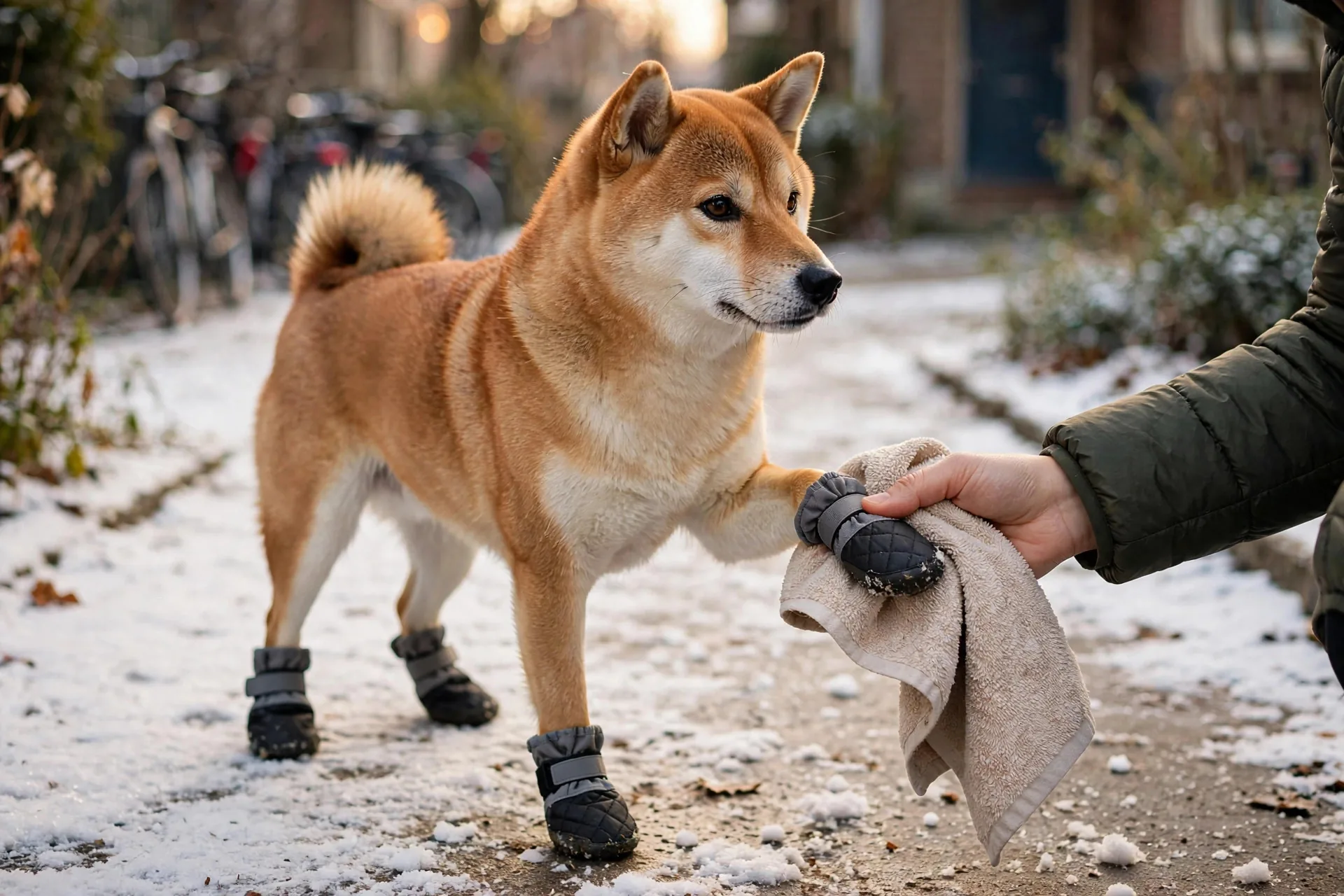
Booties are for the conditions wax can't handle: fresh piles of rock salt, chemically treated parking lots, deep wet snow that packs into ice balls between the toes, and truly brutal cold. The QUMY boots (sold as a 4-pack) hit the sweet spot for first-time bootie buyers: water-resistant fabric, rugged anti-slip soles, and reflective straps for dark winter evenings. Expect a break-in period — the first indoor fitting usually produces the famous high-stepping funny walk, which is completely normal. Size them like shoes: measure paw width with the dog standing (weight spreads the paw) and size down if between sizes, since loose booties just fall off in snowdrifts. Fit them snugly at home with treats, take a short walk, and check the straps after ten minutes.
Build the after-walk routine. This is the half people skip. When you come inside: wipe or rinse paws with warm (not hot) water to remove salt and de-icer, check between the toes for packed ice, then dry thoroughly — damp paws crack faster. Keep a towel and treats right inside your door so the wipe-down becomes automatic. If you're setting up that entryway zone, our washable rugs guide covers a mud-catching landing area that makes the routine painless.
Trim the fur between the pads. Long toe fur is where ice balls form — the painful clumps that make dogs limp mid-walk. A quick trim with blunt-tipped scissors every few weeks prevents most of them. Keeping nails at a good length helps the whole paw sit correctly on ice, too — our nail trimming guide covers grinders versus clippers.
Make your own property salt-safe. Your dog's exposure starts at your front steps. Swap your home de-icer for a pet-safe formula, and even on "clean" days give paws a quick wipe — fine salt dust builds up over a season.
What not to overpay for
Skip the "paw care kits." Bundles with five products — a balm, a separate moisturizer, wipes, a brush, and a spray — solve a problem you don't have. One good wax doubles as both barrier and moisturizer for cracked pads; a damp towel replaces the wipes. Buy the kit and four of the five items gather dust.
Don't subscribe to single-use paw wipes. They're a monthly line item for something a washable towel does just as well. Save the money for the wax or the booties.
Avoid designer booties on your first pair. Rubber-soled basics with secure straps protect just as well, and first pairs take abuse while your dog learns. Upgrade later if you become serious winter hikers.
Paw Wax by Musher's Secret
Best for: Winter walks and salty sidewalks
- Food-grade wax blend per manufacturer specs
- Forms breathable barrier per brand claim
- Used by sled-dog teams per brand claim
What we like
- Dogs tolerate it better than booties
- Protects against salt and ice
- A tin lasts a long winter
Tradeoffs
- Waxy residue on floors right after application
- Needs reapplying on long outings
Based on published specifications · Last checked 2026-10-08
Dog Boots (4-pack) by QUMY
Best for: Snow, ice, and hot pavement
- Water-resistant fabric per product specs
- Reflective straps
- Rugged anti-slip soles
What we like
- Real protection where wax isn't enough
- Stay on better than cheap alternatives
- Reflective for night walks
Tradeoffs
- Dogs need a break-in period (funny walk at first)
- Sizing between sizes can be tricky
Based on published specifications · Last checked 2026-10-08
FAQ
Do dogs really need booties, or is paw wax enough?
For typical winter conditions — salted but shoveled sidewalks, temps above the mid-teens — wax is enough for most dogs, based on how these products are designed to be used. Booties earn their place when conditions get extreme: heavy chemical de-icer, deep snow, sub-zero pavement, or a dog whose pads are already cracked and sore. Plenty of owners use both — wax for mild days, booties for the rough ones.
How do I get my dog to accept booties?
Start indoors, one boot at a time, with high-value treats — build the association that booties equal good things. The exaggerated high-step walk is normal and fades fast. Most dogs adjust within a few short sessions.
Is sidewalk salt dangerous if my dog licks it off their paws?
Some de-icing chemicals can cause stomach upset if ingested, which is exactly why you wipe paws yourself instead of letting the dog lick them clean. If your dog shows vomiting, excessive drooling, or lethargy after exposure, call your vet. Pet-safe de-icer on your own property removes one big source of exposure.
Can I just use coconut oil instead of paw wax?
In a pinch, coconut oil moisturizes dry pads — but it rubs off quickly and won't stand up to a salty walk the way a wax blend will. Use oil for soothing dry pads indoors; use wax before walks.
My dog's pads are already cracked. What now?
Keep walks short and on clean snow rather than salted pavement while they heal, and apply balm after the post-walk rinse. Booties can protect cracked pads on necessary walks. If cracks are deep, bleeding, or not improving, that's a vet visit — not a product problem.
The bottom line
Winter paw care is three habits, not one miracle product: protect before the walk with wax or booties, rinse after, and keep toe fur trimmed. Musher's Secret covers everyday cases with zero fuss; QUMY booties cover the brutal ones. Make the routine automatic, and your dog's paws will make it to spring in good shape.
More in Grooming & Care
Dog Dental Care: Toothbrushes vs. Dental Chews
Brushing removes plaque directly; chews win on compliance. We compare toothbrushes and dental chews honestly — and explain why most households should use both.
Dog Shampoos for Sensitive Skin: Ingredients That Matter
Oatmeal, aloe, pH balance — how to read a dog shampoo label, which ingredients soothe itchy skin, and when itching is a vet visit.
Nail Grinders vs. Clippers: Trimming Nails Without the Drama
Grinders are gradual and forgiving; clippers are fast and final. How to choose based on your dog's nerves, nails, and your confidence.