Quick verdict
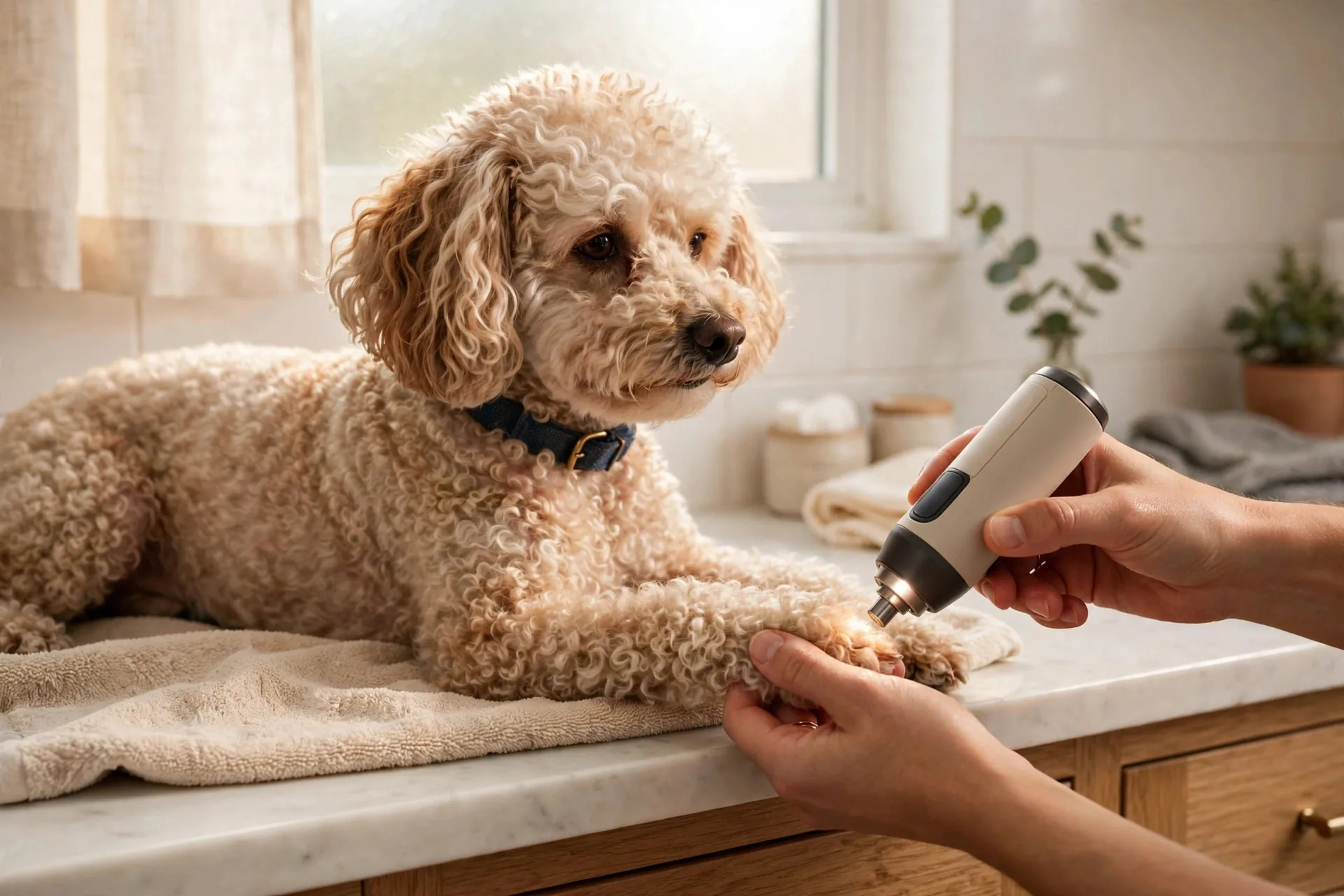
Nail grinders file nails down gradually — forgiving, precise, and ideal for nervous dogs or dark nails where you can't see the quick. Clippers cut in one snip — fast and final, best for calm dogs and confident owners. There's no universally better tool, only the better tool for your dog's temperament and your own confidence. When in doubt, start with the grinder.
The real-life scenario
Your dog's nails are clicking on the kitchen tile — that unmistakable tick-tick-tick that means trims are overdue. You dig out the clippers, and your dog, who was happily napping two minutes ago, is suddenly very interested in the far corner of the house. You remember last time: the flinch, the one cut too deep, the yelp, the styptic powder, and the week of side-eye afterward.
Or maybe you're on the other side of it: the grinder hums, your dog eyes it suspiciously for exactly one session, and then — with treats — learns that the vibration means peanut butter is coming. Ten minutes later the nails are smooth, rounded, and nobody cried. Both tools get the same job done. The question is which experience you and your dog can repeat every two to three weeks without dread.
How they differ
Speed and finality. Clippers are fast: position, snip, done — each nail takes seconds. That speed is their whole appeal and their whole risk. One confident snip past the quick and you've got a bleeding nail, a scared dog, and a training setback. Grinders are gradual: they file the nail down layer by layer, so you approach the quick slowly and stop when the nail looks right. There's almost no scenario where a grinder causes a sudden bleed.
Forgiveness. This is the grinder's defining trait. Because it removes material incrementally, mistakes develop slowly enough to notice — you see the nail getting short before you reach the quick. Clippers demand judgment in a single motion: you have to know where the quick is before you cut. For dark nails, where the quick is invisible, that's genuine guesswork. Grinders were practically designed for the dark-nailed, nail-shy dog.
The sound factor. Grinders vibrate and hum. Some dogs are unbothered; some find the sensation on their toes strange at first. Most desensitize within a few sessions if you introduce the tool gradually — let them sniff it off, touch the handle to a paw, treat generously, then grind one nail and quit while you're ahead. Clippers are silent but sudden: the snap of the cut startles some dogs more than a grinder ever would.
Time and effort. Grinders take longer per nail and a full set is a ten-to-fifteen-minute project; they also need charging between sessions. Clippers need no batteries and finish the job in minutes when the dog cooperates.
| Nail Grinders | Nail Clippers | |
|---|---|---|
| Best for | Nervous dogs, dark nails, cautious owners | Calm dogs, light nails, confident owners |
| Watch out for | Vibration takes desensitization; sessions take longer | One deep cut can set training back weeks; blades dull over time |
| Price tier | Moderate; rechargeable models need no ongoing cost | Budget-friendly; replace blades when they dull |
| Nail finish | Smooth and rounded, no filing needed | Fast cut, may need a file for sharp edges |
| Learning curve | Gentle — mistakes develop slowly | Steeper — judgment required in a single snip |
The case for starting with a grinder. If you're new to nail trims, nervous yourself, or working with a dog that already has bad associations, the grinder is the safer on-ramp. Tools like the Casfuy Dog Nail Grinder — quiet motor, USB rechargeable, with a light so you can see what you're doing — are built around exactly this use case: low noise, gradual filing, and visibility. You can always switch to clippers later once the dog trusts the routine.
The case for clippers. If your dog stands calmly, has light nails where the quick is visible, and you know how to make small, conservative cuts, clippers like the Boshel Dog Nail Clippers — with a safety guard to limit how much you can take off — are fast, effective, and cheap to maintain. Keep styptic powder on hand regardless; even experts nick a quick occasionally.
Dog Nail Grinder by Casfuy
Best for: Nervous dogs and dark nails
- Low-noise motor per manufacturer specs
- USB rechargeable
- LED light and multiple speed settings
What we like
- Gradual filing avoids cutting the quick
- Quieter than many rotary tools
- Good for dogs scared of clippers
Tradeoffs
- Takes longer than clippers per nail
- Needs charging between sessions
Based on published specifications · Last checked 2026-10-08
Dog Nail Clippers by Boshel
Best for: Quick trims on calm dogs
- 3.5mm stainless steel blades per product specs
- Safety guard to avoid over-cutting
- Ergonomic non-slip handles
What we like
- Fast when the dog cooperates
- Safety stop reduces quick-cut risk
- Includes a nail file
Tradeoffs
- One bad cut can set training back weeks
- Blades dull eventually — replace
Based on published specifications · Last checked 2026-10-08
FAQ
How often should I trim my dog's nails?
Every two to four weeks for most dogs, depending on how much their nails wear down naturally on pavement. If you hear clicking on hard floors, they're overdue. Regular small trims also train the quick to recede, making each future trim easier.
What do I do if I cut the quick?
Stay calm — your reaction matters more than the bleed. Apply styptic powder (or cornstarch in a pinch) with gentle pressure until it stops, which it will. Then stop the session on a good note with a treat. One nick isn't a disaster; panicking and wrestling the dog afterward is what creates lasting fear.
How do I get my dog used to a grinder?
Desensitize in stages over several days. Day one: let the dog sniff the grinder while it's off, treat. Day two: turn it on across the room, treat for calm. Day three: touch the handle (not the spinning head) to a paw, treat. Day four: grind one nail, jackpot treat, done. Build up from there. Rushing this step is the most common mistake.
Can I use a grinder on thick nails?
Yes — grinders handle thick nails well, and arguably better than clippers, since thick nails make quick-judgment harder. Use a higher speed setting and work in short passes so heat doesn't build up on the nail. Take breaks between nails if the grinder head feels warm.
Are nail trims really that important, or can I skip them?
They matter. Overgrown nails change how a dog's foot meets the ground, which changes posture and can cause joint pain over time. They also snag, split, and curl into paw pads. It's one of the highest-value grooming habits you can keep — and pairing it with paw care rounds out the routine.
The bottom line
Grinders are gradual and forgiving; clippers are fast and final. Nervous dog, dark nails, or shaky hands — reach for the grinder. Calm dog, visible quicks, steady hands — the clippers will serve you well. Either way, trim little and often, keep styptic powder nearby, and build the routine with treats. The drama is optional.
More in Grooming & Care
Dog Dental Care: Toothbrushes vs. Dental Chews
Brushing removes plaque directly; chews win on compliance. We compare toothbrushes and dental chews honestly — and explain why most households should use both.

Dog Shampoos for Sensitive Skin: Ingredients That Matter
Oatmeal, aloe, pH balance — how to read a dog shampoo label, which ingredients soothe itchy skin, and when itching is a vet visit.
Deshedding Tools for Shedding Season: A Practical Look
Shedding season turns sofas into fur coats. How deshedding tools work, which coat types they suit, and how to use them safely.