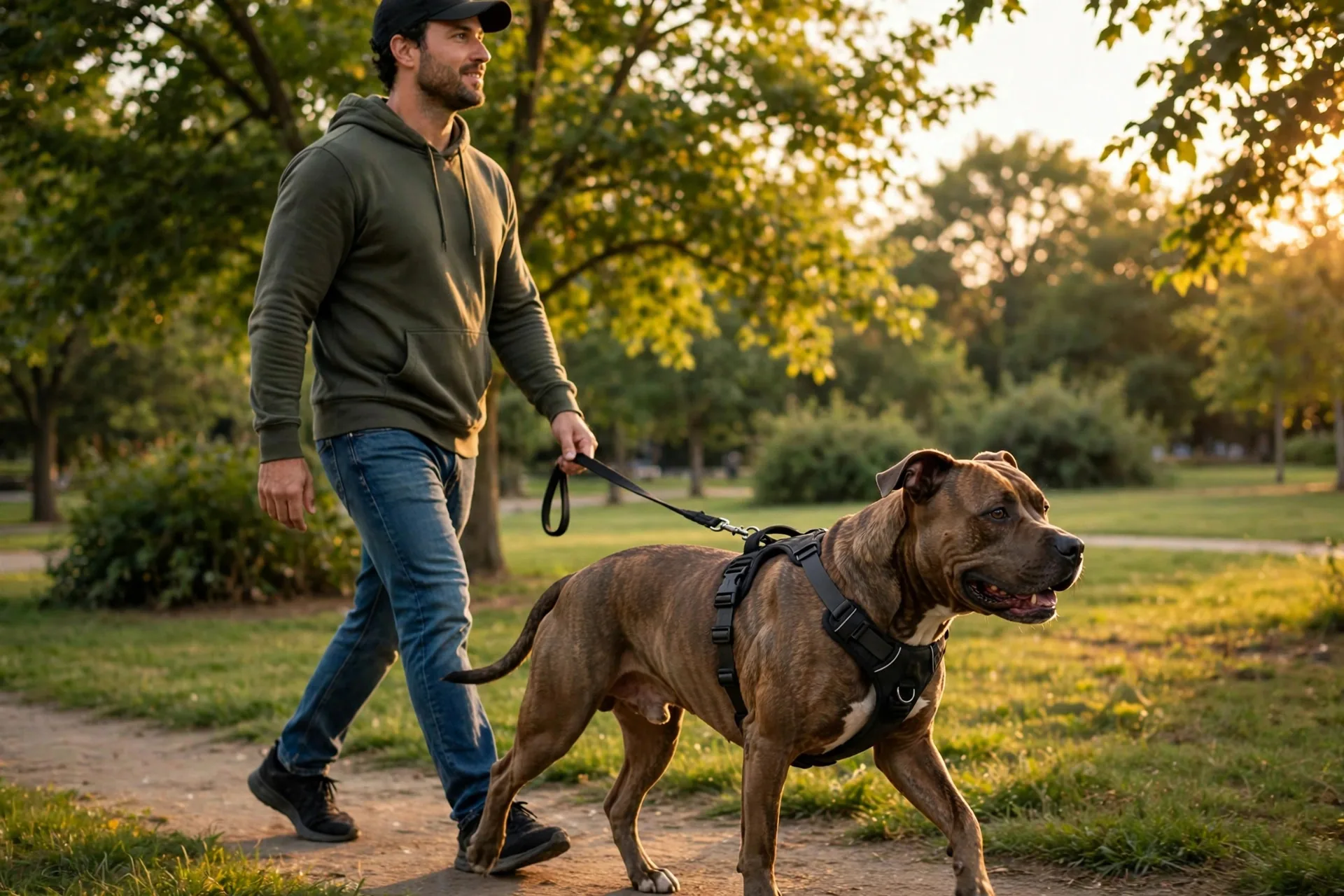
Quick verdict
A no-pull harness should steer your dog, not squeeze them — the difference comes down to where the leash clips and how the straps sit. For strong, determined pullers, a dual-clip harness with front and back attachment points (like the 2 Hounds Design Freedom No-Pull Harness) gives the most steering control. For mild pullers, a simple front-clip design such as the PetSafe Easy Walk is usually plenty. Whatever you pick, fit matters more than brand: measure your dog's girth, and check behind the front legs for rubbing after the first few walks.
The real-life scenario
It's 6:45 on a Saturday morning and you're already apologizing — to the neighbor whose sprinkler your dog just lunged at, to your shoulder, and to the coffee now decorating your shirt. Every squirrel is a five-alarm emergency. The flat collar is doing nothing except making you wince, and someone at the dog park said a no-pull harness would fix everything. So you buy one, and on the first walk the straps ride up into your dog's armpits, the chest clip twists sideways, and your dog pulls exactly as hard as before. That's the trap: a no-pull harness is a steering tool, not a magic fix, and the wrong fit turns it into an expensive source of chafing. Chosen and fitted well, it changes the physics of the walk — a lunge redirects into a turn instead of a yank, and your arm finally gets a break.
How to choose
Start with the clip placement, not the brand. A front chest clip is the core of the no-pull idea: when your dog lunges, the leash turns their chest back toward you, which takes the power out of the pull without touching the throat. A back clip alone lets a committed puller lean into the harness like a sled dog — perfectly fine for a polite walker, useless for a dog who drags. Dual-clip harnesses, such as the Freedom No-Pull, give you both: clip front and back together for maximum steering on hard days, or just the back clip when your dog is walking nicely. If your dog is only a mild puller, a single front clip like the one on the PetSafe Easy Walk or the Ruffwear Front Range keeps things simple.
Look at the strap lining and padding. The place a harness fails is almost always behind the front legs, where thin webbing saws back and forth with every step. Harnesses with padded chest and belly panels (the Front Range has these) or soft strap linings (the Freedom's Swiss-velvet lined straps are designed to reduce chafing) make a real difference on longer walks. Unlined nylon is fine for short, easy outings, but if your walks run 45 minutes, lining matters.
Count the adjustment points. Dogs are not standard-issue: deep-chested greyhounds, barrel-bodied bulldogs, and everything between. Four points of adjustment let you dial in the girth, chest, and belly straps independently so the harness doesn't migrate. Measure around the widest part of your dog's ribcage and check the brand's size chart — harness sizing runs specific, and guessing is the number-one cause of returns.
Pair it with training, not instead of it. The harness buys you leverage today; reward-based training builds the habit for tomorrow. Stop when the leash goes tight, reward your dog for checking in, and the harness becomes a backup instead of a crutch. Our front-clip vs. back-clip comparison breaks down the pulling physics in more depth.
What not to overpay for
"Anti-pull" marketing vs. actual mechanics. Every no-pull harness works the same way — a front clip that redirects. Fancy trademarked names for that mechanism don't make it stronger. Pay for construction quality and fit, not for a clever label.
More hardware than you need. Two attachment points is the useful maximum for most dogs. Extra clips, rings, and daisy chains add weight and snag points without adding control.
Premium padding for a casual walker. If your dog pulls mildly and your walks are 20 minutes around the block, you don't need the most heavily engineered harness on the market. A simple, well-fitted front-clip harness leaves money in your pocket and your dog won't know the difference. Save the upgrade for when the miles or the pulling increase.
A substitute for the right leash. A harness is half the system. A standard 6-foot leash with a traffic handle — like the ones in retractable vs. standard leashes — gives you far more control than any harness paired with a 16-foot retractable line.
Freedom No-Pull Harness by 2 Hounds Design
Best for: Strong, determined pullers
- Front and back attachment points per manufacturer specs
- Swiss-velvet lined straps reduce chafing
- Optional double leash for two-point control
What we like
- Two-point steering gives real control
- Soft lining prevents armpit rubbing
- Sturdy construction for big dogs
Tradeoffs
- Two-clip setup has a learning curve
- Costs more than single-clip harnesses
Based on published specifications · Last checked 2026-10-08
Easy Walk Harness by PetSafe
Best for: Budget-conscious owners of mild pullers
- Front-chest leash attachment per manufacturer specs
- Quick-snap buckles
- Available in multiple sizes
What we like
- Affordable entry into no-pull design
- Steers from the chest to discourage pulling
- Easy on/off
Tradeoffs
- Chest strap can loosen and needs re-tightening
- Nylon webbing is basic vs premium padding
Based on published specifications · Last checked 2026-10-08
Front Range Harness by Ruffwear
Best for: Everyday walks, all dog sizes
- Padded chest and belly panels per manufacturer specs
- Four points of adjustment
- Two leash attachment points (front and back)
What we like
- Front clip helps redirect mild pulling
- Even pressure distribution, no throat strain
- Reflective trim for low-light walks
Tradeoffs
- Sizing runs specific — measure girth carefully
- Premium price vs basic harnesses
Based on published specifications · Last checked 2026-10-08
FAQ
Will a no-pull harness hurt my dog's shoulders?
A properly fitted no-pull harness shouldn't. The concern comes from designs whose chest strap sits across the shoulder joint and restricts movement, or from harnesses worn too tight. Look for a Y-shaped front that keeps the shoulders free, fit it so you can slide two fingers under every strap, and watch your dog's gait — if they're short-striding in front, something is off. Any harness, no-pull or not, should come off when the walk is over.
Front clip or dual clip — which does my puller need?
For a mild puller who just forges ahead, a single front clip is enough. For a strong, determined puller — the kind who lunges at squirrels with full body weight — a dual-clip harness gives you noticeably more control, especially used with a two-point leash clipped to both rings. You can always start with a simple front-clip design and upgrade if your dog overpowers it.
Can my dog still pull while wearing a no-pull harness?
Yes. No harness physically prevents pulling; it redirects force so pulling is less rewarding and easier to manage. If your dog pulls just as hard as on a collar, the fit is likely wrong — often too loose, letting the chest clip slide sideways — or the behavior needs training. Think power steering, not autopilot.
How tight should the harness be?
Snug but not compressing: two fingers should fit flat under each strap, and the harness shouldn't rotate around your dog's body when they move. Check the fit again after the first week — straps settle and loosen with wear, which is why the chest strap on simpler designs needs periodic re-tightening. Re-measure if your dog gains or loses noticeable weight.
The bottom line
The right no-pull harness turns a lunge into a turn and gives your arm a fighting chance — the wrong one just adds chafing to the pulling. Clip placement first, strap comfort second, fit above all, and training alongside. Get those four right and the morning walk stops being a negotiation.
More in Walk Gear
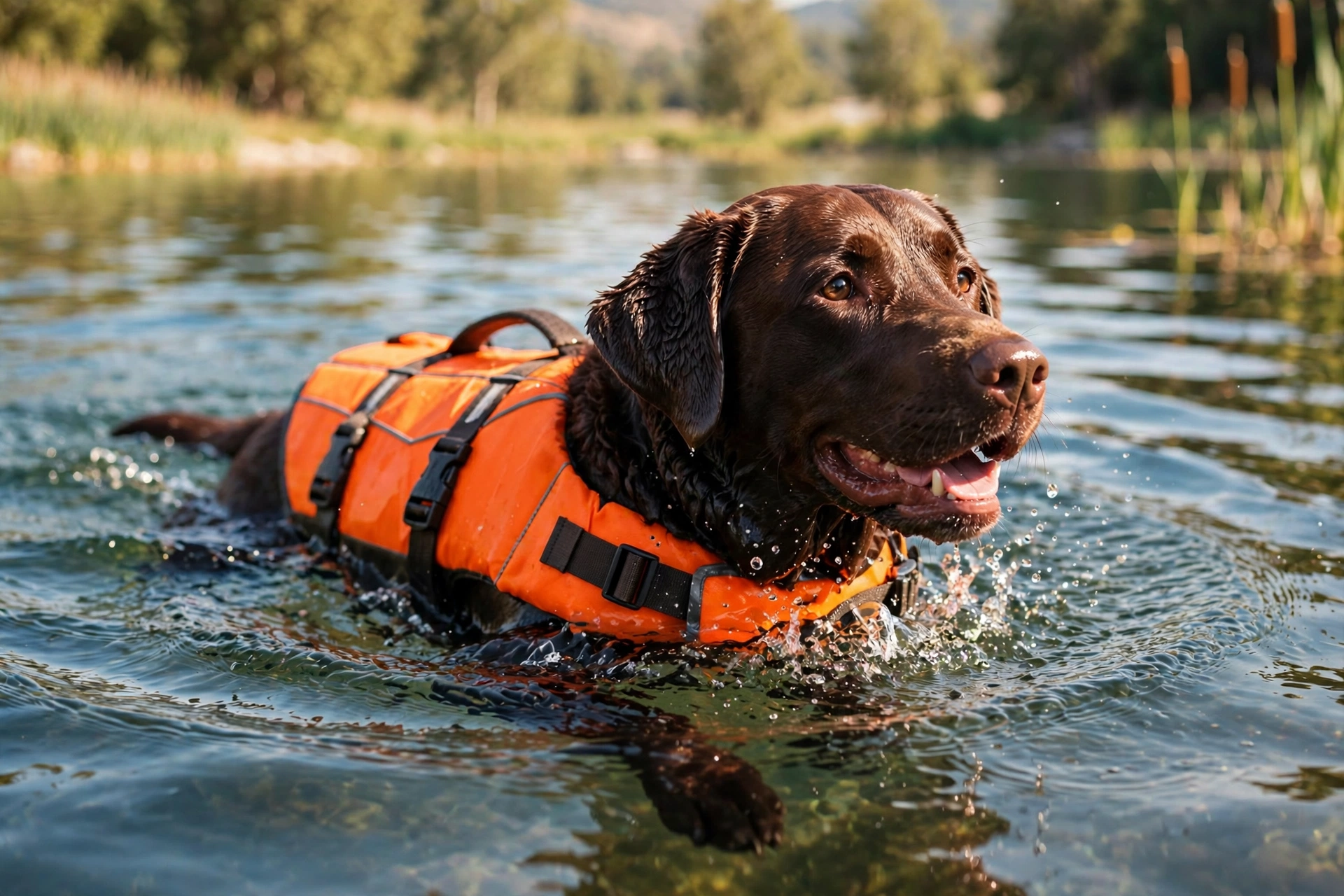
Dog Life Jackets: What Matters for Swimming Safety
Most dogs can swim, but not all swim well. Fit, buoyancy distribution, and a sturdy grab handle are what separate a real life jacket from a costume.
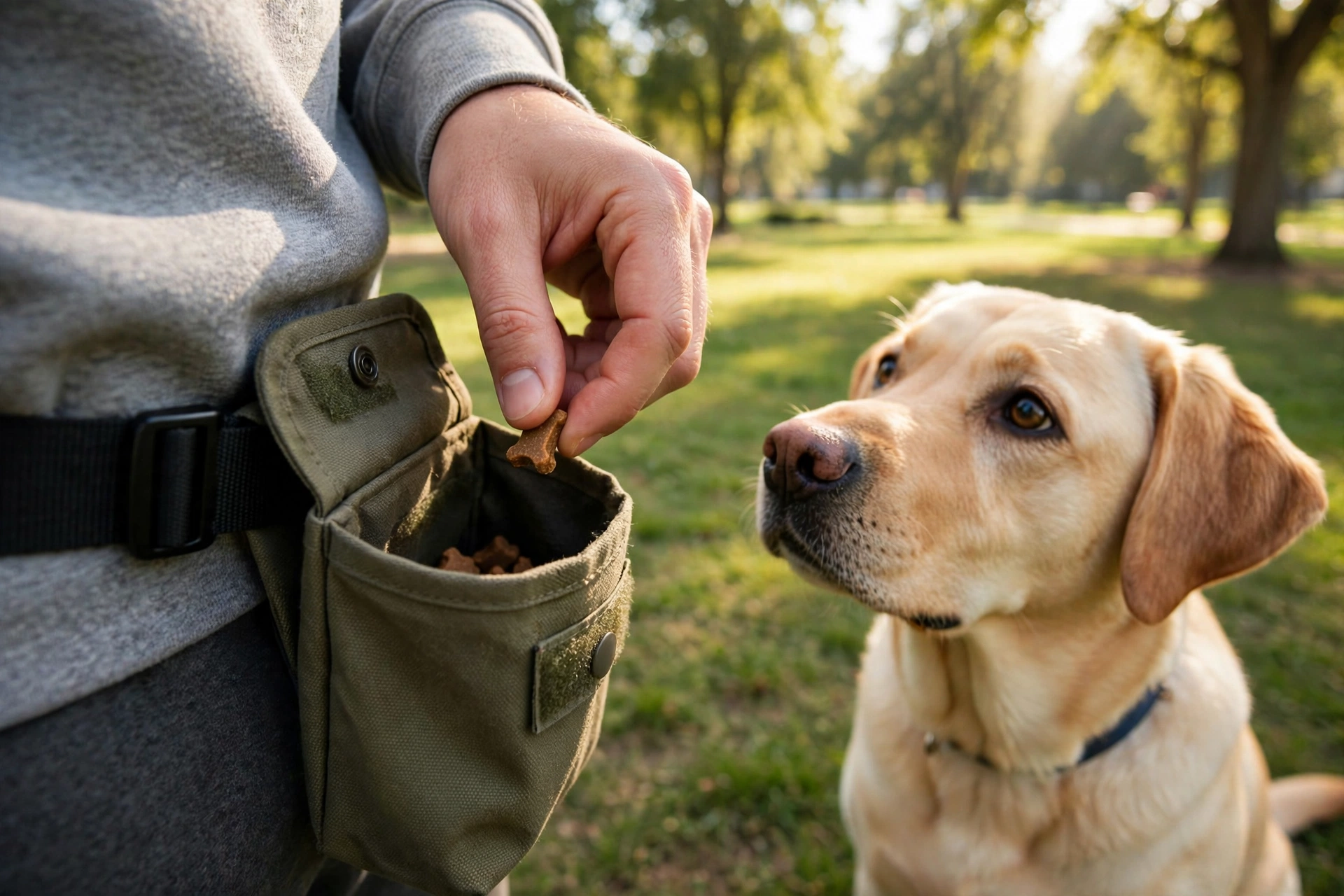
Treat Pouches for Training: What Trainers Actually Use
Trainers wear one on every session for a reason: a treat pouch fixes reward timing. What separates a good pouch from a pocket.
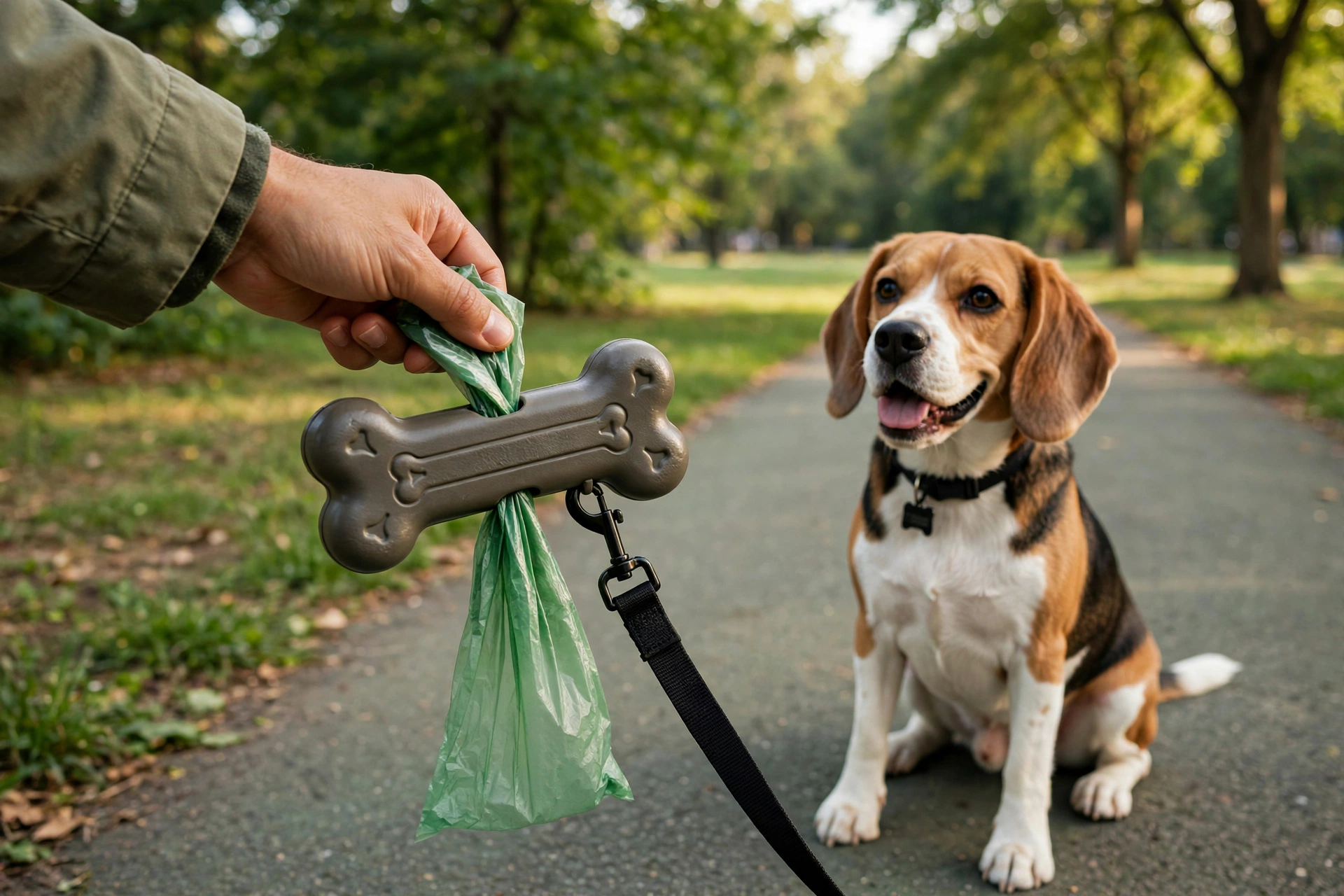
Biodegradable Poop Bags and Dispensers
Certified compostable versus merely biodegradable, scented versus unscented, and the dispenser that keeps bags on the leash: the honest comparison for 700+ bags a year.