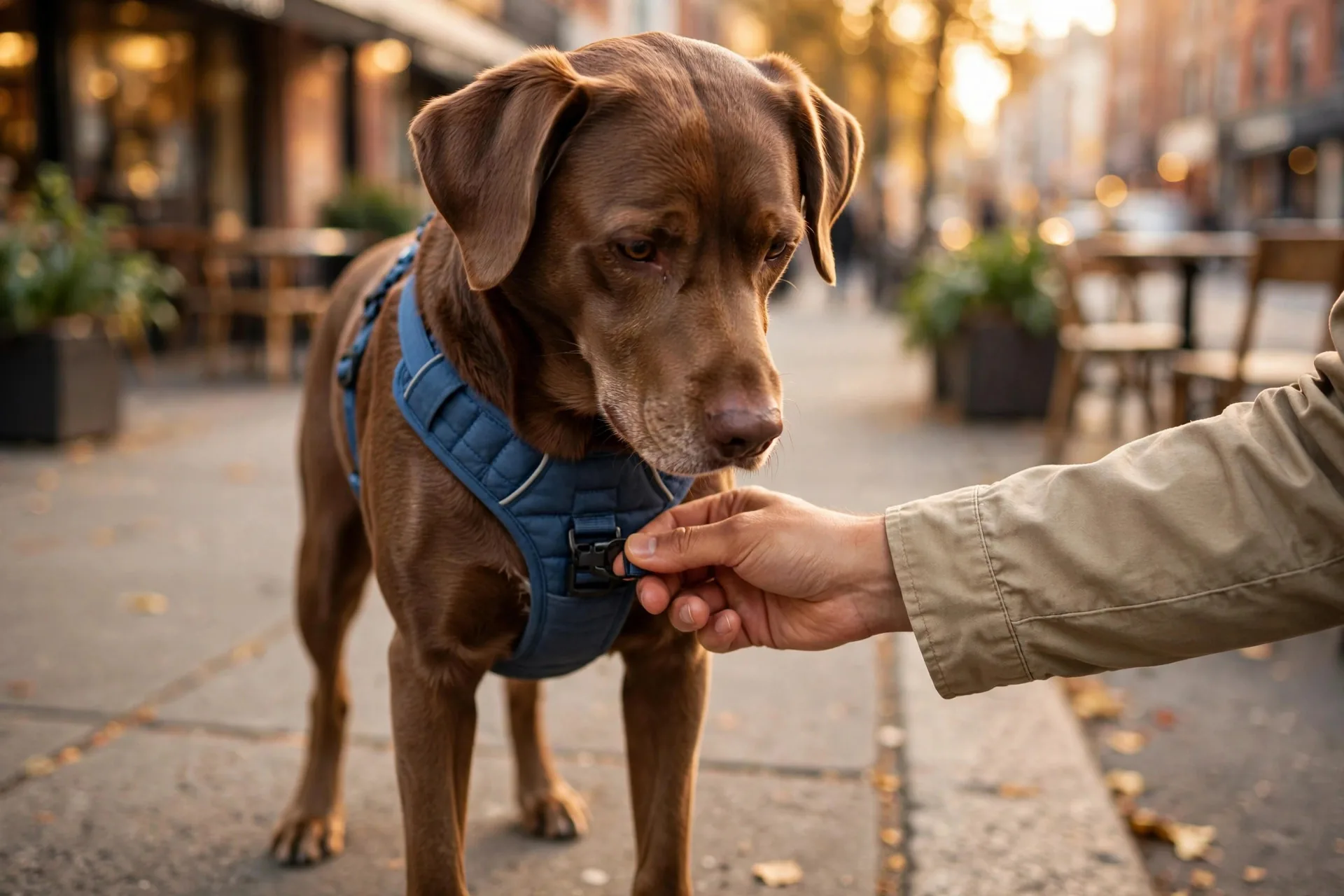
Quick verdict
Neither clip position "stops" pulling on its own — training does that. But they change the physics differently: a front (chest) clip redirects your dog's forward momentum sideways when they lunge, which discourages pulling without neck pressure. A back clip is more comfortable for easy walkers and gives you less steering. If your dog pulls, start with a front clip or a dual-clip harness that offers both. If your dog already walks nicely, a back clip is simpler and snag-free.
The real-life scenario
You're at the park entrance. Your 55-pound mutt spots a squirrel and launches — and because your leash is clipped to the back of the harness, you're now waterskiing behind a dog. The harness did its job in one sense: no choking, no neck strain. But it also functioned as a very effective sled harness, converting all of your dog's enthusiasm into forward propulsion with you as the cargo.
This is the fundamental tradeoff. A back clip sits behind the dog's center of gravity, so pulling just works — the dog leans in and physics rewards it. A front clip attaches at the chest, ahead of the center of gravity: when the dog lunges, the leash turns their front end sideways instead of letting them plow forward. Pulling suddenly stops paying off.
How they differ
Front clip: the steering option. The leash attaches to a ring on the dog's chest. When the dog pulls, the attachment point swings their front sideways — imagine someone gently guiding your shoulder to turn you. This redirects rather than restrains, which is why front-clip designs like the PetSafe Easy Walk or the front attachment on the Ruffwear Front Range are the standard recommendation for mild to moderate pullers. The pressure distributes across the chest, never the throat.
The honest downsides: the leash hangs across the dog's front legs and can tangle on sharp turns — you learn to manage the slack. Some dogs dislike the chest pressure at first, and a poorly fitted front-clip harness can ride up into the armpits. Fit matters more here than with back clips, which is why adjustability counts: the Blue-9 Balance Harness, with six points of adjustment, exists largely to solve the fit problems that make front clips uncomfortable.
Back clip: the comfort option. The leash attaches between the shoulder blades — the natural, snag-free position. Nothing crosses the legs, nothing needs managing, and most dogs accept it instantly. For dogs that already walk politely, this is the right answer; adding steering hardware to a dog that doesn't pull is pointless complexity. It's also the better choice for long-line work, canicross-style activities, and car restraint setups.
The downside is the sled-dog problem described above: for a committed puller, a back clip is an invitation. It doesn't cause pulling — that's a training gap — but it does nothing to discourage it mechanically.
The third option: both. Dual-clip harnesses — the Ruffwear Front Range has front and back rings, the Blue-9 Balance has three attachment points — let you use the front clip for training walks and the back for relaxed ones, or both at once with a double-ended leash for a strong dog. If you're unsure which camp your dog falls into, dual-clip is the safe buy because you don't have to guess.
| Front clip | Back clip | |
|---|---|---|
| Best for | Mild to moderate pullers, training loose-leash walking | Polite walkers, long lines, car restraint |
| How it steers pulling | Redirects forward momentum sideways; pulling stops paying off | Doesn't — dog can lean in and pull like a sled dog |
| Watch out for | Leash can tangle in front legs; fit must be dialed in | Gives you no mechanical help with a puller |
| Comfort | Some dogs dislike chest pressure at first | Most dogs accept it immediately |
| Best paired with | Treat-reward training for loose-leash walking | A no-pull harness guide if pulling persists |
A quick note on what front clips are not: they're not a substitute for training, and cranking any harness tighter to "control" the dog is a misuse. If your dog is a serious, determined puller rather than an enthusiastic one, read our no-pull harness guide — two-point control and proper fit become the priorities there.
Front Range Harness by Ruffwear
Best for: Everyday walks, all dog sizes
- Padded chest and belly panels per manufacturer specs
- Four points of adjustment
- Two leash attachment points (front and back)
What we like
- Front clip helps redirect mild pulling
- Even pressure distribution, no throat strain
- Reflective trim for low-light walks
Tradeoffs
- Sizing runs specific — measure girth carefully
- Premium price vs basic harnesses
Based on published specifications · Last checked 2026-10-08
Balance Harness by Blue-9
Best for: Escape artists and hard-to-fit dogs
- Six points of adjustment per manufacturer specs
- Three leash attachment points
- Y-shaped front keeps shoulders free
What we like
- Highly adjustable — fits deep chests and slim waists
- Doesn't restrict shoulder movement
- Difficult for Houdini dogs to back out of
Tradeoffs
- More straps to adjust initially
- Minimal padding vs padded sport harnesses
Based on published specifications · Last checked 2026-10-08
FAQ
Will a front-clip harness teach my dog not to pull?
Not by itself. It changes the physics so pulling is less rewarding, which makes your training more effective — but the learning still comes from rewarding the dog for walking near you. Think of the front clip as training wheels: helpful, not a replacement for learning to ride.
Why does the leash keep getting tangled in my dog's legs?
That's the main annoyance of front clips — the leash drapes across the front legs and can catch during turns. Keep the leash short rather than letting slack pool, and lift gently when turning. Most owners adapt within a week; if it's constant, the harness is probably fitted too loosely.
Is a front-clip harness safe for my dog's shoulders?
A well-fitted front-clip harness distributes pressure across the chest and shouldn't restrict shoulder movement. Problems arise from poor fit — a chest strap riding up into the armpits or a harness that shifts sideways. This is why multi-point adjustability matters: measure your dog's girth carefully and adjust all straps, not just the obvious ones.
Can I use the back clip on a dual-clip harness once my dog stops pulling?
Absolutely — that's the whole point of owning one. Use the front ring while you're training, then switch to the back ring for easy walks once loose-leash habits are solid. Many owners keep the front clip for high-distraction environments (farmers markets, squirrel-heavy parks) and the back for neighborhood loops.
My dog pulls hard even on a front clip. What's next?
First, check the fit — a loose harness negates the steering effect. Second, be honest about whether it's pulling or lunging-reactivity; a reactive dog needs behavior work, not hardware. For strong, committed pullers, a two-point setup (leash clipped to both front and back rings, or a dedicated no-pull design with a double leash) gives meaningfully more control than a single front clip alone.
The bottom line
Choose by your dog's actual behavior, not the behavior you wish they had. Pulls on walks? Front clip — mechanical help while you train. Walks like a dream? Back clip — simpler and snag-free. Unsure, or dealing with a strong dog? A dual-clip harness like the Ruffwear Front Range or the adjustable Blue-9 Balance covers both. The clip is a tool; the training is the fix.
More in Walk Gear
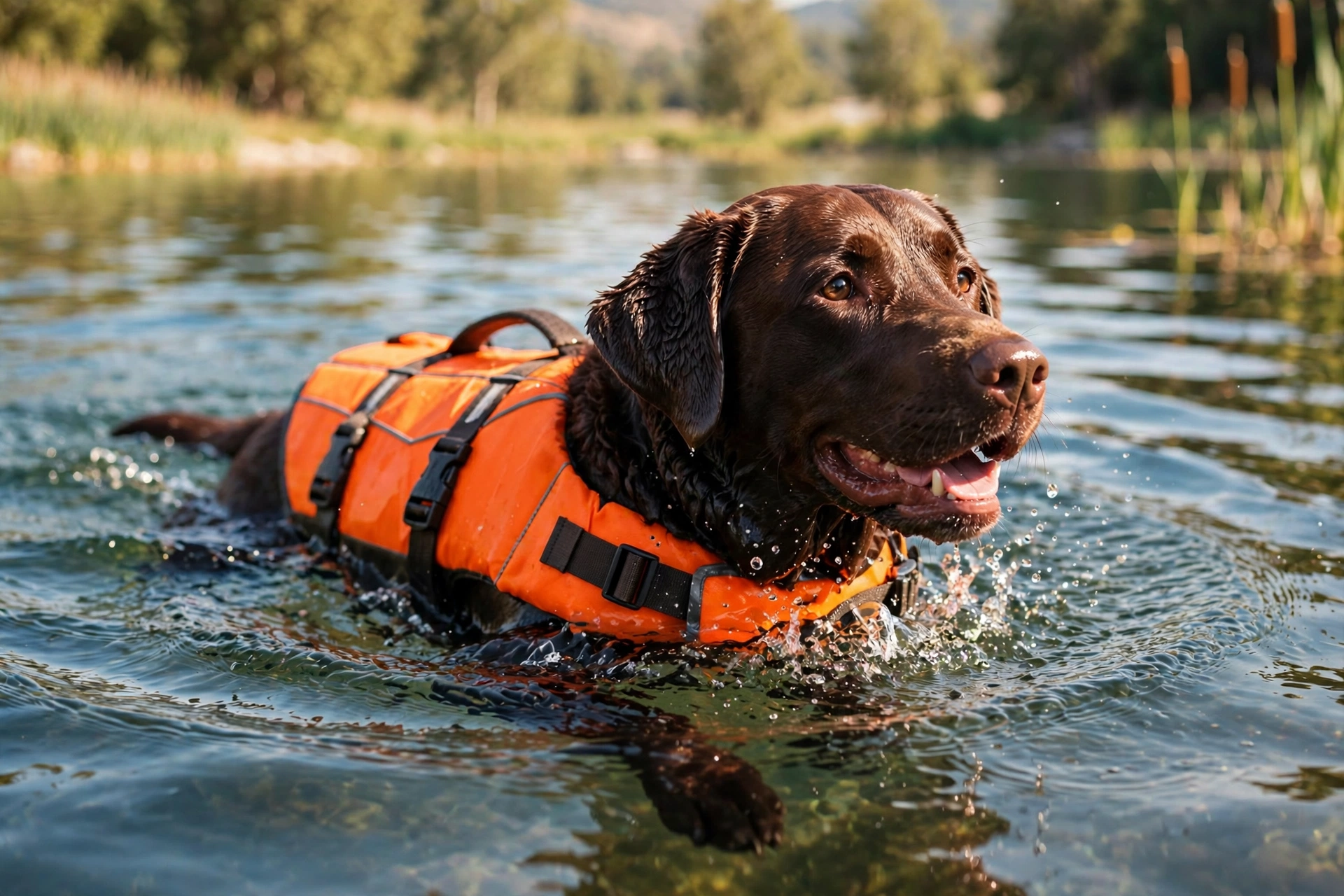
Dog Life Jackets: What Matters for Swimming Safety
Most dogs can swim, but not all swim well. Fit, buoyancy distribution, and a sturdy grab handle are what separate a real life jacket from a costume.
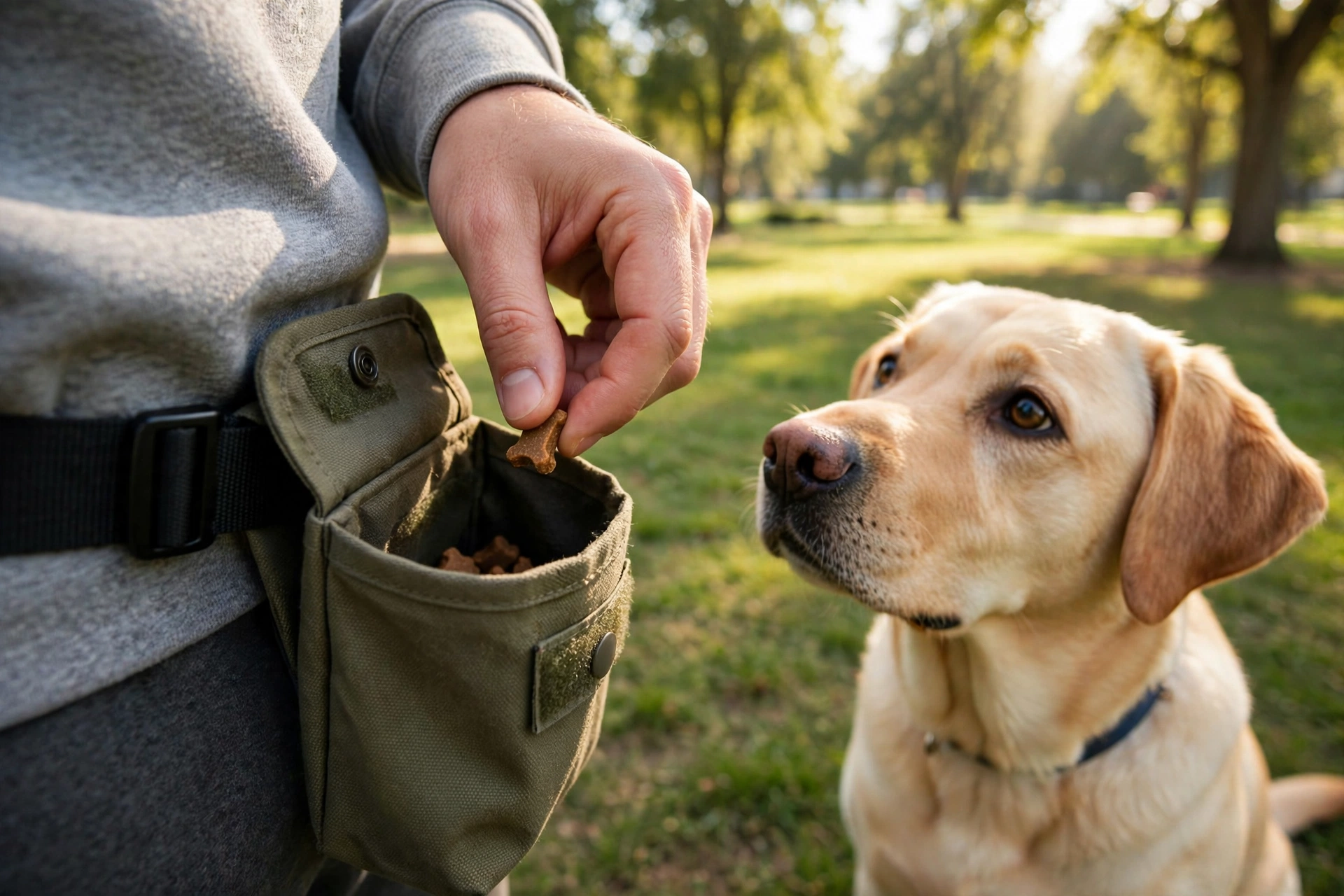
Treat Pouches for Training: What Trainers Actually Use
Trainers wear one on every session for a reason: a treat pouch fixes reward timing. What separates a good pouch from a pocket.
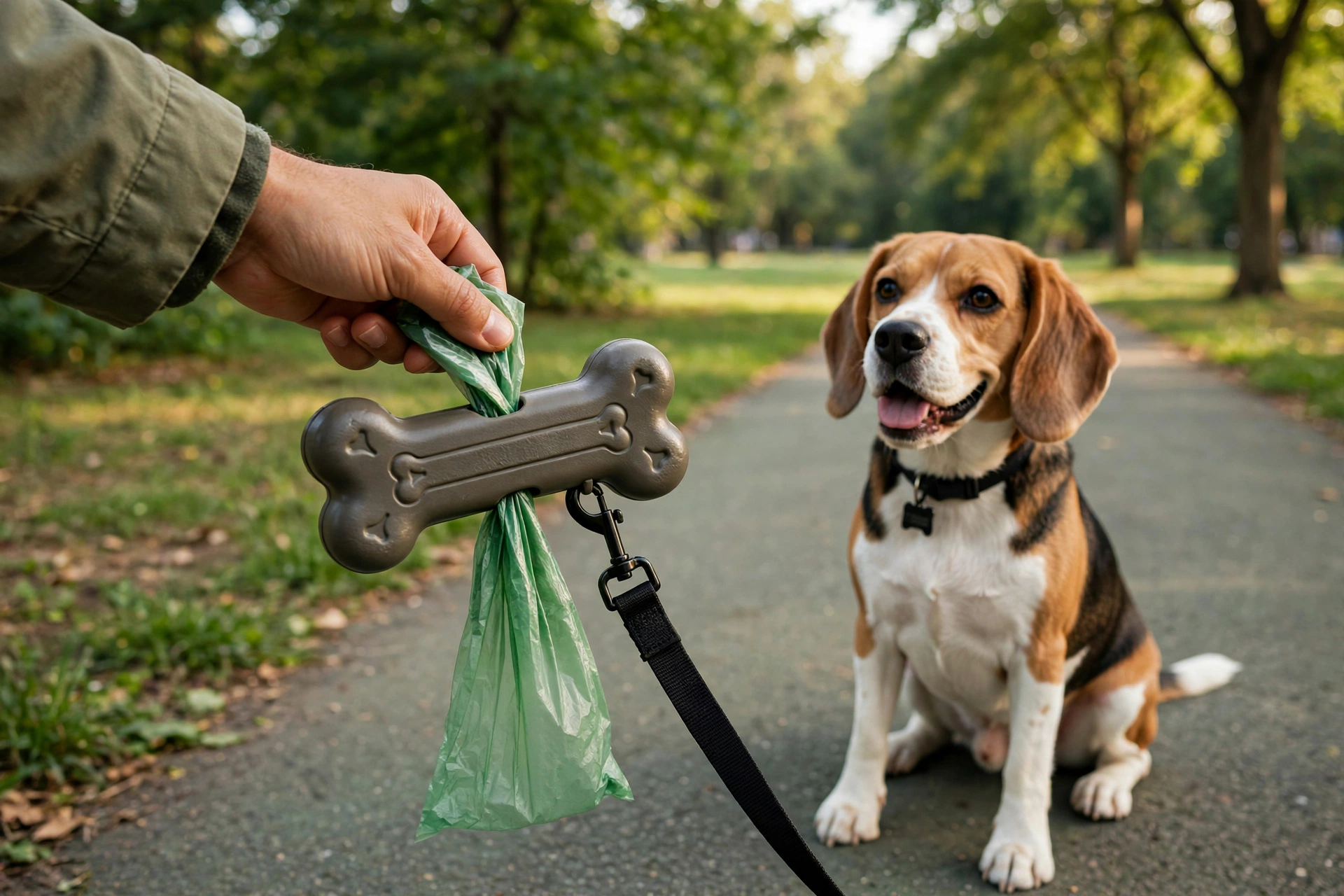
Biodegradable Poop Bags and Dispensers
Certified compostable versus merely biodegradable, scented versus unscented, and the dispenser that keeps bags on the leash: the honest comparison for 700+ bags a year.