Quick verdict
Biodegradable poop bags are worth switching to if you walk your dog daily — which is to say, nearly everyone reading this. They work exactly like conventional bags for the job that matters (picking up, tying off, carrying home) while breaking down far faster in the right conditions. The honest caveat is "the right conditions": most need industrial composting to fully degrade, and a bag tossed in a regular bin in a landfill-lined bag degrades slowly anywhere. Still, for a product you use hundreds of times a year, the better material is the better choice. Pair them with a decent dispenser and the whole system costs little and works every walk.
The real-life scenario
Do the math on a year of dog ownership: two walks a day, a bag per walk, 365 days. That's over 700 bags a year from one dog — a small mountain of plastic that outlives everyone involved by centuries. Conventional poop bags are typically HDPE plastic, and while they're thin, they're still plastic: in landfill conditions they persist for a very long time.
This is the rare environmental swap that asks nothing of you. Biodegradable bags tie, carry, and contain exactly like the bags you're already using. There's no behavior change, no compromise on the walk, no learning curve — you just buy the green box instead of the black one. The dispenser question is equally low-friction: a small holder clipped to the leash means you're never the person doing the pocket-pat-down of doom at the far end of the park, discovering the bags are still on the kitchen counter.
The comparison that matters isn't biodegradable versus conventional in a lab — it's what happens with the hundreds of bags you personally will use this year. Even imperfect degradation beats no degradation at the scale of a dog's lifetime of walks.
How it works
Biodegradable poop bags are made from plant-based or additive-enhanced materials designed to break down through microbial action rather than persisting like conventional plastic. The common formulations include corn-starch-based bioplastics (often PLA blends) and oxo-biodegradable plastics with additives that accelerate fragmentation. Based on published specifications, brands like Earth Rated use plant starch blends, while Pogi's describes its bags as plant-based with compostable certification on certain lines.
Here's the part worth understanding honestly: "biodegradable" and "compostable" are different claims. Compostable bags — certified to standards like ASTM D6400 or EN 13432 — are designed to break down in industrial composting facilities within a set timeframe. Biodegradable without certification means the material can break down eventually under some conditions, but there's no guaranteed timeline. And in a landfill, where most used bags end up sealed inside trash bags with no oxygen or light, even certified compostable bags degrade slowly. The bags are genuinely better; the waste system they're thrown into is the limiting factor.
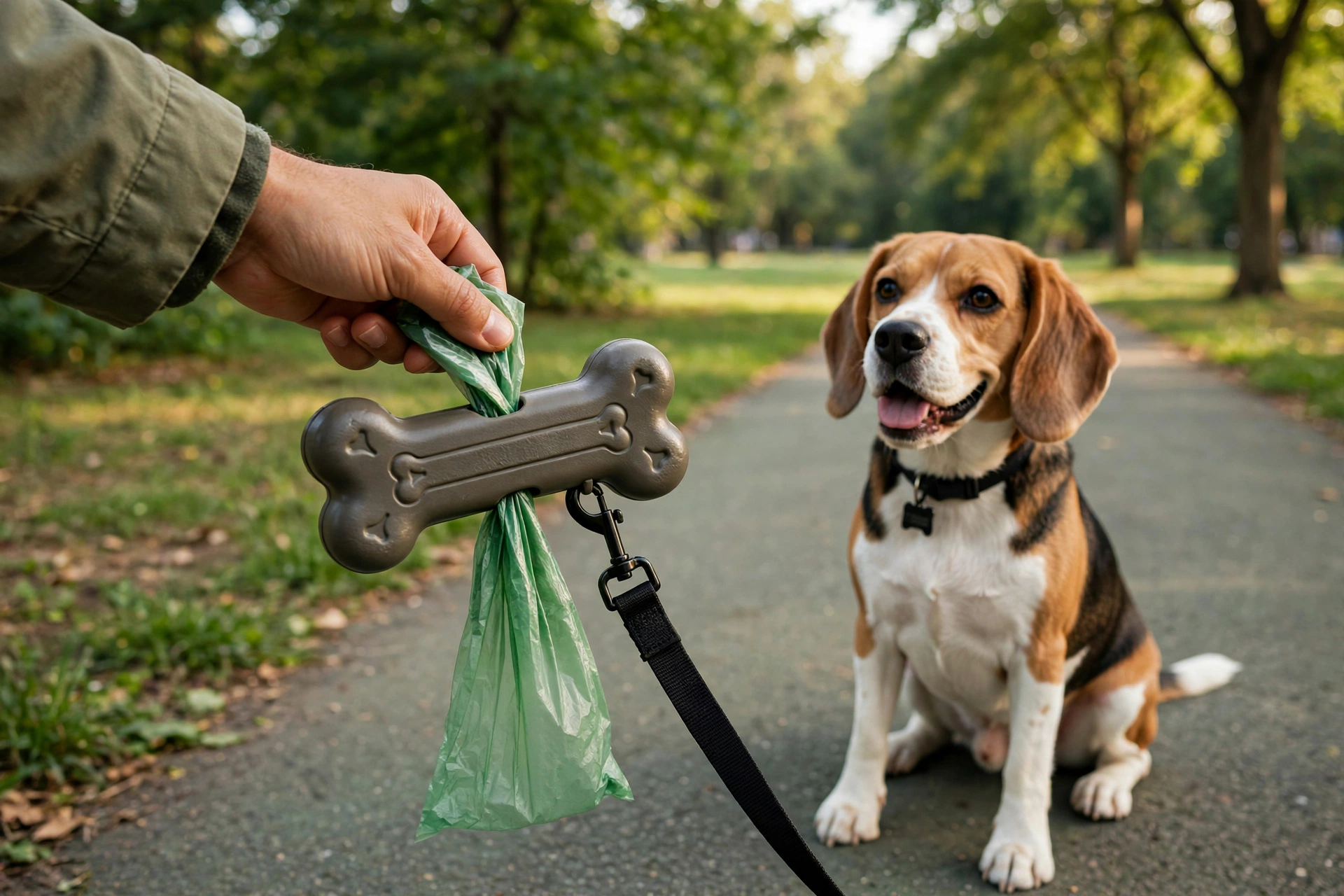
Dispensers are simple mechanical holders — usually a hard-shell case with a slot, clipped or strapped to the leash — that feed bags one at a time from a roll. The good ones survive being dropped on pavement and keep the roll dry in rain.
What to look for before you buy
Certification over marketing. "Eco," "green," and "earth-friendly" on the packaging mean nothing by themselves. Look for actual certifications — OK compost, ASTM D6400, EN 13432 — which verify the bag breaks down under defined conditions. Uncertified "biodegradable" claims are where greenwashing lives.
Thickness and leak confidence. This is the practical test that matters on every walk. Thinner eco bags can feel flimsy, and a bag you don't trust gets double-bagged — which doubles your plastic-equivalent use and defeats the point. Based on published specifications, quality brands publish their thickness (in microns); if a bag feels too thin for the job, size up or switch brands rather than doubling up.
Size. Standard bags suit most dogs, but large breeds produce accordingly. An undersized bag is a bad experience waiting to happen. Check the dimensions against your dog's reality, not the cheerful packaging illustration.
Scented versus unscented. Lightly scented bags mask odor in the tied bag on the walk home, which some owners appreciate. Heavily fragranced bags can bother sensitive noses — yours and the dog's. Unscented is the safe default.
Dispenser durability and fit. The dispenser market splits into flimsy freebies and solid holders. Look for a hard-shell case with a secure leash clip — velcro straps loosen over time — and a slot wide enough to feed bags without tearing. Standard roll sizes are fairly universal, so most dispensers accept most refill rolls, but check compatibility if you buy an unusual brand.
Roll count honesty. Compare price per bag, not per box. Bulk rolls look expensive and cost less per unit; small pretty boxes cost more per bag. At 700+ bags a year, the per-bag math is the only math that matters.
If you're kitting out for active walks, a hands-free running leash pairs naturally with a leash-mounted dispenser — the whole setup stays on your body and your hands stay free.
Earth Rated Compostable Poop Bags by Earth Rated
Best for: Daily walkers wanting certified compostable bags, Owners who buy refills in bulk
- Plant starch-based bag material, per manufacturer specs
- Certified compostable options in the range, per manufacturer specs
- Leak-proof tie-handle design, per manufacturer specs
- Standard roll size fits most dispensers, per manufacturer specs
What we like
- Verifiable compostability certifications on certified lines
- Strong, leak-proof construction for the job
- Widely available refills in bulk rolls
Tradeoffs
- Certified compostable lines cost more than basic bags
- Still need landfill disposal in most municipalities
Based on published specifications · Last checked 2026-10-08
Pogi's Poop Bag Dispenser with Plant-Based Bags by Pogi's
Best for: Owners who want bags and dispenser from one brand, Leash-mounted carry
- Plant-based bag material, per manufacturer specs
- Bone-shaped hard-shell dispenser with leash clip, per manufacturer specs
- Easy-tear perforated rolls, per manufacturer specs
- Unscented options available, per manufacturer specs
What we like
- Dispenser keeps bags on the leash every walk
- Durable case survives drops and rain
- Simple one-handed bag feed
Tradeoffs
- Dispenser sold separately from some refill packs
- Scented options may not suit sensitive noses
Based on published specifications · Last checked 2026-10-08
FAQ
Do biodegradable bags actually break down in landfill?
Slowly. Landfills are designed to entomb waste — low oxygen, low light, low microbial activity — so even certified compostable bags degrade far slower there than in an industrial composting facility. They're still a better material choice than conventional plastic, but the honest framing is "better, not solved." The real win would be municipal composting that accepts pet waste, which most programs currently don't.
Are they as strong as regular plastic bags?
Quality ones, yes. The early generations of eco bags had a reputation for tearing, and the category has improved substantially — certified compostable bags from established brands are now comparable in strength to conventional bags at similar thicknesses. The duds still exist at the bottom of the market, which is why thickness specs and brand reputation matter.
Can I compost used bags at home?
No — home compost piles don't reach the sustained high temperatures needed to break down certified compostable plastics, and pet waste itself carries pathogens that home composting can't reliably neutralize. Used bags go in the trash; the benefit is the material, not a home-composting pathway.
What's the difference between biodegradable and compostable?
Biodegradable means it can break down by microbial action under some conditions, with no defined timeline. Compostable means it breaks down under specific composting conditions within a defined timeframe, verified by a certification standard. Compostable is the stronger, verifiable claim — look for the certification marks.
Do dispensers fit all bag rolls?
Mostly. The standard roll core size is widely shared across brands, so a standard dispenser accepts standard refills. Problems arise with oversized "jumbo" rolls or unusually shaped packaging. When in doubt, buy the dispenser and refills from compatible lines or check the roll dimensions before committing.
The bottom line
Biodegradable poop bags are the easiest environmental upgrade in dog ownership: same job, same routine, better material, minimal price difference at bulk quantities. Buy certified compostable where available, don't double-bag to compensate for thinness (switch brands instead), and mount a solid dispenser on the leash so the bags are always where the dog is. Seven hundred bags a year is a lot of small choices — make them the better ones.
More in Walk Gear
Dog Life Jackets: What Matters for Swimming Safety
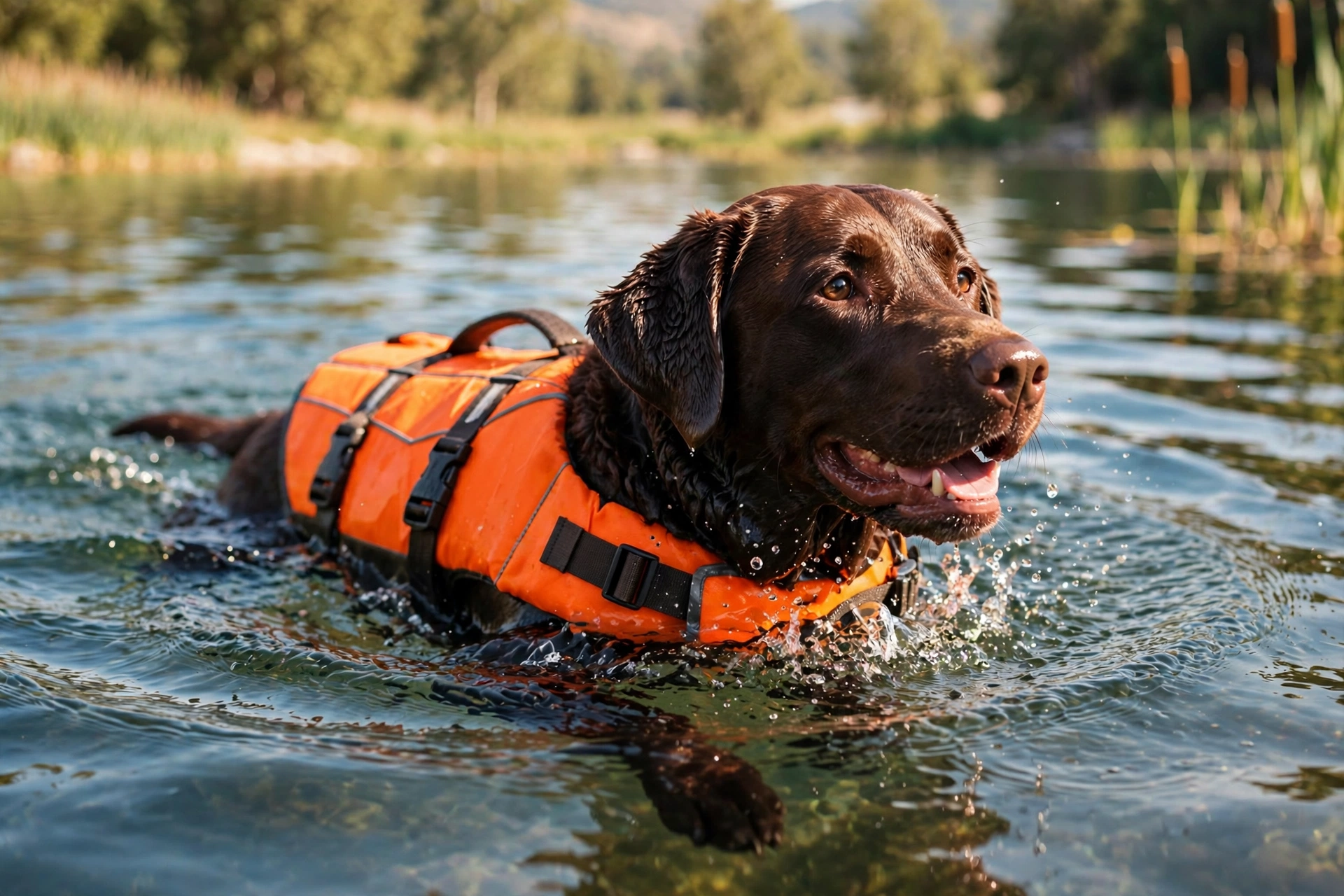
Most dogs can swim, but not all swim well. Fit, buoyancy distribution, and a sturdy grab handle are what separate a real life jacket from a costume.
Treat Pouches for Training: What Trainers Actually Use
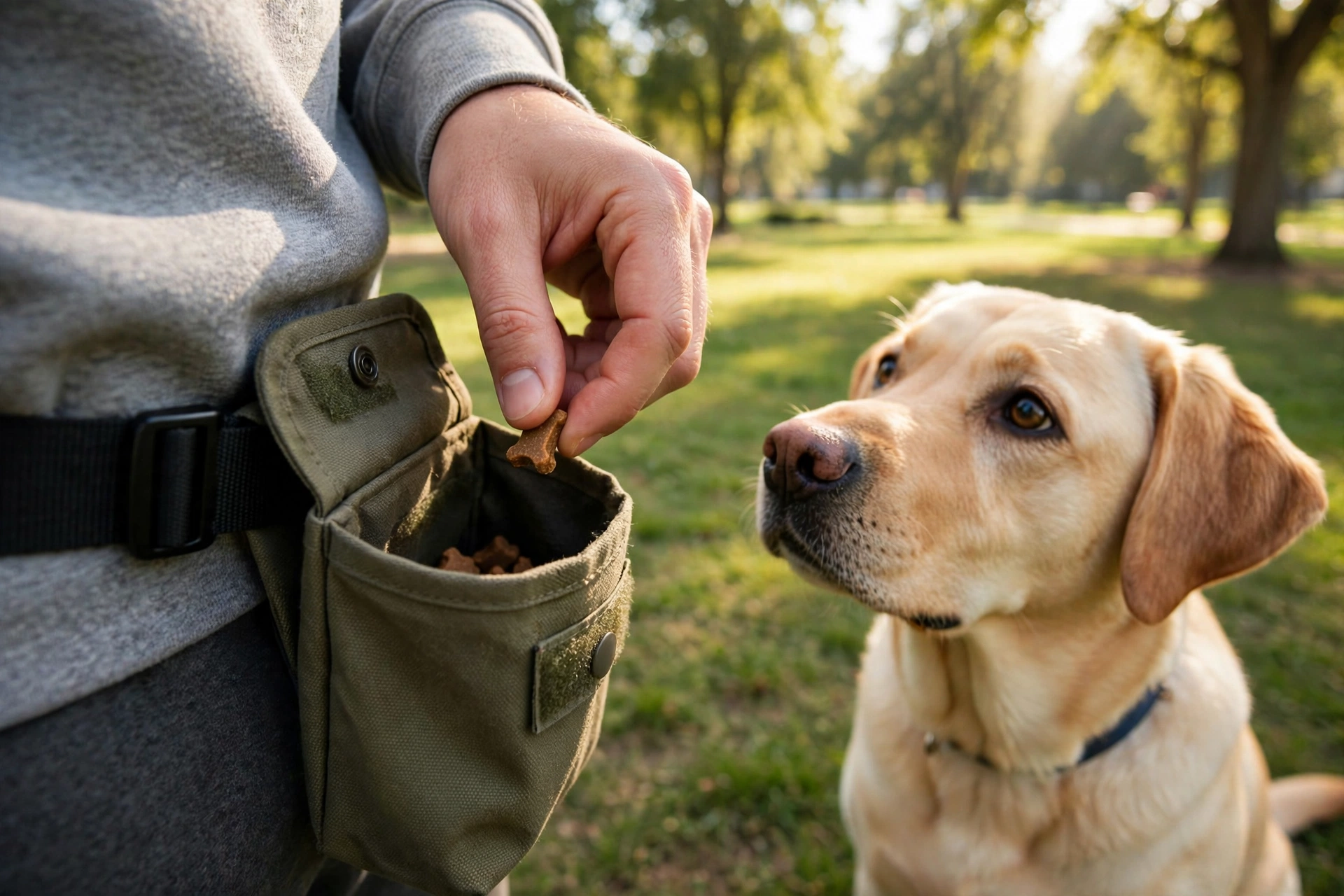
Trainers wear one on every session for a reason: a treat pouch fixes reward timing. What separates a good pouch from a pocket.

Dog Raincoats: Staying Dry on Wet Walks
Belly coverage, leg freedom, and the right warmth level — what actually matters when choosing a raincoat your dog will forget it's wearing.