Quick verdict
A good hands-free running leash keeps your arms free and your stride natural while giving you a way to reel your dog in close when it counts. The features that matter: a waist belt that stays put, a bungee section that absorbs lunges instead of transmitting them to your spine, and a traffic handle near the dog for tight spots. The Ruffwear Roamer checks all three, with an adjustable waist belt, a shock-absorbing bungee, and a close-control handle per the manufacturer's specs. Skip the running leash until your dog has basic leash manners — no gear fixes a dog that treats every run as a squirrel rodeo.
The real-life scenario
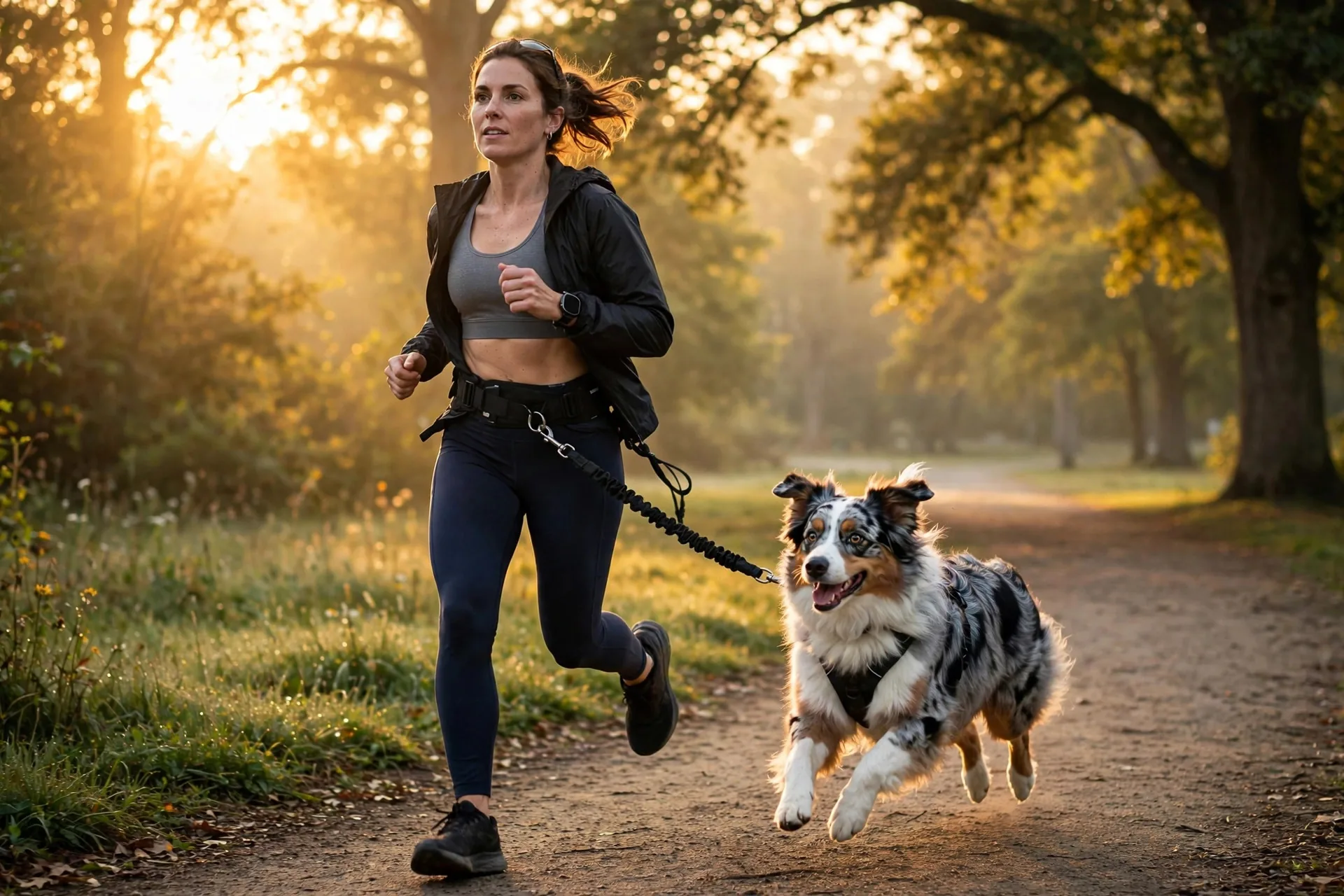
It's 6:10 a.m., the park path is empty, and you're three miles into a run that finally feels good — because your hands are swinging free instead of white-knuckling a leash. Your Australian shepherd trots at your left knee, matching your pace, and the waist belt sits snug on your hips without riding up. Then a rabbit darts across the path. Your dog launches. Instead of your shoulder taking the hit, the bungee section stretches, the jolt arrives as a firm tug rather than a whip-crack, and you stay upright and running. That's the promise working as designed. The version where it fails? Same rabbit, but the belt was loose, the leash had no give, and you spent the next mile with one hand clamped on the line and your form in pieces.
How it works
A hands-free running leash replaces your hand with your hips. The leash clips to a belt around your waist, which frees your arms for a natural swing and moves the anchor point to your center of gravity — a much sturdier place to absorb a sudden lunge than your shoulder.
The bungee section is the key engineering. A static leash transmits every one of your dog's accelerations straight into your body as a sharp jerk; an elastic section stretches under load and returns gradually, smoothing out the small lunges and pace changes that happen constantly on a run. Per the published specs, the Roamer's bungee is designed to absorb those jolts so a sudden lunge doesn't rearrange your stride.
The traffic handle is the part people forget until they need it. Near the dog end of the leash, a short grab handle lets you pull your dog in tight — passing another runner, crossing a road, navigating a narrow trail section — without fumbling. Once you've used it at a busy intersection, you'll consider it non-negotiable. Pair it with a sturdy side-release buckle that opens with a deliberate squeeze, so you can detach in one motion at the water fountain or the car.
What to look for before you buy
Belt fit and stability. The belt is the foundation — if it rides up or loosens mid-run, the whole system fails. Look for a wide belt with real adjustability that sits on your hips, not your waist. Try it over your actual running clothes; the fit changes with fabric.
Bungee vs. static. For running, bungee wins. It forgives the constant micro-lunges of a dog at your side and protects both your joints and your dog's shoulders from repeated jerks. Static waist leashes are cheaper but better suited to walking. Note the tradeoff: the stretch adds a beat of delay in close control — that's what the traffic handle is for.
A real traffic handle. Not a decorative loop — a handle close enough to the dog that you can gather them to your knee in one grab. If you can't reel your dog in quickly with the leash at full extension, keep shopping.
Reflective details. You'll run at dawn and dusk, when paths are empty and light is low. Reflective trim on the leash and belt keeps you and your dog visible to cyclists — a small feature with an outsized safety payoff.
What to skip. Skip the running leash if your dog doesn't yet walk politely — running amplifies every bad habit, and a dog that pulls at walking speed is a hazard at running speed. Skip ultralight belts if your dog is over 50 pounds; you want substance at the anchor point. And for technical trails and crowded routes, a standard hand-held leash (see our retractable vs. standard leash breakdown) still gives the most precise control.
If your dog is still in the pulling phase, sort that out first with a proper no-pull harness and some training miles on foot before adding speed.
Roamer Running Leash by Ruffwear
Best for: Runners and active owners
- Adjustable waist belt fit per manufacturer specs
- Bungee section absorbs jolts
- Traffic handle for close control
What we like
- Bungee smooths out sudden lunges
- Waist-worn — hands stay free
- Side-release buckle for quick detachment
Tradeoffs
- Bungee has a learning curve for close control
- Pricier than basic waist leashes
Based on published specifications · Last checked 2026-10-08
FAQ
Can any dog learn to run with me?
Most healthy adult dogs can, with conditioning — but check with your vet first, especially for puppies with still-closing growth plates, seniors, brachycephalic breeds, and dogs with joint issues. Build distance gradually with run-walk intervals, and watch for heavy panting, lagging, or next-day soreness. Heat is the real danger: run early or late in summer and bring water.
Waist belt or cross-body — which is better?
Waist belts are the standard for running: they anchor at your center of gravity and keep torso rotation free. Cross-body attachments work for walking and hiking but bounce and shift at running pace. If you're buying specifically to run, get a waist belt.
How do I teach my dog to run beside me instead of in front?
Start on foot, not at speed. Reward your dog for staying at your side on walks until the position is habitual, then add short jogging intervals. A consistent cue ("with me") paired with treats builds the habit; the traffic handle enforces it in the moment. Dogs that surge ahead constantly are usually under-exercised or over-aroused — a tired dog holds position better.
Is a bungee leash safe for my dog's neck?
A bungee is generally gentler than a static leash because it spreads a lunge's force over time instead of delivering it as a snap. Still, for dedicated running most trainers recommend clipping to a harness rather than a collar, moving any remaining force to the chest and shoulders. Pair the running leash with a well-fitted harness and the system is about as joint-friendly as leashed running gets.
The bottom line
Running with your dog should feel like a shared rhythm, not a tug-of-war at seven-minute pace. Get the belt fit right, let the bungee do its job, keep the traffic handle within reach — and make sure leash manners are in place before the running shoes come out.
More in Walk Gear
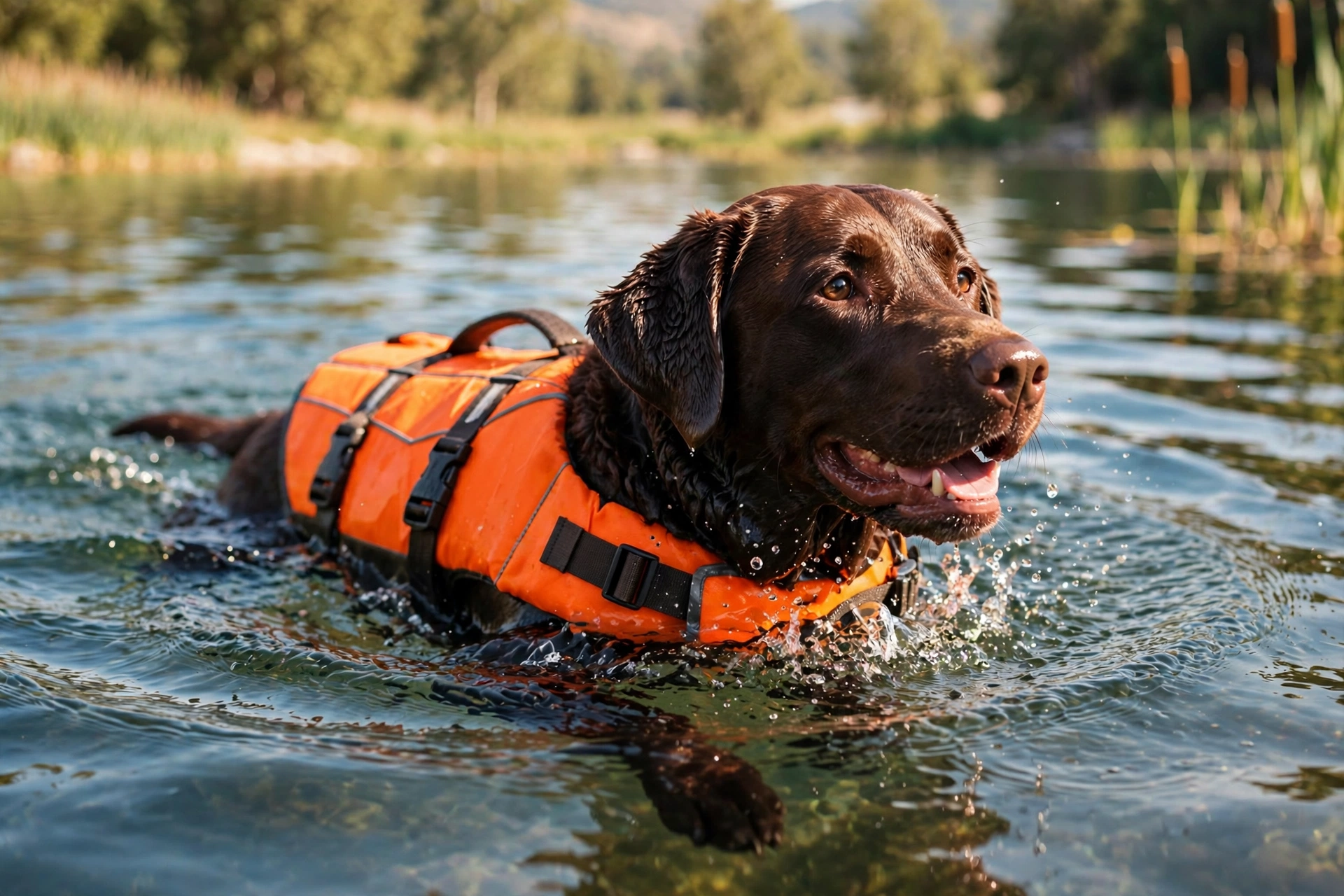
Dog Life Jackets: What Matters for Swimming Safety
Most dogs can swim, but not all swim well. Fit, buoyancy distribution, and a sturdy grab handle are what separate a real life jacket from a costume.
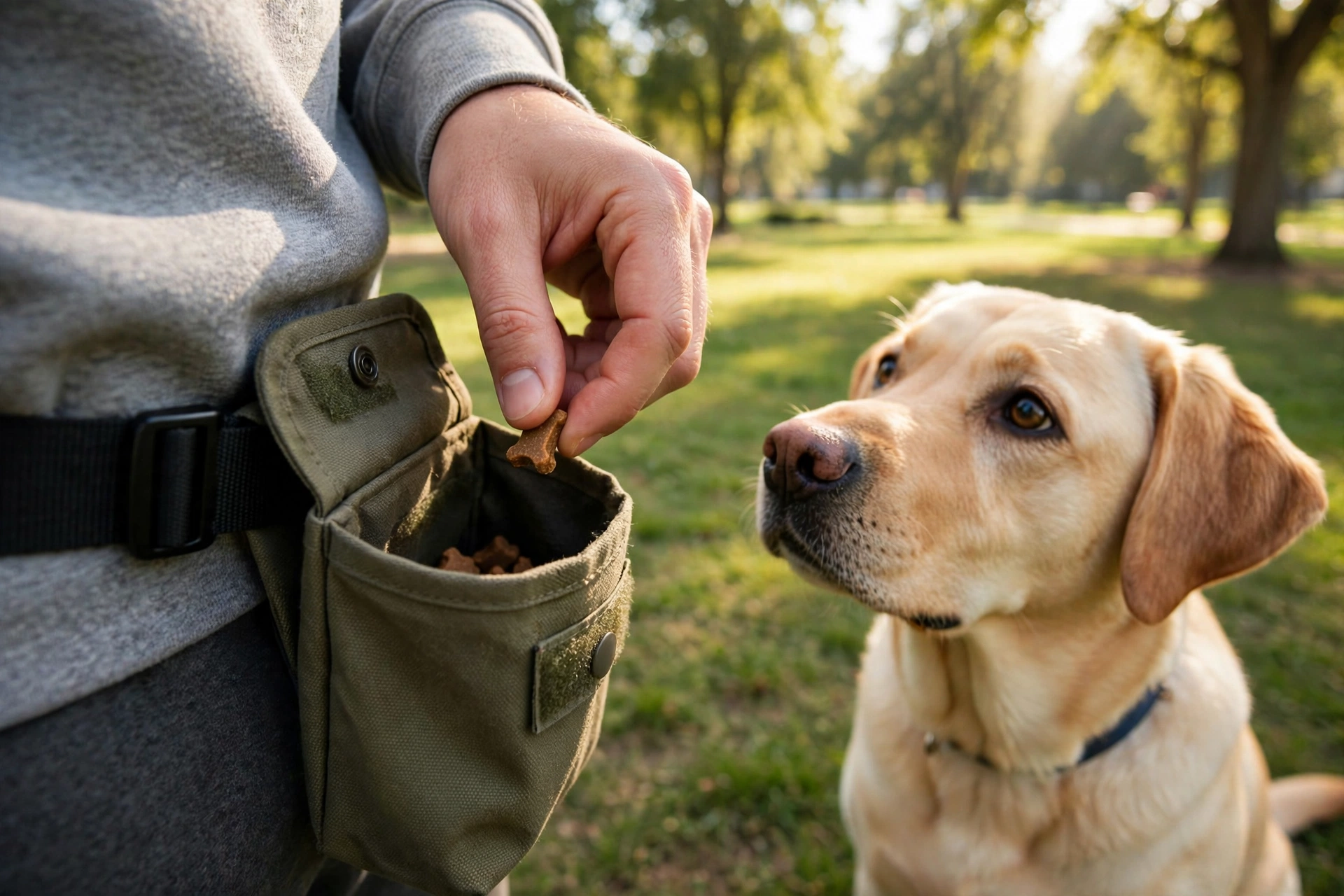
Treat Pouches for Training: What Trainers Actually Use
Trainers wear one on every session for a reason: a treat pouch fixes reward timing. What separates a good pouch from a pocket.
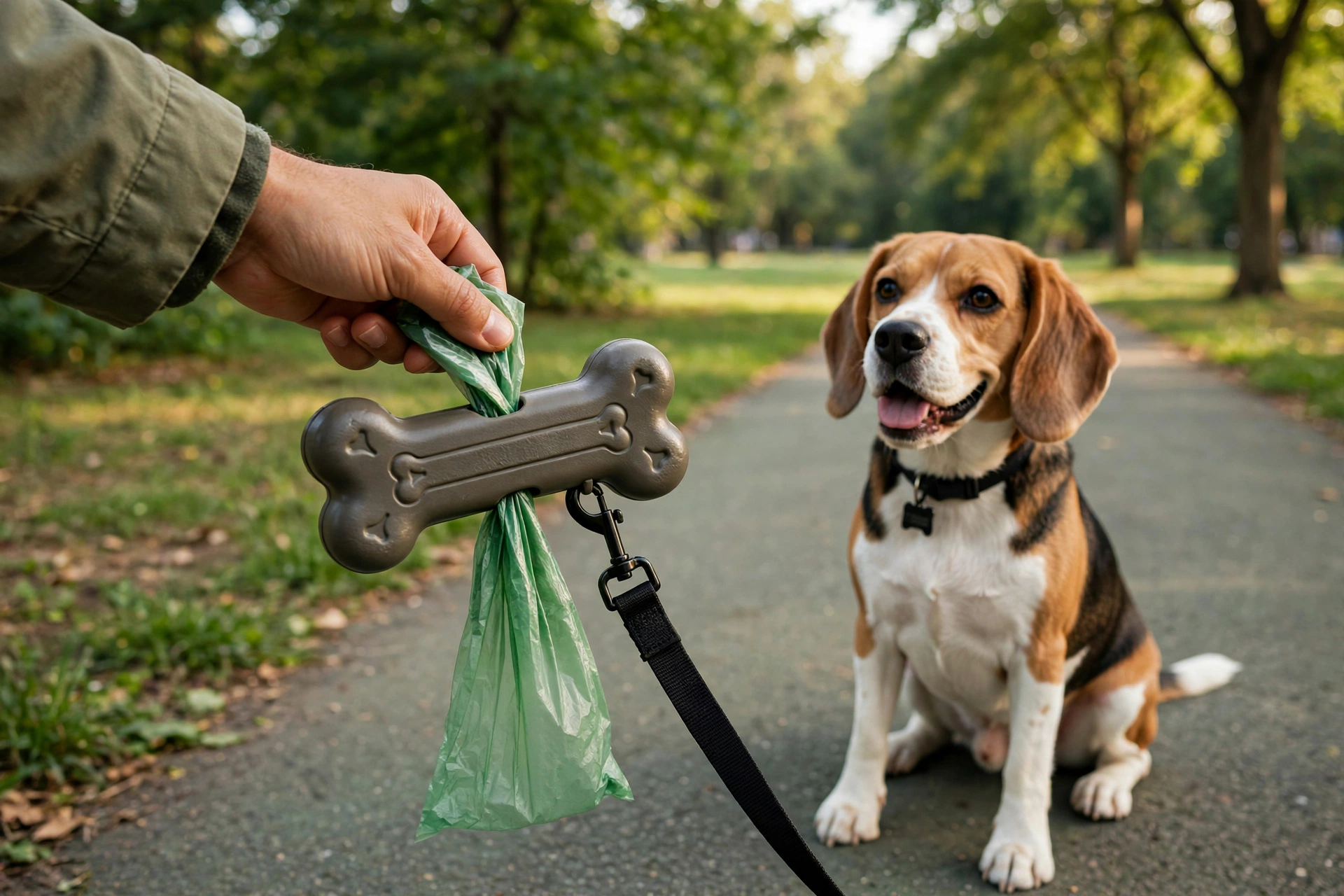
Biodegradable Poop Bags and Dispensers
Certified compostable versus merely biodegradable, scented versus unscented, and the dispenser that keeps bags on the leash: the honest comparison for 700+ bags a year.