
Quick verdict
Retractable leashes and standard leashes solve opposite problems, so the honest answer is that most owners eventually want both. A retractable leash (tape version, like the flexi Classic) gives a sniffy dog room to roam in open, low-traffic areas. A standard 6-foot leash (like the Max and Neo Double Handle) gives you real control for training, city sidewalks, and crowded trails. If your dog is still learning leash manners, start with the standard leash — retractables reward pulling by design and make training harder.
The real-life scenario
Picture two walks. In the first, you're crossing an empty meadow at golden hour. Your beagle's nose is doing the important work of reading every blade of grass, and a 16-foot tape line lets her zigzag through the good smells while you stroll in a straight line, thumb resting easy on the brake. Bliss. In the second, you're on a narrow city sidewalk at rush hour. A cyclist rings behind you, a toddler waddles toward your dog with sticky hands, and that same 16 feet of line is now a tripwire stretched across the bike lane. You fumble for the lock button while your dog investigates a pigeon. Same leash, same dog, completely different story. That's the whole debate in a nutshell: the tool isn't good or bad — the setting decides.
How they differ
| Retractable leash | Standard 6-foot leash | |
|---|---|---|
| Best for | Sniffy decompression walks in open, low-traffic areas | Training, city sidewalks, crowded trails, vet visits |
| Freedom | Up to 16 ft of roaming on tape models | Fixed length — you set the radius |
| Control near traffic | Weaker — thin line, delayed brake response | Strong — full grip, instant feedback |
| Training value | Low — the dog learns pulling extends the line | High — a consistent boundary you can reward |
| Watch out for | Tape/cord burns if grabbed, tangles around legs, not for dogs near the top of the weight range | Less sniffing freedom; arm fatigue on very long walks |
| Price tier | Budget to mid-range | Budget to mid-range |
The freedom question is real, not just marketing. Dogs experience the world through their noses, and a dog that gets to sniff freely on part of the walk comes home more satisfied than one marched in a heel the whole time. A retractable line genuinely delivers that — the flexi Classic's tape version extends up to 16 feet per the manufacturer's specs, and the brake locks with one thumb. For a calm, recall-reliable dog in a field, that's a lovely setup. The TUG 360 offers the same idea at a budget-friendly tier with a 360-degree tangle-free tape design.
But control is physics, and physics favors the short leash. On a retractable, your dog is always pulling against spring tension — the line teaches them that leaning forward makes the world get bigger, which is the exact opposite of loose-leash training. The braking is also delayed: by the time you thumb the lock, a lunging dog has already covered several feet of thin line. In traffic, around other dogs, or anywhere with bikes and kids, that delay matters. A standard leash puts the full connection in your hand with zero lag, and a traffic handle (the short second handle near the clip on the Max and Neo leash) lets you reel your dog in close in one motion.
Safety details most people miss. Tape is meaningfully safer than cord: it's more visible, less likely to cause a friction burn if it wraps a leg, and easier for others to see. That's why the flexi tape version earns its "classic" status — if you go retractable, choose tape. Also respect the weight ratings; a retractable near the top of its weight range is working hard, and the TUG's own specs position it away from dogs pushing the upper limit. Never grab a moving retractable line with your bare hand, and never tie one off to a post — they're designed for a hand on the handle, always.
The practical compromise. Many experienced owners carry both: the standard leash clipped on for the walk to and from the park, the retractable for the open field in the middle. If you can only buy one and your dog is still learning manners, buy the standard leash first — it's also the better partner for a no-pull harness, where consistent leash length makes training clearer for your dog.
Classic Retractable Leash (Tape) by flexi
Best for: Open fields and low-traffic areas
- Tape (belt) version up to 16 ft per manufacturer specs
- One-hand brake and lock
- Ergonomic handle
What we like
- Gives sniffy dogs room to explore
- Brake is intuitive with one hand
- Tape is more visible and safer than cord
Tradeoffs
- Not for training loose-leash walking
- Cord can burn hands if grabbed; tape version safer
Based on published specifications · Last checked 2026-10-08
Double Handle Dog Leash by Max and Neo
Best for: Training and city walks
- Dual handles (standard + traffic) per product specs
- Reflective stitching
- Company donates a leash per purchase per brand claim
What we like
- Traffic handle for tight situations
- Reflective for night walks
- Donation model supports rescues
Tradeoffs
- Heavier hardware than ultralight leashes
- Nylon needs occasional washing
Based on published specifications · Last checked 2026-10-08
360 Retractable Leash by TUG
Best for: Budget retractable buyers
- 360-degree tangle-free tape per manufacturer specs
- One-hand brake/lock
- Multiple size options by dog weight
What we like
- Tangle-free claim holds up in daily use
- Very affordable
- Comfortable grip
Tradeoffs
- Build quality a step below premium brands
- Not for dogs near the top of the weight range
Based on published specifications · Last checked 2026-10-08
FAQ
Are retractable leashes bad for dogs?
They're not inherently bad — they're situational. In an open field with a calm dog, a tape retractable is a fine enrichment tool. The problems come from using them as an everyday walking leash: they undermine loose-leash training, offer poor control near roads and crowds, and the thin line can injure hands and legs. Match the leash to the setting and most of the controversy disappears.
Tape or cord — does it matter?
Yes, choose tape. Cord-style retractables are thinner, harder for others to see, and far more likely to cause a friction burn if the line wraps around a leg — yours or your dog's. Tape versions are more visible and distribute pressure over a wider surface. It's one of the few gear choices where the safer option costs about the same.
Can I train loose-leash walking on a retractable leash?
Effectively, no. A retractable leash is spring-loaded: the dog learns that pulling forward is what extends the line, which directly rewards the behavior you're trying to eliminate. Do your training on a standard 6-foot leash with clear, consistent boundaries, and save the retractable for sniffy free time once the manners are in place.
What length standard leash should I get?
Six feet is the standard for a reason: long enough for your dog to sniff and move naturally, short enough to keep them out of the street and under control. Longer lines (15–30 ft) have their place for recall training in safe areas, but for everyday walks, six feet with a traffic handle covers nearly everything.
The bottom line
Stop asking which leash is better and start asking where you're walking. Open field, calm dog, sniffing time: retractable tape leash. Sidewalk, training, crowds, traffic: standard six-footer, every time. Own the right tool for each walk and you'll stop fighting your gear.
More in Walk Gear
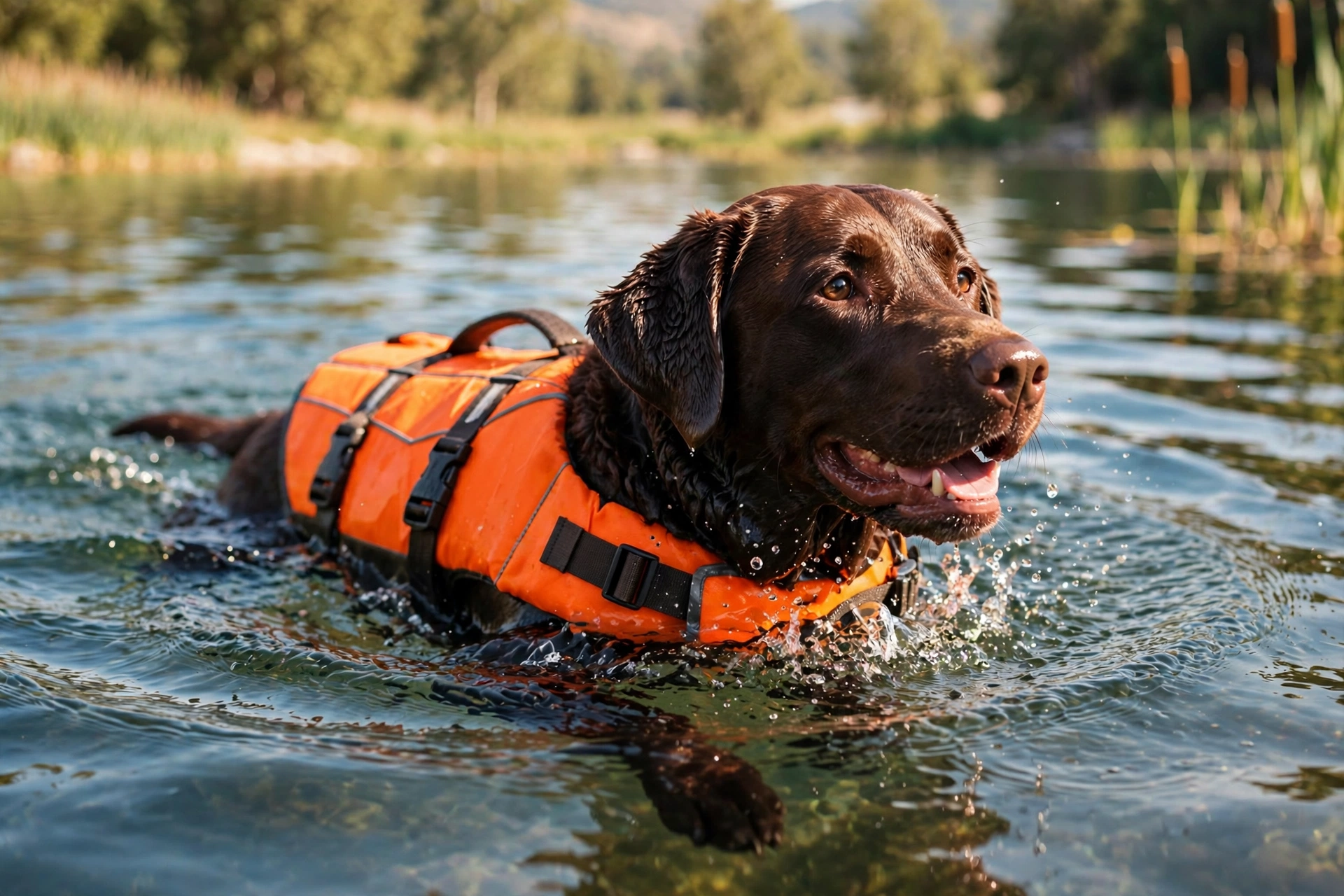
Dog Life Jackets: What Matters for Swimming Safety
Most dogs can swim, but not all swim well. Fit, buoyancy distribution, and a sturdy grab handle are what separate a real life jacket from a costume.
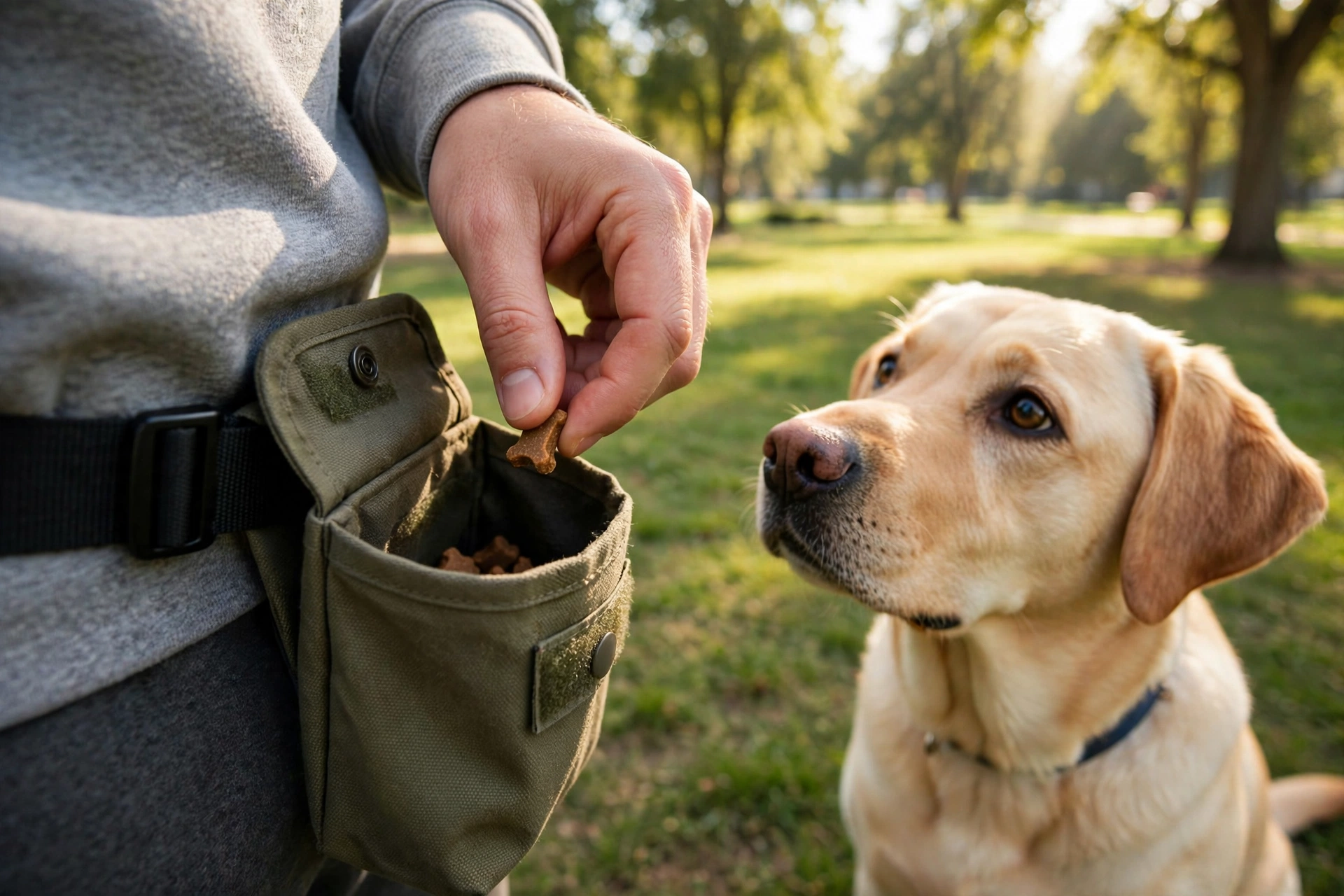
Treat Pouches for Training: What Trainers Actually Use
Trainers wear one on every session for a reason: a treat pouch fixes reward timing. What separates a good pouch from a pocket.
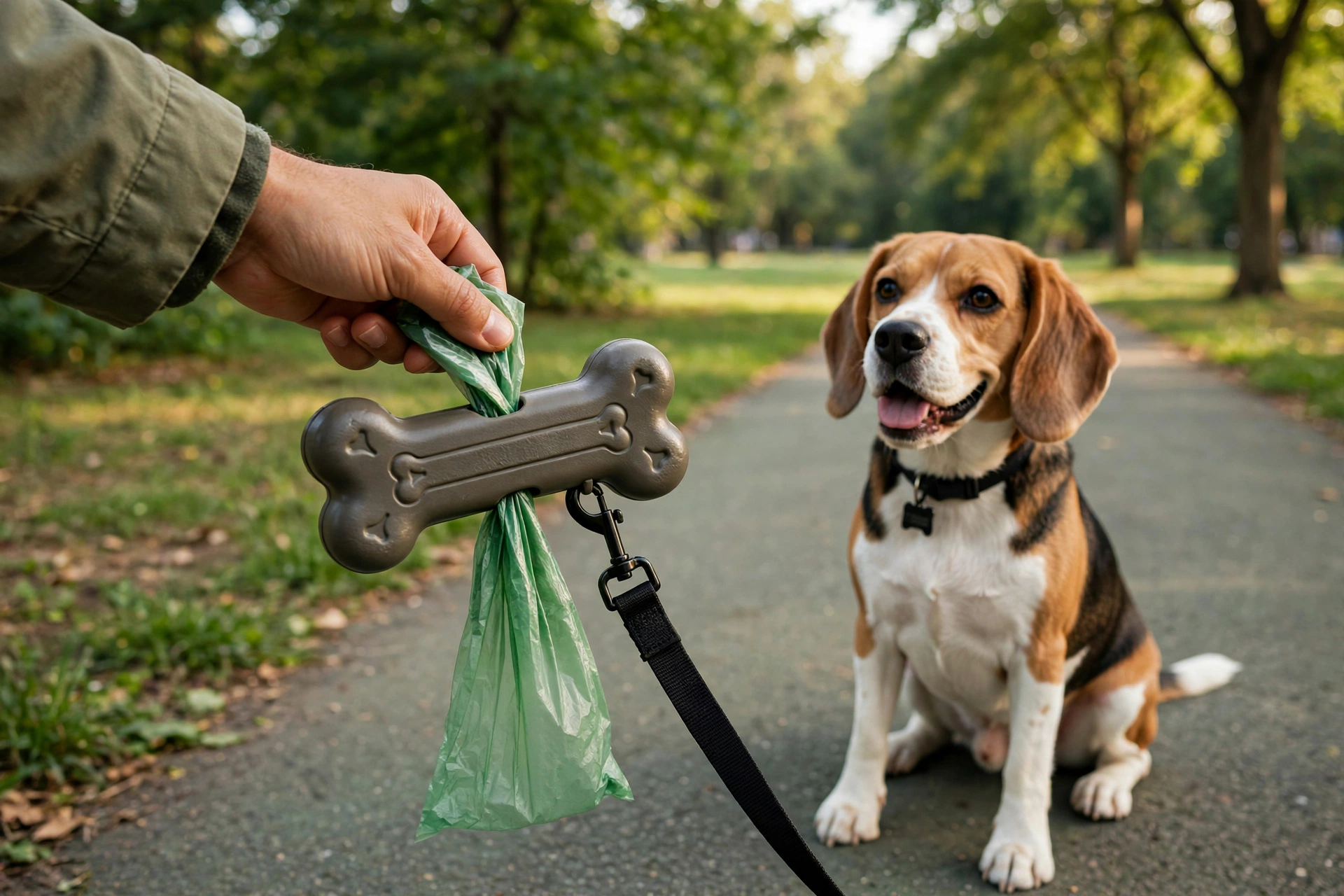
Biodegradable Poop Bags and Dispensers
Certified compostable versus merely biodegradable, scented versus unscented, and the dispenser that keeps bags on the leash: the honest comparison for 700+ bags a year.