Quick verdict
A snuffle mat is one of the simplest enrichment tools you can buy: a mat with fabric strips that hide kibble, turning mealtime into a sniffing game. For high-energy dogs, anxious dogs, and fast eaters, ten minutes of nose work burns more mental energy than a casual neighborhood walk. Just make sure you pick a washable, non-slip mat — and introduce it as a game, not a chore.
The real-life scenario
It's 6:45 on a rainy Tuesday. Your border collie has already paced the hallway twice, nosed the treat jar, and started doing that stare — the one that says we both know a walk isn't happening. You scatter dinner across her bowl. Forty-five seconds later the bowl is empty and the staring resumes.
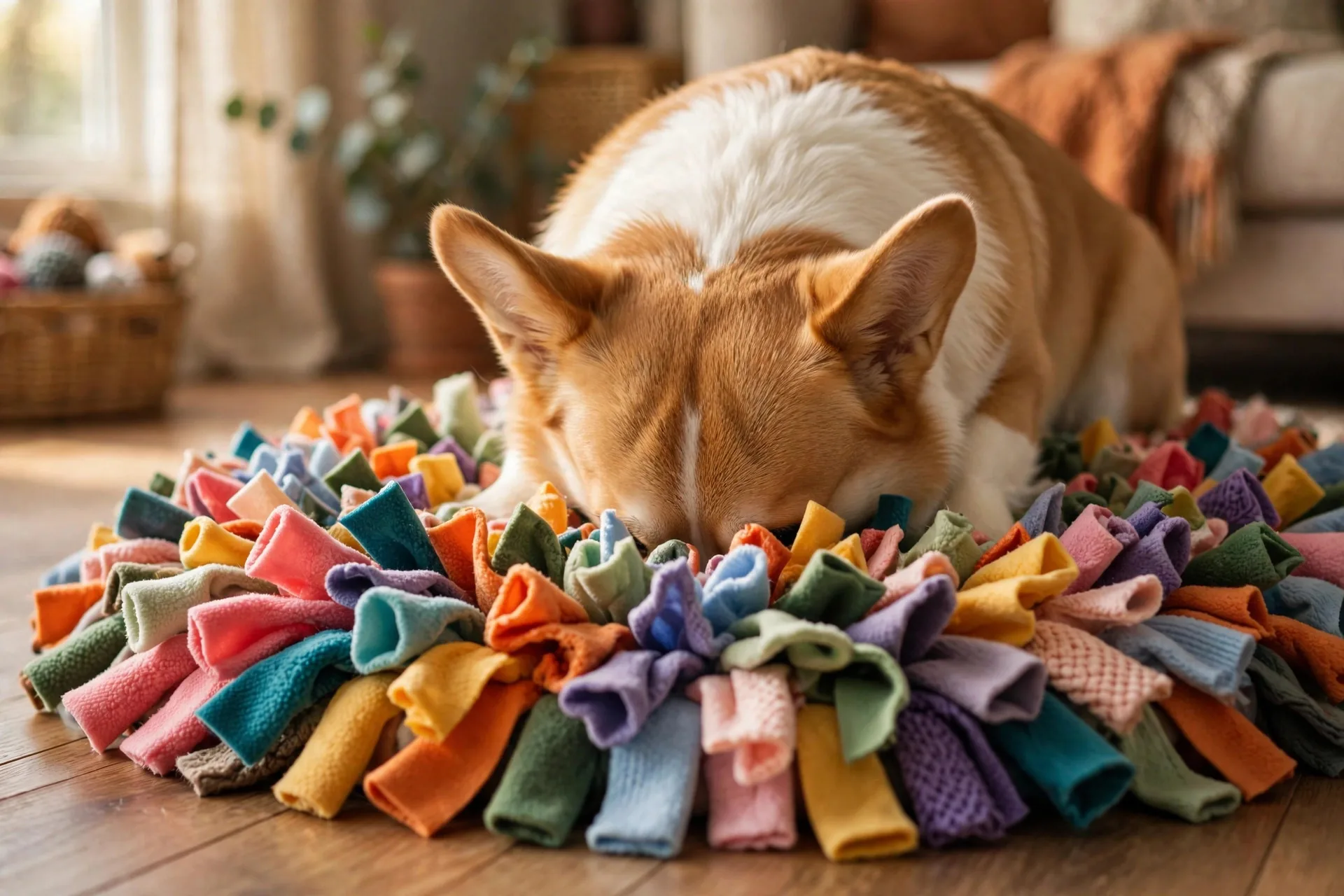
Now rewind. Same rainy Tuesday, different dinner. You take a shaggy mat, tuck pieces of kibble into the folds of fabric, and set it on the floor. She approaches. Sniffs. Her whole body stills — brain, not body, doing the work. Ten minutes later she's lying down with that deep, satisfied exhale that used to require an hour at the dog park. That's the promise of a snuffle mat: mental exhaustion on demand.
How it works
A snuffle mat is essentially a fabric puzzle. Dozens of soft fleece strips are tied or woven onto a rubber or fabric base, creating layers of flaps and hiding spots. You tuck dry kibble, small training treats, or even fresh bits of carrot into the folds, and your dog "forages" — nosing, snuffling, and pawing to find every last piece.
Why sniffing works so well is no mystery. Dogs experience the world through their noses the way we do through our eyes, and concentrated scent work demands focus. Trainers call this nose work, and it's genuinely tiring in a way that a passive chew toy isn't. Many dogs that never learned to "settle" after a walk will settle after a snuffle session — the mental effort does what physical exercise sometimes can't.
Snuffle mats also solve a real mealtime problem: the speed eater. Dogs that inhale dinner in under a minute often end up gassy, gurgly, or simply asking for more. A snuffle mat stretches the same meal into a ten-minute activity. Unlike a hard plastic slow feeder, there's nothing rigid for an anxious dog to chew or scrape, and nothing that clatters across the floor. If you want the full picture on feeding pace, our slow feeder guide for fast eaters covers the broader options.
What to look for before you buy
Washability matters more than you think. A mat that hides food will collect saliva, crumbs, and odor. Machine-washable construction is close to non-negotiable — hand-washing a matted fleece mat is miserable. Look for mats the manufacturer says can go in a regular wash cycle, and expect to wash it every week or two depending on use.
Check the base. Your dog will push, paw, and drag at the mat. A non-slip backing keeps it from skating across hardwood and turning the game into a frustration. If your floors are tile or wood, this detail matters more than any fancy feature.
Match difficulty to your dog. Dense, layered strips are wonderful for experienced foragers but can frustrate a puppy encountering its first mat. Start simple: tuck treats on top rather than buried deep, and let your dog succeed early. You can always make it harder once the game clicks.
Size honestly. A mat sized for a dachshund becomes a non-event for a husky, who will simply pin it with one paw and vacuum. Check the manufacturer's size guidance against your dog, and err larger — an oversized mat still works; an undersized one doesn't.
Know when it's not the right tool. Snuffle mats require supervision, always. They are not chew toys, and dogs that shred fabric will shred a mat — the fabric-eating dog is the one exception where this whole category is a hard no. For power chewers who play rough, see our guide to indestructible dog toys instead.
The PAW5 Wooly Snuffle Mat is the reference pick in this category: fleece strips over a non-slip base, machine washable, and specifically designed to slow down fast eaters without plastic maze feeders. It fits the rainy-day scenario perfectly — breakfast becomes a weatherproof activity.
Wooly Snuffle Mat by PAW5
Best for: Sniff-driven dogs and rainy days
- Fleece strips hide kibble per product specs
- Machine washable per manufacturer
- Non-slip base
What we like
- 10 minutes of sniffing visibly tires dogs out
- Slows fast eaters without plastic
- Easy to toss in the wash
Tradeoffs
- Fleece strips need occasional washing
- Not for dogs that eat fabric
Based on published specifications · Last checked 2026-10-08
FAQ
How do I introduce a snuffle mat to my dog?
Make the first session easy and rewarding. Scatter a few treats on top of the mat where your dog can see them, so the "aha" moment arrives fast. Over the next few sessions, tuck pieces deeper into the folds. If your dog tries to chew the fabric, redirect with a treat and try again later — and if chewing persists, this tool isn't for them.
Can I use a snuffle mat for my dog's entire meal?
Yes, for most dogs and most kibble-fed meals. It's actually one of the best uses: the same dinner becomes ten minutes of enrichment instead of a forty-five-second inhale. Just make sure your dog drinks water normally and that you're not hiding so much food that you're overfeeding — count mat kibble as part of the daily ration.
How often should I wash the mat?
Every one to two weeks for regular use, more often if you use moist treats or fresh food. Saliva and crumbs build up in the fleece, and a smelly mat is a mat your dog will ignore — or worse, a bacteria farm. Machine washable models make this a non-issue.
Is a snuffle mat good for anxious dogs?
Many trainers say yes, with a sensible caveat: sniffing is inherently calming for dogs — it's a self-soothing behavior, similar to how some people fidget with a pen. A snuffle session before a known stressor (fireworks season, a vet visit, the mail carrier's arrival) can genuinely help take the edge off. It won't replace training or vet guidance for real anxiety, but it's a strong complementary tool.
Are snuffle mats safe for puppies?
For most puppies, yes, under supervision. They're gentle on baby teeth, quiet, and a great way to tire out a puppy brain. The same fabric rule applies: if the puppy eats fabric pieces rather than sniffing, retire the mat and try again when they're older.
The bottom line
A snuffle mat is cheap, quiet, washable, and it works — ten focused minutes of sniffing is one of the best trades you can make for a calmer evening. Introduce it as a game, supervise every session, wash it regularly, and keep fabric-chewers away. Your rainy Tuesdays will never be the same.
More in Toys & Enrichment
Automatic Ball Launchers for High-Energy Dogs
For the dog that would play fetch until your arm gives out: how automatic launchers work, who they suit, and the safety rules that matter.
Lick Mats for Dogs: Calm Enrichment That Actually Works
A few dollars of textured silicone that buys calm on demand. How lick mats settle anxious dogs, what to smear on them, and why freezing is the best trick in the category.
Puzzle Toys for Beginners: Where to Start Without Frustrating Your Dog
Start too hard and your dog quits. Here's a level-by-level path into puzzle toys that builds confidence instead of frustration.