Quick verdict
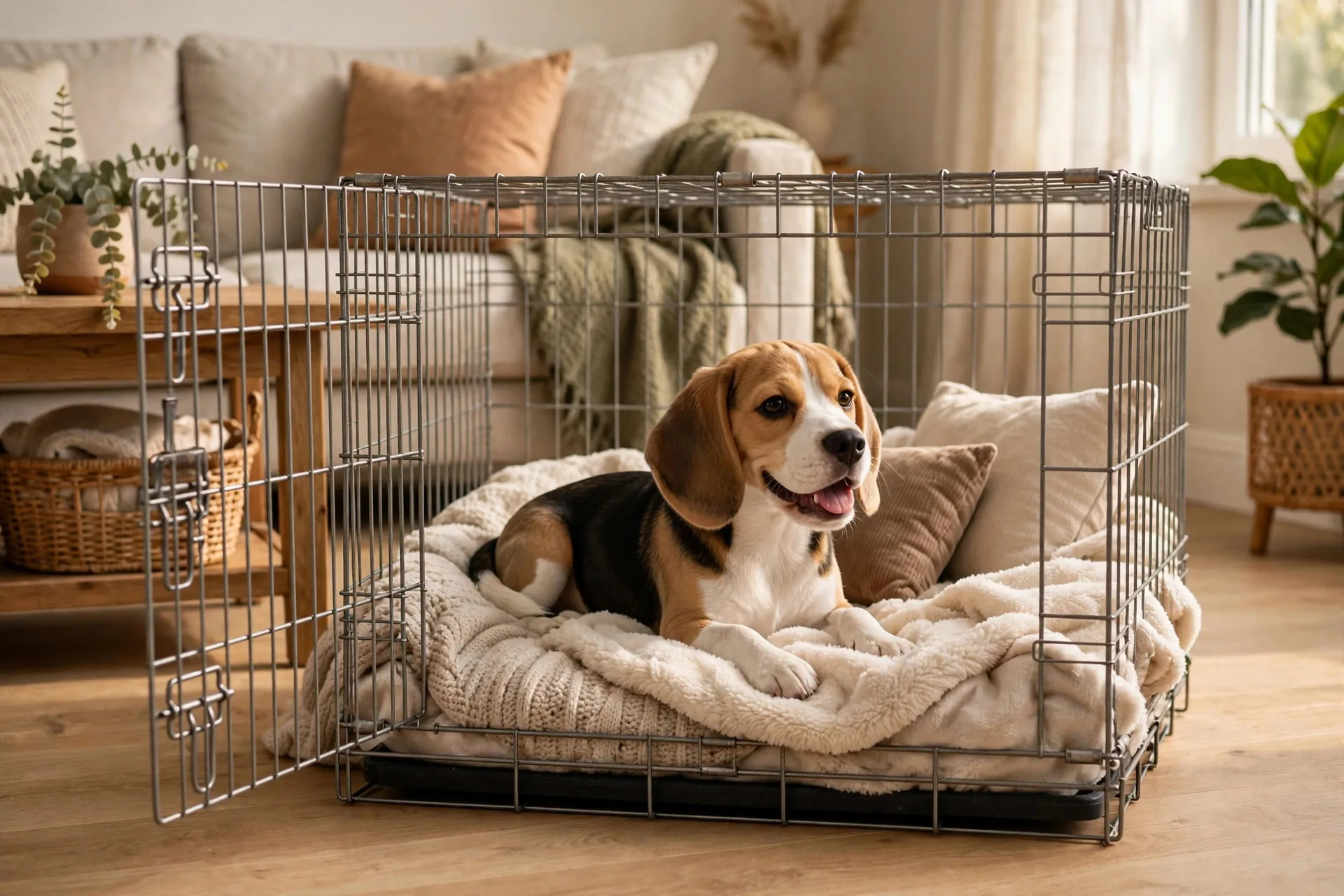
A crate is three tools in one: a house-training aid, a safe den, and the closest thing to a seatbelt your dog gets in the car. For puppies and home training, a wire crate with a divider panel — like the MidWest iCrate — is the value pick: cheap, ventilated, and it grows with the dog. For travel and living rooms where a wire box feels like an eyesore, the Diggs Revol collapses in seconds and looks like furniture. Size it so your dog can stand, turn, and lie down — then train it as a reward, never a punishment.
The real-life scenario
The puppy comes home Saturday. By Sunday night, someone has suggested a crate, someone else has called crates cruel, and you're staring at a wall of wire boxes feeling guilty either way. Here's what the guilt misses: dogs are den animals. Most seek out small, enclosed spots — under tables, behind couches. A crate, introduced properly, becomes that spot on purpose.
The practical side shows up fast. The crated puppy doesn't chew the baseboards at 2 a.m. The crate-trained adult rides calmly in the car. And on holiday visits, the crate is the one piece of home that travels with you. For extra den coziness, a calming donut bed inside the crate is a combination anxious dogs love.
How to choose
Size it like a bedroom, not a ballroom. The rule: your dog should be able to stand up, turn around, and lie down comfortably — no more. Extra space sounds generous, but for a puppy in house training it's a liability: puppies avoid soiling their sleeping area, but a crate with a spare corner becomes a bedroom with a bathroom attached. This is exactly what divider panels solve. The MidWest iCrate includes one: you buy the adult-size crate once and move the divider as the puppy grows, so you're not buying three crates in a year.
Pick the material for the job. Wire crates (like the iCrate) are the training default: maximum ventilation, visibility both ways, fold-flat, and cheap. Double doors — standard on most sizes — let you place the crate against different walls. Plastic kennels feel more den-like, which nervous dogs prefer, and they're the classic car-travel shape. Soft-sided crates are light and packable for calm, crate-trained adults — never for chewers, who'll be through the mesh fast. Furniture-style crates look great but rarely travel well.
If travel is the point, test the logistics. The Diggs Revol earns its premium here: it collapses flat in seconds with a carrying handle, sets up just as fast at the destination, and doesn't look like a cage in your living room between trips. Whatever you choose, measure your car's cargo area before buying — crate dimensions on paper have surprised many a hatchback owner. For flying, note that airline crate rules vary by carrier and change often; check your specific airline's current requirements rather than trusting any product's "airline-friendly" label.
Train the crate, don't just buy it. The fastest way to ruin a crate is using it as punishment or locking a puppy in for hours on day one. The protocol: door open, meals and high-value treats inside, short voluntary naps first. Toss a treat in, let the dog walk in and out freely, build duration gradually. Most dogs choose the crate voluntarily within a week or two — which is the whole point. For road trips, pair the crate with a travel water bottle so hydration doesn't depend on rest stops.
What not to overpay for
The biggest crate in the store "just in case." Oversized crates undermine house training and take over your living room. Buy the right size with a divider, not the giant one with wishful thinking.
Heavy-duty "escape-proof" aluminum crates. Unless you have a genuine Houdini who has destroyed a wire crate, you don't need the premium indestructible box. Most dogs — including strong ones — do fine in a standard wire crate once it's properly introduced.
Fancy crate covers. A spare blanket or sheet draped over the top and sides creates the same den-like darkness for free. Buy the cover only if you love the look.
Premium crate mattresses for the training stage. Puppies chew, and house-training puppies have accidents. A washable mat or old blanket is the right bedding until the chewing and accidents are reliably over — then upgrade to something nice.
iCrate Dog Crate by MidWest Homes for Pets
Best for: Crate training on a budget
- Divider panel for puppy growth per product specs
- Double doors on most sizes
- Fold-flat for storage
What we like
- Divider grows with the puppy
- Sets up in minutes, no tools
- Very affordable
Tradeoffs
- Wire crates are not escape-proof for Houdinis
- Pan can rattle — add a mat
Based on published specifications · Last checked 2026-10-08
Revol Dog Crate by Diggs
Best for: Travel and design-conscious homes
- Collapsible with carrying handle per specs
- Puppy divider included
- Airline-friendly dimensions on select sizes per brand
What we like
- Collapses flat in seconds
- Looks like furniture, not a cage
- Sturdy latches
Tradeoffs
- Premium price for a crate
- Heavier than wire crates
Based on published specifications · Last checked 2026-10-08
FAQ
How long can my dog stay in a crate?
For puppies, the rule of thumb is about one hour per month of age — a three-month-old puppy gets about three hours max, plus you should never push it. Adult dogs can handle a few hours, but a crate is not all-day storage: no dog should be crated for a full workday. If you're gone that long, the answer is a dog walker or daycare, not a bigger crate.
Isn't crating cruel?
A crate used as punishment or long-term confinement, yes. A crate trained as a den — door often open, associated with meals and rest — is something most dogs actively choose. Watch a crate-trained dog at a chaotic family gathering: they'll often retreat to the crate on their own. The training makes the difference, not the box.
Wire crate or plastic crate — which is better?
For home training, wire: ventilation, visibility, and easy cleaning. For car travel and nervous dogs who like enclosure, plastic kennels feel more den-like. Many households end up with both — wire at home, plastic in the car — and there's nothing wrong with that.
My dog panics in the crate. What do I do?
Back all the way up: door open, treats for approaching, meals just inside the doorway, tiny increments over days. Cover the crate to make it den-like, exercise the dog first, and never force them in. If panic persists — drooling, escape attempts, self-injury — stop and consult a trainer or behaviorist.
Should the crate be in my bedroom?
For the first few weeks with a puppy, yes — nearby helps with nighttime potty breaks and the puppy settles faster hearing you breathe. Once nights are reliable, you can gradually move it to its permanent spot.
The bottom line
Buy the crate your actual life needs: a wire crate with a divider for training at home (the MidWest iCrate is the value standard), or a collapsible, good-looking one for travel (the Diggs Revol). Size it snugly, introduce it with food and patience, and the crate stops being a cage — it becomes the place your dog goes when the world gets to be a bit much.
More in Home & Sleep

Enzymatic Cleaners for Pet Stains and Odors
Urine odor that keeps coming back isn't a cleaning failure — it's chemistry. How enzymatic cleaners digest the residue regular cleaners leave behind, and how to apply them so they finish the job.
Dog Gates and Playpens: Creating Safe Home Zones
Pressure-mounted or hardware-mounted? Gate or playpen? How to divide your home into safe zones for a puppy — matching the barrier to the location, the athlete, and your daily routine.

Puppy Starter Kit: The Realistic Essentials Checklist
Less than the pet store suggests, more than 'just bring a collar.' The dozen items that actually matter in month one, and what to deliberately buy later.