Quick verdict
Working from home with a dog sounds ideal until your dog decides that your most important video call is the perfect moment to demand attention. An interactive dog camera — one that lets you watch, talk to, and toss a treat to your dog from your phone — helps, but it is only half the answer. The camera keeps you connected; it does not keep a dog busy for an hour. What actually gets you through a call-heavy workday is a rotation system: a small set of puzzle toys, lick mats, and snuffle mats that you cycle through so your dog always has something new to work on, with the camera there to check in and deliver a well-timed treat between calls. Cameras are worth it if your dog is alone in another room or gets anxious when you close the office door. If your dog sleeps at your feet all day, save your money and spend it on enrichment toys instead.
Why work calls are the hardest part of the day for a dog
Dogs are good at reading routines, and most work-from-home dogs learn the shape of the day fast: morning walk, breakfast, a nap while you answer emails, then — suddenly — you are talking to your laptop, gesturing, laughing, and completely ignoring them. To a dog, a video call looks like you are having an intense conversation with a glowing rectangle while refusing to make eye contact. Boredom plus confusion is a reliable recipe for attention-seeking: barking, pawing at your leg, bringing you a toy, or settling on the keyboard.
The problem is not that your dog is badly behaved. It is that a call asks a dog to do something unnatural: be quiet and still for 30 to 60 minutes while their favourite person is right there and clearly awake. Puppies and high-energy breeds struggle most, but even calm adult dogs have a limit. The fix is not more discipline — it is giving the dog a job that is more interesting than interrupting you.
What an interactive camera actually does
An interactive dog camera is a small camera with a speaker, a microphone, and a treat dispenser, controlled from an app on your phone. The useful features are simple: a live video feed so you can see what your dog is doing, two-way audio so you can talk to them, and a button that flings a treat across the room. Some models add motion alerts, bark detection, or a laser pointer. Our pet camera guide covers treat-tossing cameras in detail, including treat size and latency.
Where a camera earns its keep during the working day is in the gaps between calls. You glance at the feed, see your dog circling the office door, and toss a treat toward their bed before the whining starts. You can also use the camera to check on a dog that is in another room while you are on a call, and to confirm that the chewing sound you hear is a puzzle toy and not the corner of your rug. What a camera cannot do is occupy a bored dog. Tossing a treat every few minutes becomes a game in itself, and some dogs learn to bark at the camera to make treats appear — the opposite of what you want on a call.
Two practical notes before buying one. First, test the treat size: most dispensers only take small, dry, round treats, and anything sticky or oddly shaped will jam. Second, think about placement. A camera on a high shelf sees the whole room but tosses treats into the middle of nowhere; a camera at dog height near their bed keeps the treats — and the dog — where you want them.
The puzzle rotation system: the part that actually works
A rotation system is a small collection of enrichment toys that you cycle through, so your dog never gets the same puzzle two calls in a row. Novelty is the whole point: a puzzle a dog solved yesterday is boring today, but the same puzzle after three days off feels new again. You need four or five items, and they should mix different kinds of work — licking, sniffing, chewing, and problem-solving — because different dogs tire out on different tasks.
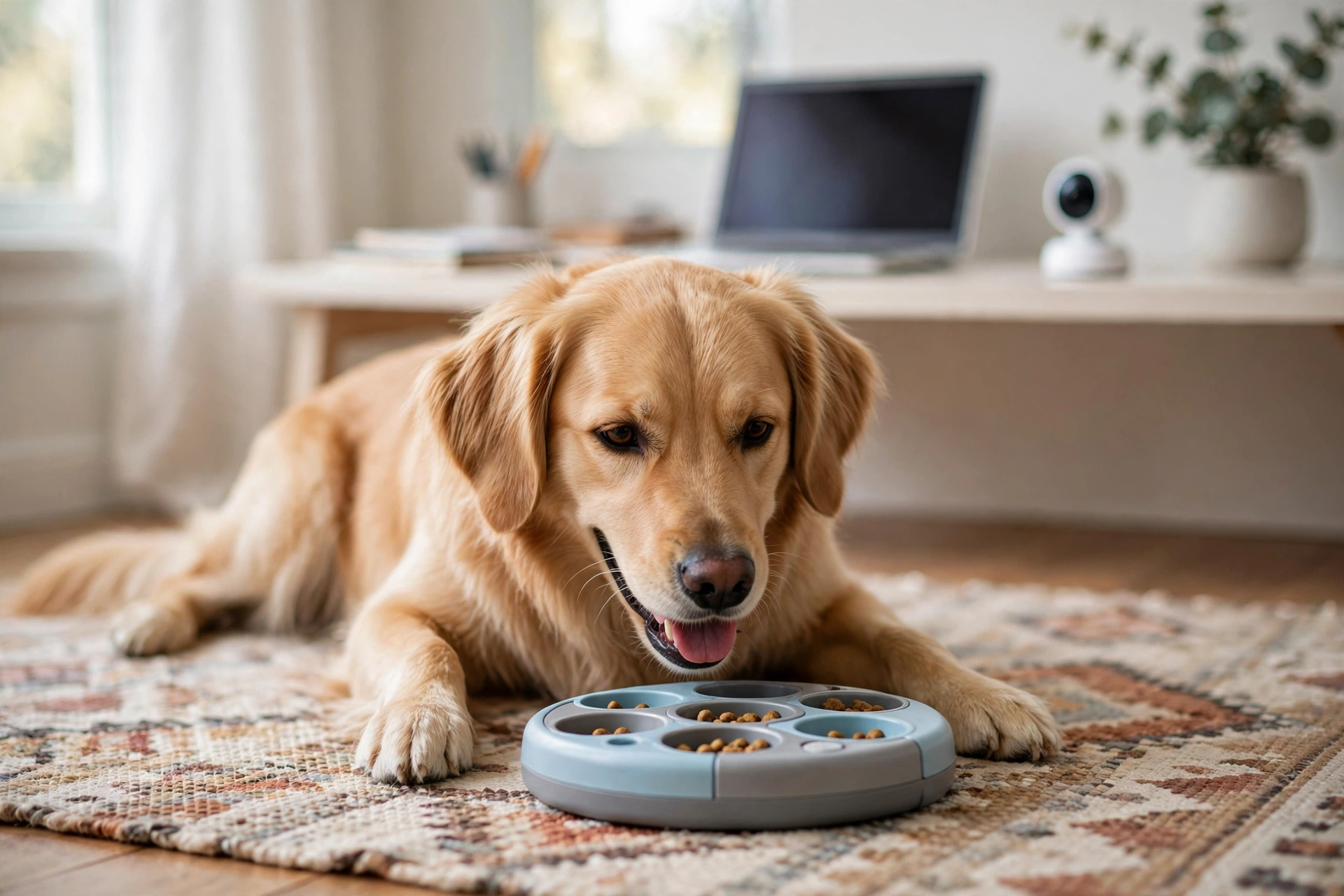
The call-day lineup. Before your first call, set out one item. When the call ends, put that item away and set out the next one. A frozen stuffed toy is a strong opener: stuff it with kibble and a smear of wet food, freeze it overnight, and it keeps a dog occupied for 20 to 40 minutes. A lick mat smeared with plain yoghurt or mashed banana works the same way for dogs that prefer licking to chewing — our lick mat guide explains which spreads are safe and how long to freeze them. A snuffle mat with kibble hidden in the folds gives a dog a sniffing job, which is surprisingly tiring; our snuffle mat review covers the best options. A sliding puzzle toy with treats under the compartments suits dogs that like to work things out with their paws, and a rubber chew toy stuffed with a few treats is a reliable fallback for heavy chewers. Our puzzle toy guide for beginners walks through difficulty levels if you are building a collection from scratch.
Timing matters more than difficulty. Match the item to the call, not the other way round. A 15-minute stand-up gets a quick scatter of kibble in a snuffle mat. A 60-minute planning meeting gets the frozen stuffed toy. The last call of the day gets the easiest item, because a tired dog will give up on a hard puzzle and come looking for you instead.
Keep the good stuff for work hours. The rotation only works if the enrichment toys are special. If the puzzle toys live on the floor all day, they are furniture. Put them in a cupboard or a high shelf, and bring them out only when you need quiet. The same goes for high-value chews: a long-lasting chew that appears only during calls becomes a powerful signal that call time is settle-down time.
Building a call-day routine
Cameras and puzzles work best inside a routine your dog can predict. Dogs settle faster when they know what happens next, so build the workday around the same pattern: a proper walk or play session before your first call, breakfast from a puzzle or a slow feeder rather than a bowl, then a calm settling cue — a mat or bed in the same spot every day — as you sit down to work.
Between calls, do the small things that prevent the next interruption. A two-minute garden break, a quick training game, or a short sniff walk around the block resets a dog far better than an hour of ignoring them. If your dog is restless in the afternoon, that is usually a sign they have had too little movement, not too little attention. An automatic ball launcher in the garden can burn off energy in a lunch break if you have the space, but it is no substitute for a walk.
For dogs that struggle to settle even with enrichment, a camera with bark alerts can tell you whether the problem is boredom or anxiety. A bored dog quiets down once they have a job; an anxious dog paces, pants, and keeps checking the door no matter what you offer. If that sounds like your dog, talk to your vet or a behaviourist before buying more gear — no camera or puzzle fixes separation anxiety on its own.
Choosing the right setup for your home
Start with the enrichment, not the camera. Four or five puzzle items cost less than most cameras and solve the actual problem — a bored dog — directly. Add a camera when you need eyes on a dog in another room, when you leave the house for part of the day, or when you want the treat-tossing trick for the moments between calls.
If you do buy a camera, prioritise a wide field of view and a stable app over fancy extras. A laser pointer sounds fun, but most dogs lose interest in it quickly and some get frustrated by a light they can never catch. Bark alerts are useful only if you can act on them — an alert you cannot answer mid-call is just a notification. And check the camera's night vision and privacy settings if it will sit in a room you use in the evening.
One more practical point: keep the camera and the puzzle toys apart in your dog's mind. If the camera becomes the treat machine, your dog will stare at it all day. Let the puzzles do the occupying, and let the camera do the checking in.
KONG Classic by KONG
Best for: Stuffing, freezing, and fetch
- Natural red rubber formula per manufacturer specs
- Hollow center for stuffing
- Vet-recommended design per brand claim
What we like
- Endlessly stuffable — kibble, peanut butter, frozen mixes
- Bounces unpredictably for fetch
- Dishwasher safe
Tradeoffs
- Black 'extreme' version needed for power chewers
- Rubber smell when new (fades)
Based on published specifications · Last checked 10/08/2026
Toppl Puzzle Toy by West Paw
Best for: Beginners and easy cleanup
- Zogoflex recyclable material per manufacturer specs
- Top-rack dishwasher safe
- Squeezy wide opening
What we like
- Wide opening is beginner-friendly
- Rinse-clean in seconds
- Gentle on teeth vs hard plastic puzzles
Tradeoffs
- Smaller opening than KONG for big stuffing jobs
- Premium price
Based on published specifications · Last checked 10/08/2026
Nina Ottosson Puzzle Toy by Outward Hound
Best for: Smart dogs that solve easy puzzles fast
- Nina Ottosson design with sliding compartments per specs
- Multiple difficulty levels in the line
- BPA-free plastic per manufacturer
What we like
- Teaches problem-solving in short sessions
- Replaceable parts available
- Good price for the engagement
Tradeoffs
- Plastic pieces need supervision
- Too easy for puzzle veterans at level 1
Based on published specifications · Last checked 10/08/2026
Wooly Snuffle Mat by PAW5
Best for: Sniff-driven dogs and rainy days
- Fleece strips hide kibble per product specs
- Machine washable per manufacturer
- Non-slip base
What we like
- 10 minutes of sniffing visibly tires dogs out
- Slows fast eaters without plastic
- Easy to toss in the wash
Tradeoffs
- Fleece strips need occasional washing
- Not for dogs that eat fabric
Based on published specifications · Last checked 10/08/2026
LickiMat Classic by LickiMat
Best for: Anxious eaters, Dogs that need mental stimulation at meals
- Textured surface for spreading soft foods per manufacturer specs
- Made from food-grade TPR
- Freezer and microwave friendly per manufacturer
What we like
- Turns meals into a calming licking activity
- Great vehicle for peanut butter, yogurt, pumpkin
- Easy to rinse clean
Tradeoffs
- Not a chew toy — supervise and remove when empty
- Thin surface can be punctured by determined chewers
Based on published specifications · Last checked 10/08/2026
FAQ
Will an interactive camera stop my dog barking on calls?
Not on its own. A camera lets you see the barking and toss a treat, but a bored dog will bark again once the treat is gone. The combination that works is a camera for check-ins plus a puzzle rotation that keeps the dog occupied — the camera supports the system, it does not replace it.
How many puzzle toys do I need for a rotation?
Four or five is enough for a full workday: one per call block, with a day or two of rest between uses of each item. Mix types — a frozen stuffed toy, a lick mat, a snuffle mat, a sliding puzzle, and a chew — so each one works a different sense. More than that is nice, but the rotation matters more than the collection size.
Can I leave my dog alone with a puzzle toy while I work?
Yes, with two conditions: the toy must suit your dog's chewing strength, and you should have watched them use it a few times first. Remove any toy your dog can tear apart or swallow pieces of, and never leave a heavy chewer unsupervised with a soft rubber toy they can shred. Check puzzle toys regularly for wear and replace them before they split.
Is talking to my dog through a camera a good idea?
Sometimes. A calm, familiar voice can reassure a dog that is settling down. But if your dog gets excited or confused by a voice with no person attached, the camera can make things worse — some dogs run to the door looking for you when they hear you. Test it on a day when you can watch the reaction, and stop using the voice feature if it riles your dog up instead of calming them.
What if my dog ignores puzzle toys entirely?
Start easier. Some dogs have never learned that food comes from a toy, so smear the puzzle with something high-value and leave part of the food visible. Help them get the first few treats out, then step back. Most dogs work it out within a few sessions. If your dog still shows no interest, try a different type — a sniffer may love a snuffle mat and ignore a sliding puzzle, and a chewer may want the opposite.
The bottom line
A quiet work-from-home day with a dog comes from a system, not a single gadget. Build a small rotation of four or five puzzle toys, lick mats, and snuffle mats; match the hardest item to your longest call; keep the toys special by putting them away between uses; and give your dog a proper walk before the workday starts. Add an interactive camera when you need to check on a dog in another room or toss a treat between calls — but let the puzzles do the occupying and the camera do the checking in. Your dog gets a job, you get your calls back, and the keyboard stays free of paws.
More in Toys & Enrichment

Dog Gift Guide 2026: The Right Present for Every Kind of Dog
Gift picks matched to the dog's real life — new puppy, grey-muzzled senior, adventure dog, anxious homebody — in small, mid-range and splurge tiers, published ahead of Black Friday.
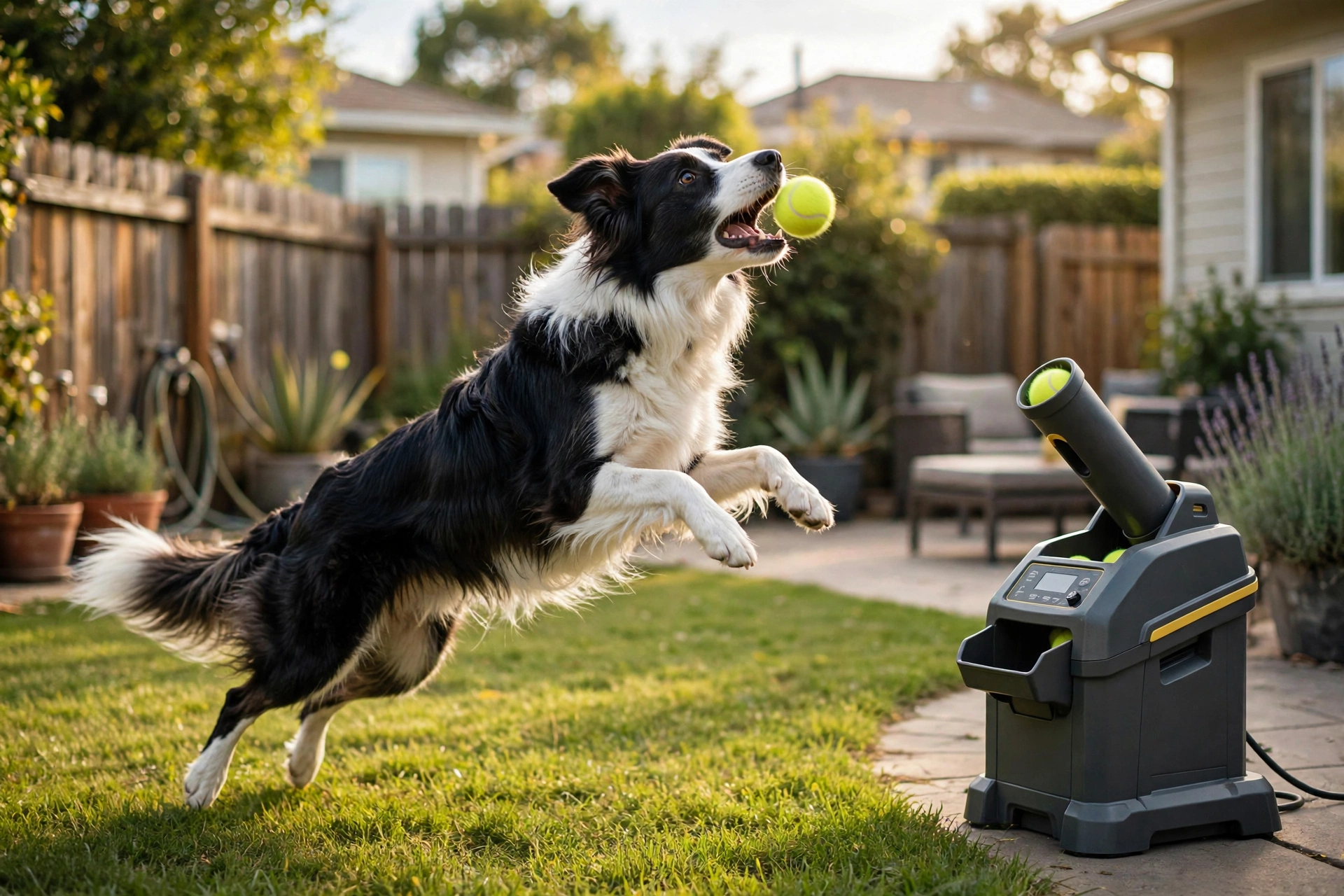
Automatic Ball Launchers for High-Energy Dogs
For the dog that would play fetch until your arm gives out: how automatic launchers work, who they suit, and the safety rules that matter.
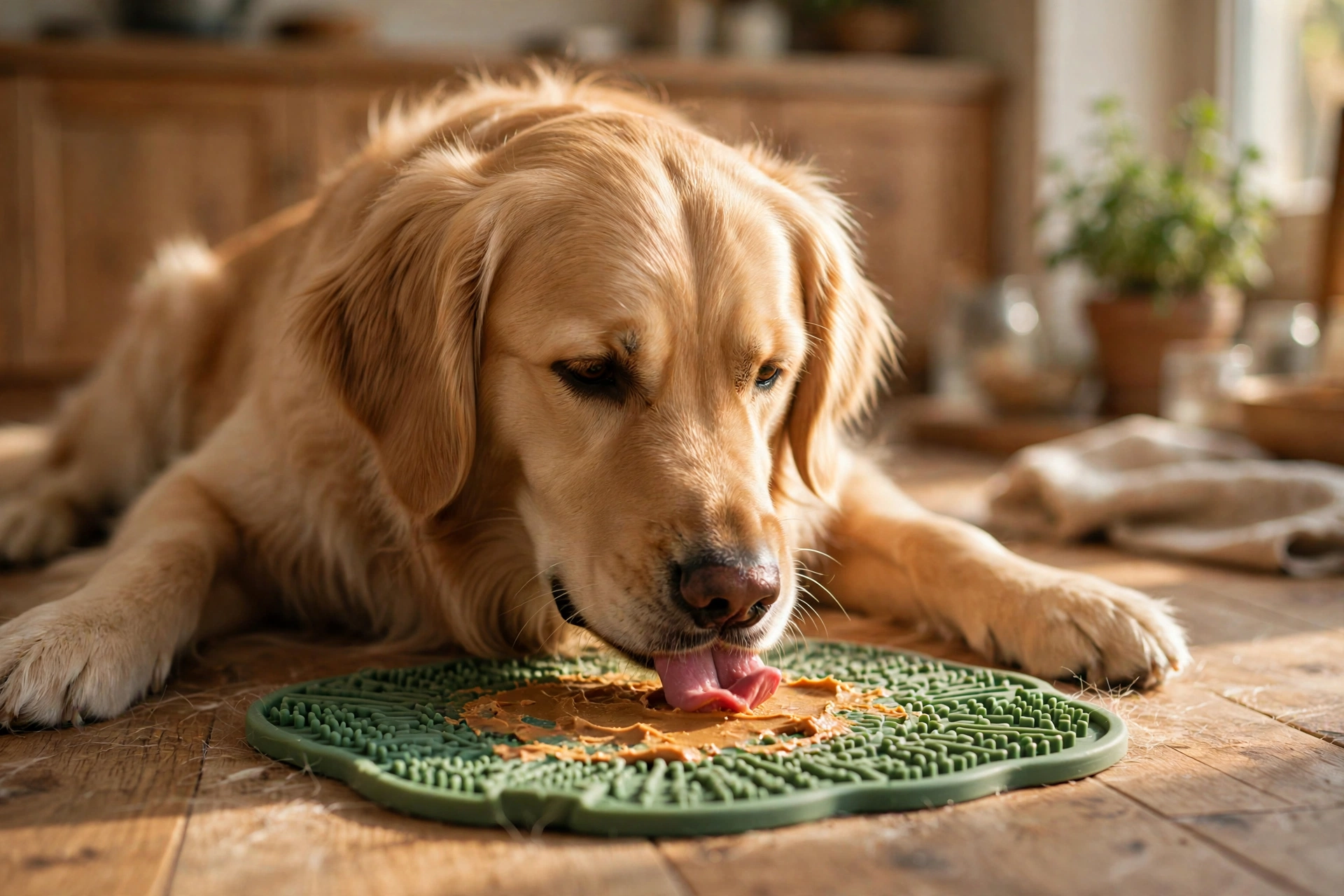
Lick Mats for Dogs: Calm Enrichment That Actually Works
A few dollars of textured silicone that buys calm on demand. How lick mats settle anxious dogs, what to smear on them, and why freezing is the best trick in the category.