Quick verdict
For dogs that already hike with you, a well-fitted backpack is one of the best upgrades you can make to your trail kit. It lets your dog carry their own water, a collapsible bowl, treats, and poop bags, which takes real weight out of your pack on longer outings. The key word is well-fitted: a saddlebag-style pack that sits stable on the ribcage is a tool; a loose one that slides around is a misery for everyone. Sized and packed correctly — light loads, balanced side to side, never more than the commonly cited guideline of around ten percent of body weight for casual day hikes — most healthy adult dogs take to packs quickly and barely notice the load.
The real-life scenario
Picture a Saturday morning on the trail. You're three miles in, your daypack already holds your water, your lunch, the first aid kit, the dog's water bottle, the collapsible bowl, the treat pouch, and a growing collection of used poop bags. Your shoulders are doing all the work while your dog trots along empty-pawed, in peak physical condition, utterly unburdened.
A dog hiking backpack redistributes that math. The dog's gear — the litre of water they actually need, the bowl, the treats — moves onto the dog. On a six-mile loop, that can be a couple of kilos you stop carrying, and there's a side benefit owners don't expect: dogs with a job to do often walk more calmly on trail. A pack gives an energetic dog a sense of purpose, and many owners notice the pulling-on-leash behavior settles once the dog is "working."
It's not for every dog or every outing. Puppies, seniors, and dogs with joint issues shouldn't be carrying loads, and a two-mile stroll around the park doesn't need gear. But if your weekends involve real mileage, a pack earns its place fast.
How it works
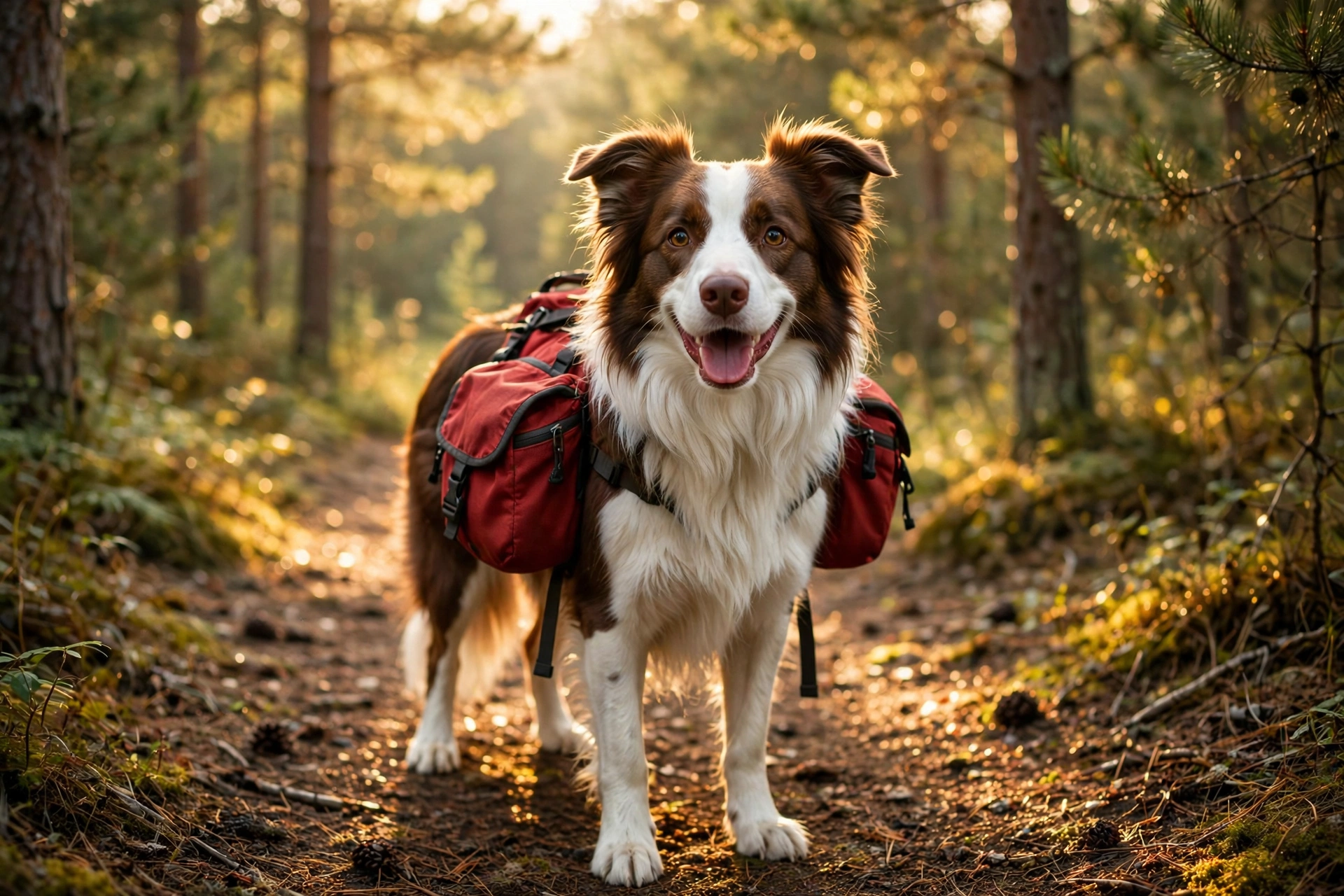
A dog hiking backpack is essentially a harness with saddlebags. Straps run around the chest and belly, and two pouches hang on either side of the ribcage — never over the spine, where weight would sit directly on the back. Good packs have five or more points of adjustment so the weight stays centered on the ribs and doesn't slide toward the tail on downhills or bunch up at the shoulders on climbs.
The load-carrying principle is simple physics: distributed, balanced weight on a strong frame. A dog's ribcage is the strongest part of the torso, and balanced side-to-side loading means no single muscle group gets overloaded. Based on published specifications, quality packs use ripstop nylon, closed-cell foam padding at strap points, and a top-mounted handle so you can steady your dog over obstacles.
The guideline most manufacturers and trail vets converge on: for casual hiking, keep the pack's total weight around ten percent of the dog's body weight, and build up to it gradually over several weeks. Athletic dogs conditioned for it can handle more, but that's a training question, not a shopping question. Start with empty bags, add weight slowly, and watch how your dog moves.
What to look for before you buy
Fit first, everything else second. Measure your dog's chest girth behind the front legs and check the manufacturer's size chart — not the weight range alone, because a deep-chested greyhound and a barrel-chested bulldog can weigh the same and need different packs. The bags should sit over the ribs with room to spare in front of the hips. If the pack can rotate or slide backward when loaded, the fit is wrong.
Weight distribution and stability. Look for packs where the bags hug the body rather than flopping outward. Wider, shorter bags ride more stably than tall, narrow ones. A belly strap plus a chest strap is the minimum; premium packs add a second belly strap or a sternum strap to prevent sliding on steep terrain.
Attachment and trail features. A leash attachment point on top is essential if your dog hikes leashed — it replaces the harness, so the pack needs to do harness duty well. Reflective trim matters for dawn and dusk trailheads. The Ruffwear Approach Pack, for example, is designed around a five-point adjustment system specifically to keep loads stable on uneven ground.
Capacity realism. For day hikes, smaller is better. You need room for water, a bowl, treats, and bags — not a pantry. Oversized bags tempt you to overload, and they shift more when half-empty. Check the capacity per the manufacturer's specs and be honest about what you'll actually pack.
Water compatibility. Dogs drink a lot on trail, and a soggy pack chafes. Water-resistant shell fabric and water bottle pockets sized for your bottles keep things dry. If your dog drinks from a travel water bottle on the go, test that it fits the pack's pockets before you commit.
Heat management. On warm days, a pack adds insulation. Mesh-lined interiors and light colors help. In genuine heat, consider hiking pack-free and carrying the dog's gear yourself — the weight trade-off isn't worth an overheated dog.
Ruffwear Approach Pack by Ruffwear
Best for: Day hikes and backpacking with medium to large dogs, Owners who want maximum fit adjustability
- Saddlebag design with two side pouches, per manufacturer specs
- Five-point adjustment system to keep loads stable, per manufacturer specs
- Top-mounted handle for steadying the dog over obstacles, per manufacturer specs
- Leash attachment point on top, per manufacturer specs
What we like
- Extensive adjustability suits a wide range of body shapes
- Stable, close-to-body bag placement on varied terrain
- Established brand with strong trail reputation
Tradeoffs
- Higher price than basic day packs
- May be more pack than short neighborhood walks need
Based on published specifications · Last checked 2026-10-08
Outward Hound DayPak by Outward Hound
Best for: Casual day hikes and first-time pack users, Budget-conscious owners
- Saddlebag-style pouches on both sides, per manufacturer specs
- Adjustable chest and belly straps, per manufacturer specs
- Mesh lining for ventilation, per manufacturer specs
What we like
- Affordable entry point into dog packs
- Simple to fit and load for short outings
- Good for testing whether a dog takes to carrying gear
Tradeoffs
- Fewer adjustment points than premium packs
- Best suited to lighter loads
Based on published specifications · Last checked 2026-10-08
FAQ
Can my dog wear a backpack on every hike?
They can, but they shouldn't start there. Introduce the pack on short walks with empty bags, add light weight gradually over a few weeks, and skip it entirely on very hot days or rough scramble terrain where the pack could snag. Think of it like conditioning for a new exercise — the dog's body needs to adapt.
How much weight can my dog carry?
The widely cited starting guideline is around ten percent of body weight for casual hiking, increased only with conditioning. This isn't a hard rule — breed, age, fitness, and body structure all matter. A vet check before loading up a dog with any joint history is money well spent.
What should the dog actually carry?
Their own supplies: water, a collapsible bowl, treats, poop bags, and a small towel. Keep your stuff — keys, phone, first aid — in your own pack where you can reach it. And always split weight evenly between the two bags; an unbalanced pack is worse than none.
My dog freezes or tries to roll when the pack goes on. Now what?
That's normal for the first fittings. Go back to zero: let the dog wear the pack indoors with treats for five minutes, no weight, no hiking. Most dogs adjust within a week. If the freezing persists after patient conditioning, the fit may be wrong — a pack that pinches or slides will get rejected no matter how gradually you introduce it.
Are hiking backpacks safe for puppies?
No — puppies' growth plates are still open, and loaded carrying is inappropriate until the dog is fully grown, which for large breeds can be 18 months or more. An empty pack for short conditioning walks is fine for older puppies, but add weight only on an adult dog's frame.
The bottom line
A dog hiking backpack is one of those purchases that quietly changes how your hikes feel — lighter shoulders for you, a more purposeful stride for the dog. The product category is mature, the good ones are well documented, and the main risk is buying before measuring. Get the fit right, load it lightly, condition gradually, and your dog gets to be a genuine trail partner instead of just a passenger.
More in Walk Gear
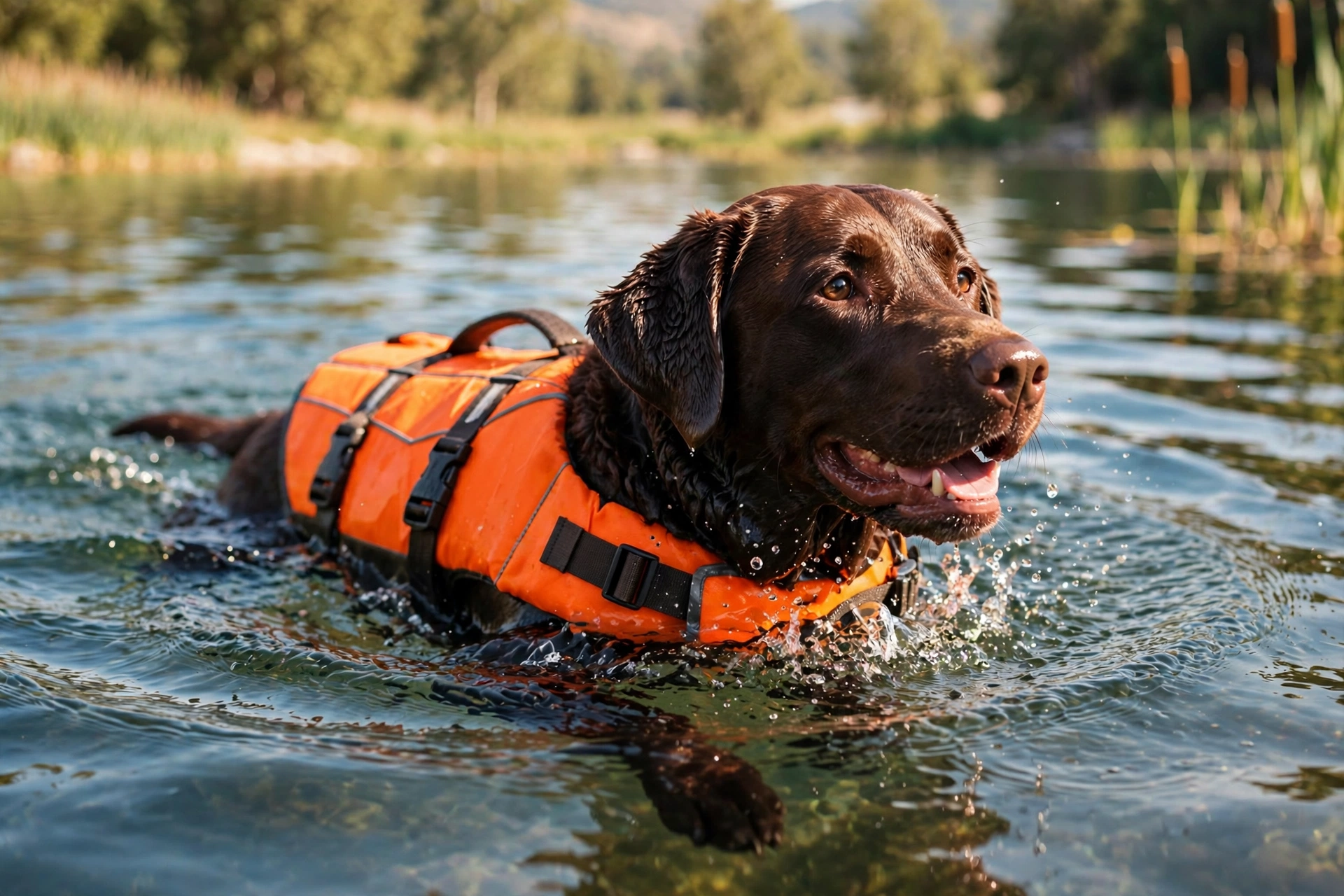
Dog Life Jackets: What Matters for Swimming Safety
Most dogs can swim, but not all swim well. Fit, buoyancy distribution, and a sturdy grab handle are what separate a real life jacket from a costume.
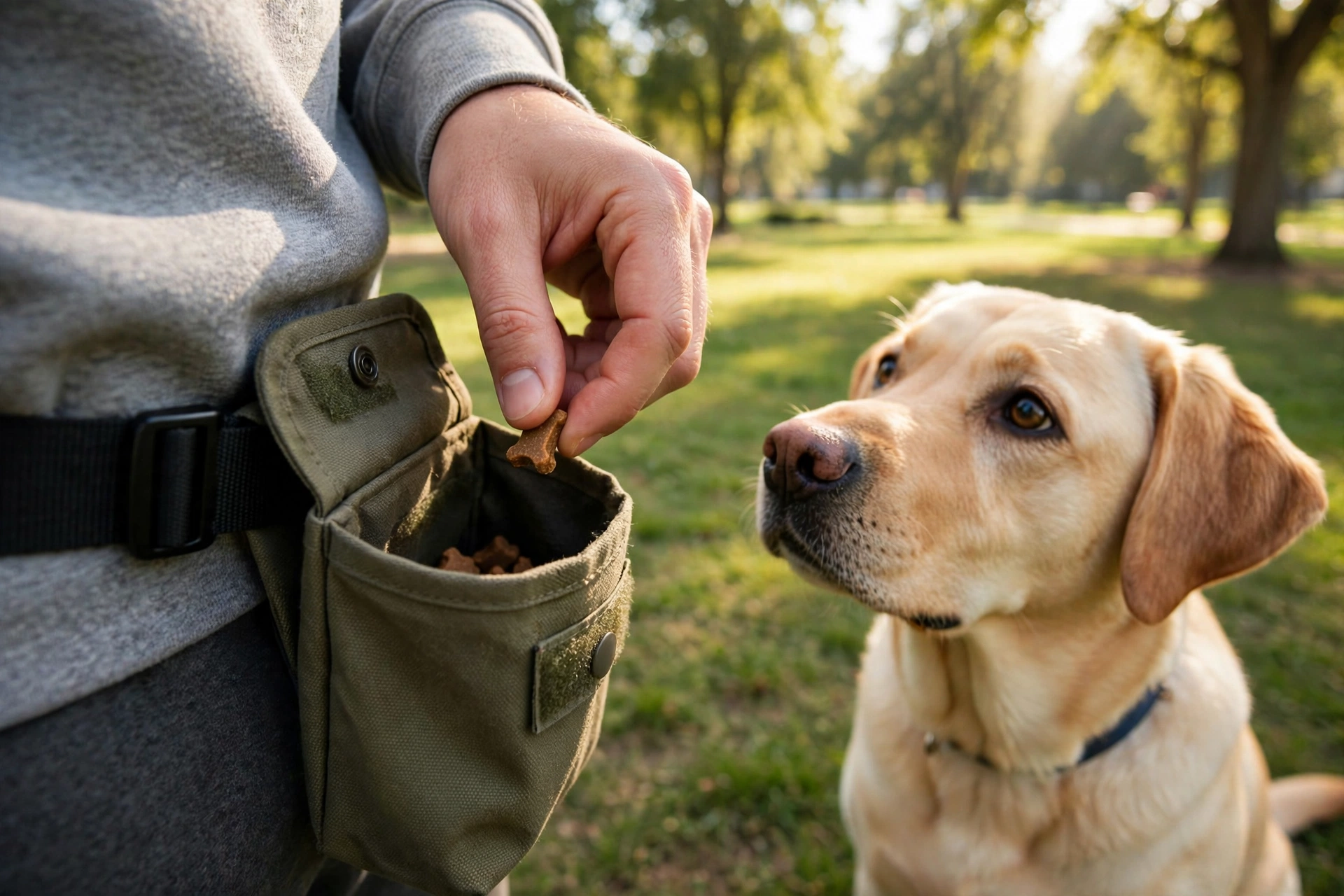
Treat Pouches for Training: What Trainers Actually Use
Trainers wear one on every session for a reason: a treat pouch fixes reward timing. What separates a good pouch from a pocket.
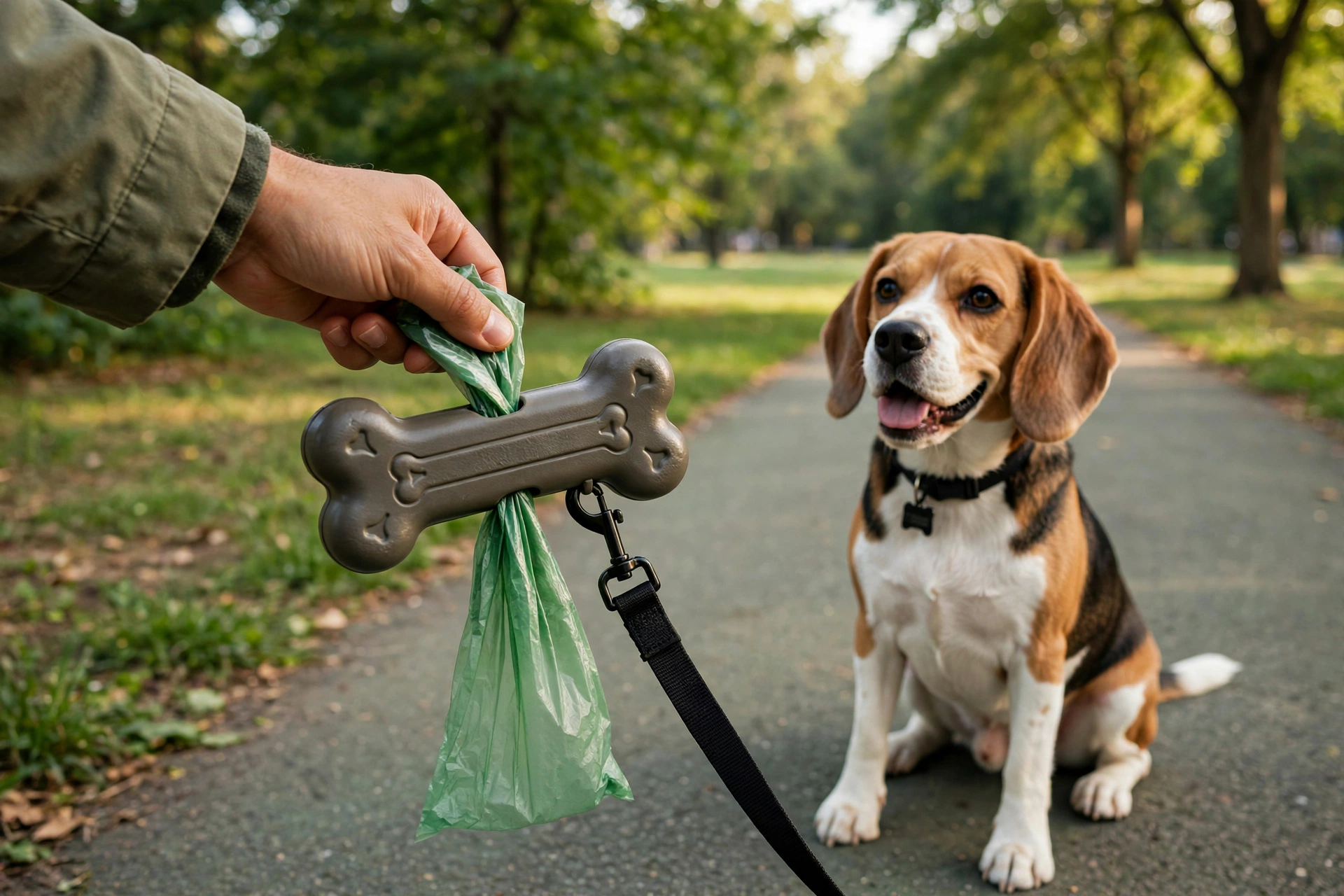
Biodegradable Poop Bags and Dispensers
Certified compostable versus merely biodegradable, scented versus unscented, and the dispenser that keeps bags on the leash: the honest comparison for 700+ bags a year.