Quick verdict
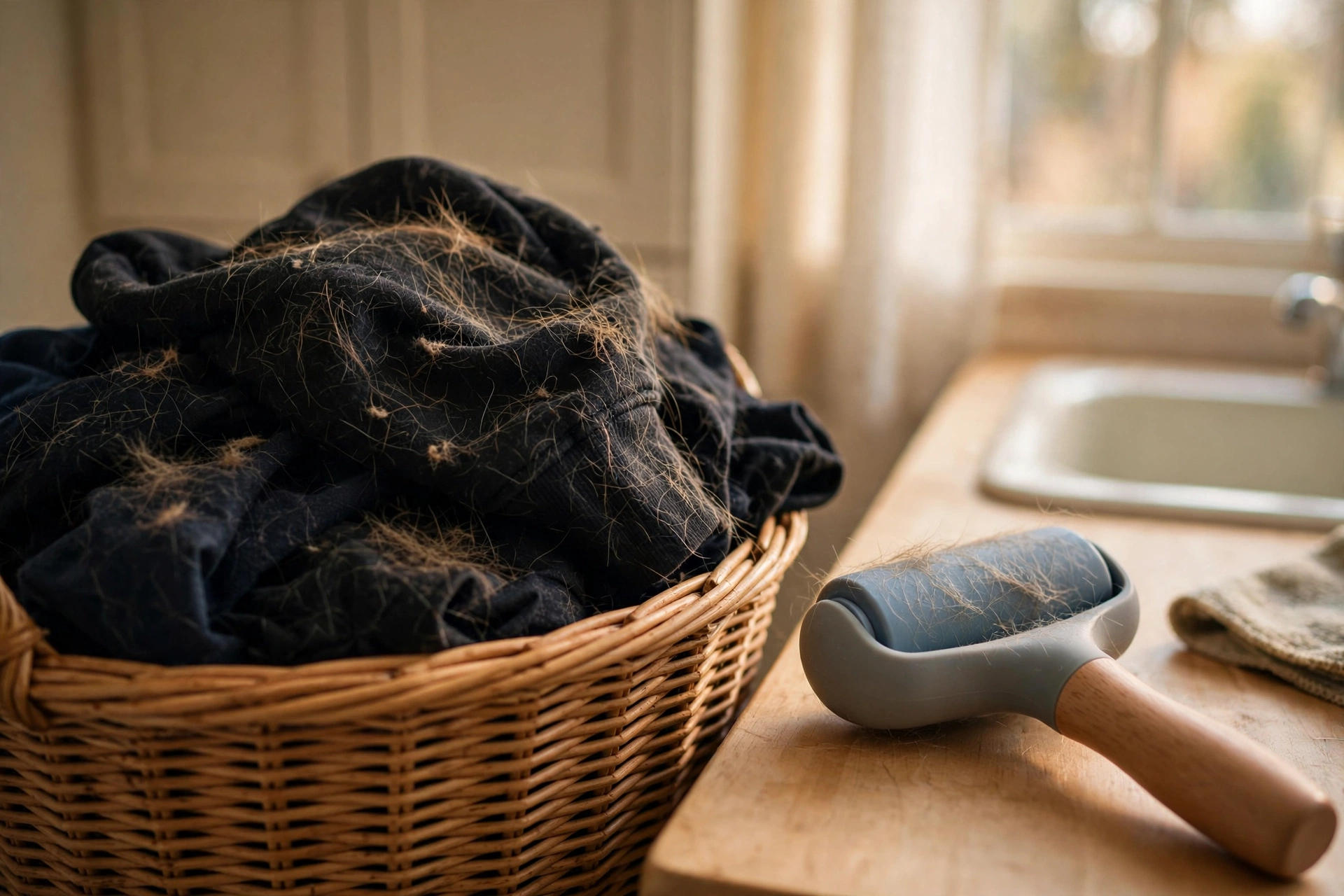
Pet hair survives the wash — every dog owner has pulled "clean" clothes out of the dryer still wearing the dog. Reusable pet hair removers designed for the laundry genuinely help: rubber or fabric-catch tools that go in the washer and dryer alongside your clothes, loosening embedded hair so the machine can flush it away. They work best as part of a system — brush the dog regularly, shake clothes before washing, and let the remover do the rest. No single tool makes a husky household lint-free, but the right one turns laundry from a fur-removal chore back into laundry.
The real-life scenario
You pull your black work trousers out of the dryer. They went in coated in golden retriever hair — standard. They come out... still coated in golden retriever hair, except now it's been pressed in by heat and somehow bonded at a molecular level. You spend ten minutes with a sticky lint roller, which fills after six sheets and leaves adhesive ghosts on the fabric. Repeat every laundry day, forever.
The frustration is that the washing machine was supposed to solve this. But pet hair is built to cling: it's slightly oily, statically charged, and barbed at a microscopic level. Water and detergent alone don't reliably dislodge it from woven fabric — it needs mechanical help. That's exactly what laundry-specific hair removers are: mechanical help that works while the machine runs.
How it works
Laundry pet hair removers come in two main designs. The first is the reusable roller — the ChomChom Roller is the well-known example, though it's primarily a furniture tool. Per the manufacturer, the ChomChom uses an electrostatic charge generated by rolling back and forth to lift hair off fabric into a collection chamber. The second, laundry-specific design is exemplified by the FurZapper: soft, tacky, paw-shaped silicone-like pieces that go directly into the washer and dryer. Per the manufacturer, they work by gently adhering to pet hair and separating it from clothing during the wash and dry cycles, so it ends up in the lint trap or drain filter instead of on your shirt.
Based on published specifications, the mechanism is straightforward: as clothes tumble, the remover pieces collide with fabric, their tacky surface grabs loosened hair, and the motion of the cycle pulls it free. The hair then either sticks to the remover (rinse it off and reuse) or migrates to the lint filter. They contain no chemicals and add nothing to the wash — they're purely mechanical.
A few honest mechanics notes:
- They reduce hair; they don't eliminate it. On a double-coated breed in full shed, expect noticeably cleaner clothes, not hair-free clothes. They work best combined with regular brushing — our deshedding guide covers the tools that keep the hair off your dog in the first place.
- Washer and dryer both matter. Using the remover in the wash loosens hair; the dryer is where most of it leaves the clothes for good, into the lint trap. If you line-dry everything, you'll see less benefit.
- They need cleaning to keep working. Tacky tools lose tack as they collect hair and detergent residue. Rinse or wipe them down regularly per the manufacturer's instructions — a saturated remover is just a passenger.
What to look for before you buy
Washer-and-dryer safe. Non-negotiable: the tool must be rated for both the wash cycle and dryer heat by the manufacturer. Cheap knockoffs can melt in the dryer or shed material onto your clothes — buy the real thing and check the temperature guidance.
Reusable versus disposable. Reusable tools (silicone pieces, electrostatic rollers) cost more upfront and work for months. Dryer sheets marketed for pet hair are single-use and add up fast. Over a year, reusable wins on both cost and waste — but only if you actually rinse them when they're full.
Load compatibility. Some removers work better in smaller loads where they tumble freely against the clothes; in an overstuffed drum, everything just sits. If you routinely wash full loads, consider using two removers per load, within the manufacturer's guidance.
Fabric safety. Quality laundry removers are gentle on all fabrics per the manufacturer, but if you regularly wash delicates, silk, or technical sportswear, check the manufacturer's fabric guidance first — mechanical agitation tools are safest on everyday cotton, denim, and synthetics.
Expectation management. The heaviest shedders will still need a lint roller for the last ten percent. Think of the laundry remover as the tool that handles ninety percent of the work automatically, so the roller only does touch-ups.
If hair is also a furniture-and-floor problem — and with a shedding dog, it is — washable rugs are worth a look for the high-traffic zones. Our guide to washable rugs for muddy paws covers the ones that survive both the dog and the washing machine.
ChomChom Roller Pet Hair Remover by ChomChom Roller
Best for: Couches, beds, and car seats, Quick daily hair control, Reducing hair before laundry day
- Electrostatic charge lifts hair into a collection chamber, per manufacturer specs
- Reusable — no refills or sticky sheets required, per manufacturer specs
- Works on furniture, bedding, and clothing, per manufacturer specs
What we like
- No ongoing cost — fully reusable
- Picks up embedded hair that lint rollers miss
- Quick to empty and use again
Tradeoffs
- Designed for surfaces, not for use inside the washer/dryer
- Chamber needs emptying frequently in heavy-shed homes
Based on published specifications · Last checked 2026-10-08
FurZapper Pet Hair Remover for Laundry by FurZapper
Best for: Dog owners tired of hairy 'clean' laundry, Washer-and-dryer households, Reducing hair on everyday clothes
- Soft tacky material grabs pet hair during wash and dry cycles, per manufacturer specs
- Goes directly in the washer and dryer with the load, per manufacturer specs
- Reusable and chemical-free, per manufacturer specs
What we like
- Works automatically — just toss it in with the load
- Noticeably reduces hair on clothes after drying
- No chemicals added to the wash
Tradeoffs
- Needs rinsing to keep the tacky surface effective
- Best results need the dryer, not line-drying
Based on published specifications · Last checked 2026-10-08
FAQ
Do FurZapper-style laundry removers really work?
They genuinely reduce pet hair on clothes through the wash and dry cycles, based on how they're designed — tacky surfaces that grab hair and help the machine carry it to the lint trap. Results vary with the dog: a short-haired beagle's owner may find clothes nearly hair-free, while a husky owner will see a big improvement rather than perfection.
Can I use pet hair removers with fabric softener?
It's generally fine per manufacturer guidance, though fabric softener coats fibers (and the remover's tacky surface) with a waxy film, which can reduce effectiveness slightly. If results seem weak, try skipping the softener on dog-heavy loads — or use dryer balls instead.
Will they damage my washing machine?
Reputable laundry hair removers are designed to be machine-safe — they're soft, lightweight, and contain no parts that can snag or jam. Check the manufacturer's guidance for your specific machine type, and inspect the tools periodically for tears or degradation.
How long do reusable laundry hair removers last?
Months to well over a year, depending on use, per manufacturer estimates. The tacky surface wears down gradually. When hair stops coming off clothes as effectively and cleaning the tool doesn't restore it, it's time to replace.
Do they work on human hair too?
Yes — the mechanism is mechanical, not pet-specific. Long human hair, lint, and general fuzz all get picked up the same way, which is why many buyers end up tossing them in every load, dog owner or not.
The bottom line
Your washing machine can't beat pet hair alone — it needs a mechanical assist. A reusable laundry hair remover is the lowest-effort way to get one: toss it in, forget it, and pull out clothes that look like they belong to someone without a dog. Pair it with regular brushing of the actual dog, and laundry day stops being a second round of lint-rolling.
More in Home & Sleep
Enzymatic Cleaners for Pet Stains and Odors
Urine odor that keeps coming back isn't a cleaning failure — it's chemistry. How enzymatic cleaners digest the residue regular cleaners leave behind, and how to apply them so they finish the job.
Dog Gates and Playpens: Creating Safe Home Zones
Pressure-mounted or hardware-mounted? Gate or playpen? How to divide your home into safe zones for a puppy — matching the barrier to the location, the athlete, and your daily routine.
Puppy Starter Kit: The Realistic Essentials Checklist
Less than the pet store suggests, more than 'just bring a collar.' The dozen items that actually matter in month one, and what to deliberately buy later.