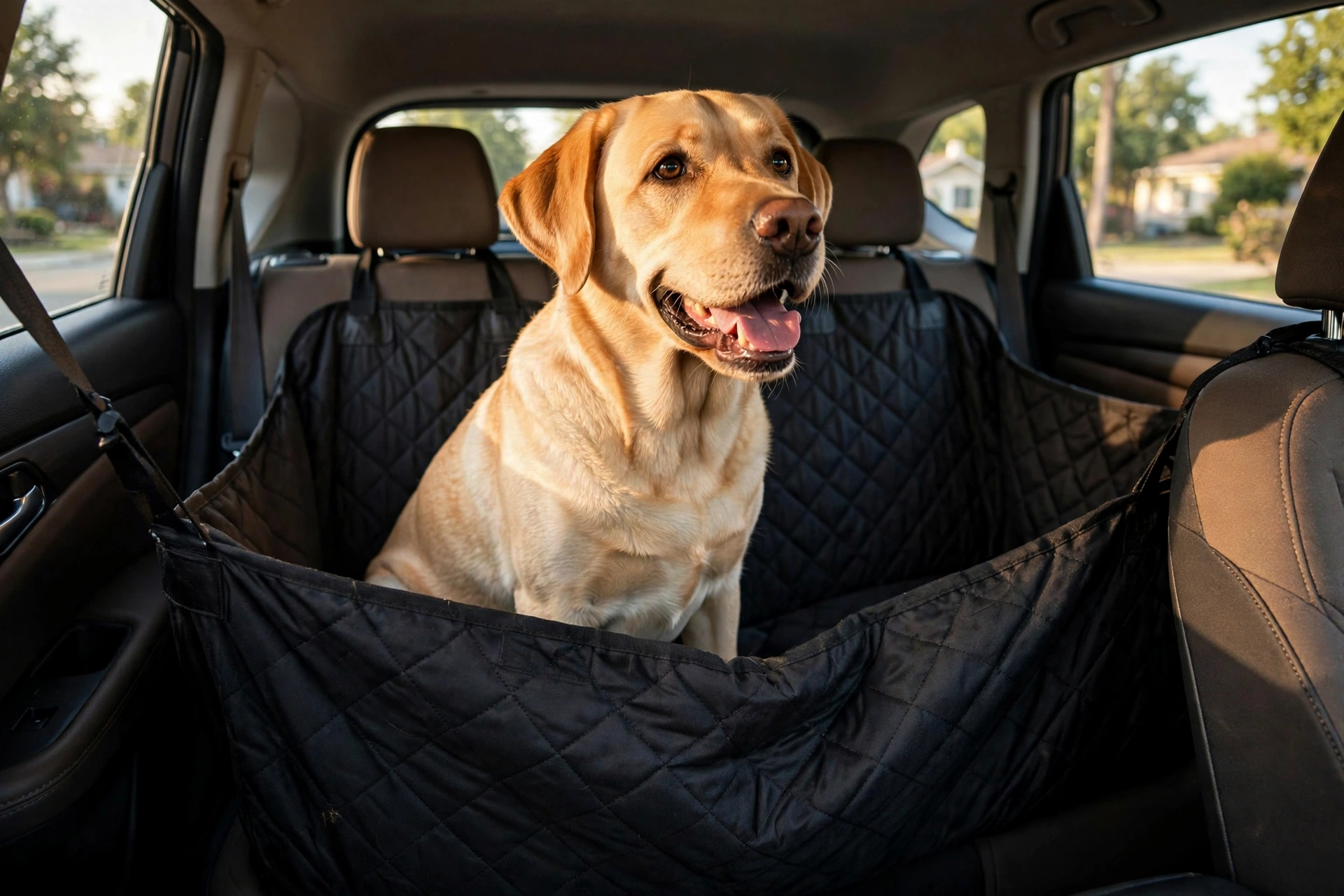
Quick verdict
If your dog rides in the car regularly, a seat cover pays for itself the first rainy day after a hike. Hammock-style covers — the ones that drape from the front headrests to the rear headrests — are the most popular design for good reason: they protect the seat and the seatbacks, give the dog a contained area, and block the footwell canyon that dogs slide into every time you brake. Quilted, waterproof options with seat anchors and a non-slip backing stay put best. One honest boundary: a cover protects the car, not the dog — it doesn't replace a crash-tested harness or a secured crate for safety.
The real-life scenario
The hike was perfect. The dog is not. Ten minutes from home, your mud-caked, joyfully damp labrador is sitting in the back seat, and you're doing the mental math on the upholstery: the paw prints on the seat, the wet-dog transfer on the seatback from where they pressed their nose to the window, the mysterious damp patch you'll discover in three days. You'd laid down a towel, optimistically, before you left. The towel is now wadded in the footwell, and the dog is sitting directly on the seat.
This is the exact moment every dog-owning driver has lived. A towel shifts. A blanket slides. A proper cover — anchored at four points, waterproof through, quilted against claws — stays where you put it and takes the hit so the upholstery doesn't have to.
How it works
The classic design is the hammock: a large quilted panel that straps to the front and rear headrests, draping across the back seat and spanning the footwell gap. The dog gets a flat, contained platform instead of a seat plus a leg-breaking trench; you get protection for the seat cushion, both seatbacks, and the back of the front seats, where muddy paws inevitably land.
Based on published specifications, the construction details that separate good covers from decorative ones are the waterproof layer (a proper waterproof membrane or coating, not just "water-resistant" fabric), the quilting (padding that resists claw punctures and adds comfort), and the anchoring system — headrest straps plus anchors that wedge into the seat crease plus a non-slip backing. All three together are what keep the cover from migrating into the footwell mid-drive. Bench-style covers skip the hammock drape and just cover the seat itself; they're quicker to install and remove but leave the footwell open. Bucket-seat and cargo-area variants exist for other vehicle layouts.
Two things a cover doesn't do: it doesn't restrain the dog in a crash — that's a harness or crate's job — and it doesn't make a car-sick or anxious dog enjoy the ride. It's upholstery insurance, and honest about it.
What to look for before you buy
Hammock versus bench versus bucket. Match the design to your car and your dog. Hammocks give maximum coverage and the footwell bridge, which nervous or clumsy dogs appreciate. Bench covers suit owners who frequently flip between dog mode and passenger mode. Measure your back seat and check the manufacturer's dimensions — most quality covers fit standard sedans and SUVs, but compact cars and third rows are worth verifying.
Real waterproofing. Look for an explicitly waterproof layer per the manufacturer, not just water-resistant fabric. Water-resistant buys you minutes against a wet dog; waterproof buys you the whole drive home. Sealed or well-finished seams matter too — water finds the stitching.
The anchoring system. This is where cheap covers fail. Headrest straps alone let the cover slide; the designs that stay put combine headrest straps with seat-crease anchors and a non-slip backing. Based on published specifications, quilted covers from established brands like 4Knines build all three in — it's the difference between a cover you adjust once and one you adjust at every red light.
Seatbelt and seat compatibility. If your dog rides in a harness clipped to a seatbelt, check for seatbelt openings or hook-and-loop slits in the cover. If you have split-folding rear seats or child seats to work around, look for designs with zippers or split configurations rather than one solid panel.
Cleaning. Machine washable per the manufacturer is the standard you want — a cover you can't easily wash is a cover that becomes the smell problem it was meant to prevent. Dark colors and quilted textures hide a multitude of sins between washes.
The safety pairing. A cover plus an unrestrained dog is still an unrestrained dog. Pair the cover with a crash-tested harness or a secured crate for actual safety — our crate guide covers travel crates if that's your direction.
4Knines Rear Seat Cover with Hammock by 4Knines
Best for: Muddy-pawed adventure dogs, Owners who want maximum seat protection
- Quilted, waterproof layers, per manufacturer specs
- Hammock design straps to front and rear headrests
- Seat anchors and non-slip backing, per manufacturer
- Machine washable, per manufacturer
What we like
- Full coverage: seat, seatbacks, and footwell gap
- Waterproofing handles wet dogs well
- Stays in place better than basic bench covers
Tradeoffs
- Heavier and pricier than simple bench covers
- Blocks use of the back seat for passengers while installed
Based on published specifications · Last checked 2026-10-08
Kurgo Bench Seat Cover by Kurgo
Best for: Daily drivers with a regular canine passenger, Owners who want quick install and removal
- Water-resistant quilted construction, per manufacturer specs
- Headrest straps and seat anchors, per manufacturer
- Openings for seatbelts, per manufacturer
- Machine washable, per manufacturer
What we like
- Quick to install and remove
- Lighter and easier to store than full hammocks
- Seatbelt openings keep restraint options open
Tradeoffs
- Doesn't block the footwell gap like a hammock does
- Less coverage for very muddy dogs
Based on published specifications · Last checked 2026-10-08
FAQ
Will a seat cover fit my car?
Most quality hammock and bench covers are sized for standard sedan and SUV back seats — check the manufacturer's listed dimensions against your seat width before ordering. Compact cars, trucks with narrow rear seats, and vehicles with built-in child seats are the cases worth measuring carefully. When in doubt, size up slightly; excess can be tucked, but a short cover leaves upholstery exposed.
Can I still use the seatbelt with a cover installed?
Yes, if the cover is designed for it. Look for seatbelt openings or hook-and-loop slits that let the belt pass through — this matters if your dog rides in a harness clipped to the seatbelt, which is the safest common setup. Install the cover first, then route the belt through the opening.
How do I stop the cover from sliding around?
The three-part answer: headrest straps, seat-crease anchors, and a non-slip backing — designs with all three stay put. Also, install it snugly rather than loosely; a taut cover shifts less than a draped one. If your cover still migrates, it's usually missing the seat anchors.
Are these machine washable?
Most quilted covers from established brands are machine washable per the manufacturer — typically a gentle cycle, then air dry to protect the waterproof layer. High heat is the enemy of waterproof coatings, so skip the hot dryer even if you're tempted.
Will a cover protect against claws?
Quilted, multi-layer covers resist normal scrambling and pawing well — the padding distributes the pressure that would otherwise puncture a thin fabric. A dog that deliberately digs or scratches at bedding can eventually wear through any soft cover, though; for dedicated diggers, no fabric cover is indestructible.
The bottom line
A good hammock cover is the difference between dreading the post-hike drive and not thinking about it at all. Prioritize genuine waterproofing, a three-part anchoring system, and seatbelt compatibility — then pair it with a proper restraint, because the cover protects your car while the harness protects your dog.
More in Home & Sleep
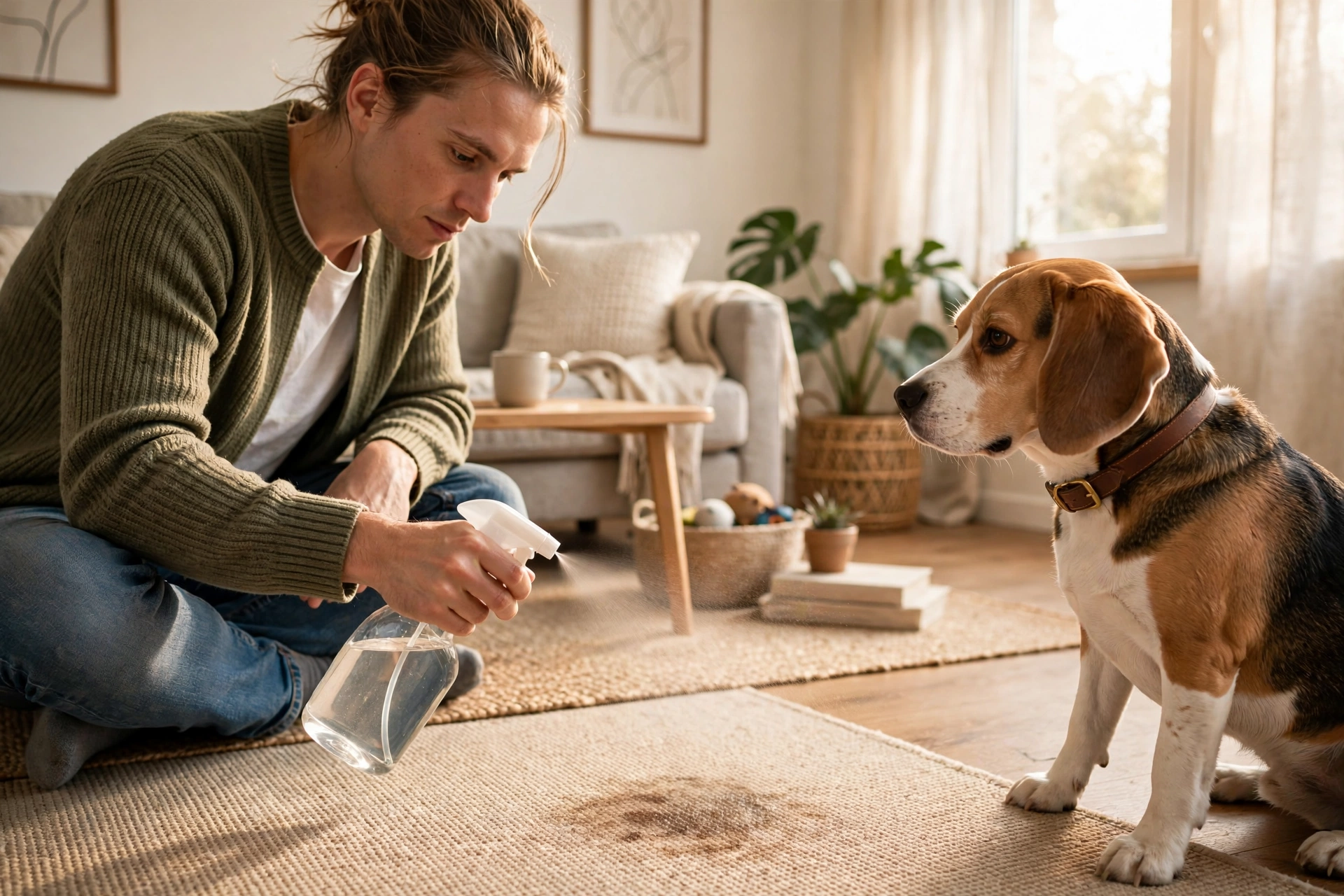
Enzymatic Cleaners for Pet Stains and Odors
Urine odor that keeps coming back isn't a cleaning failure — it's chemistry. How enzymatic cleaners digest the residue regular cleaners leave behind, and how to apply them so they finish the job.
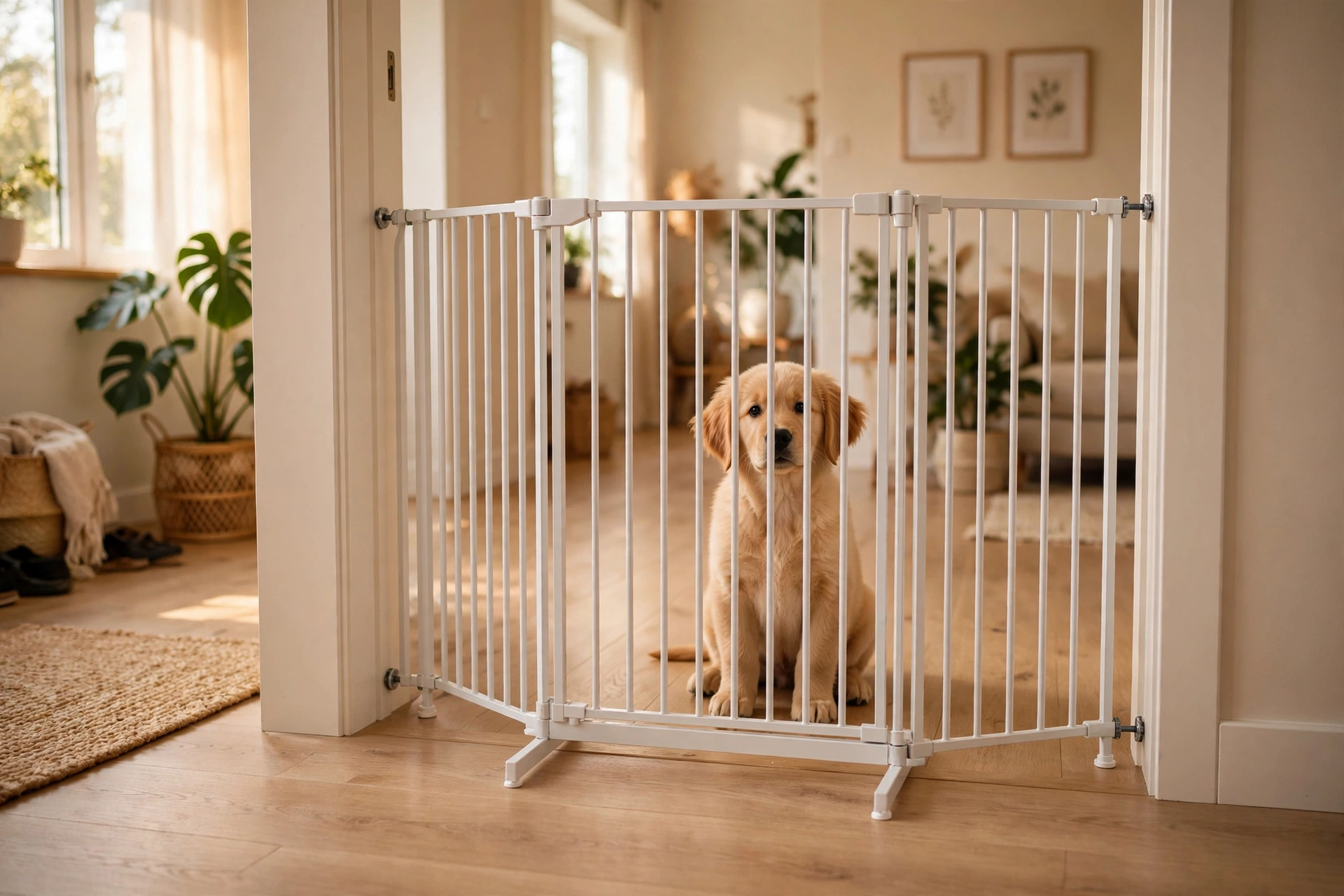
Dog Gates and Playpens: Creating Safe Home Zones
Pressure-mounted or hardware-mounted? Gate or playpen? How to divide your home into safe zones for a puppy — matching the barrier to the location, the athlete, and your daily routine.
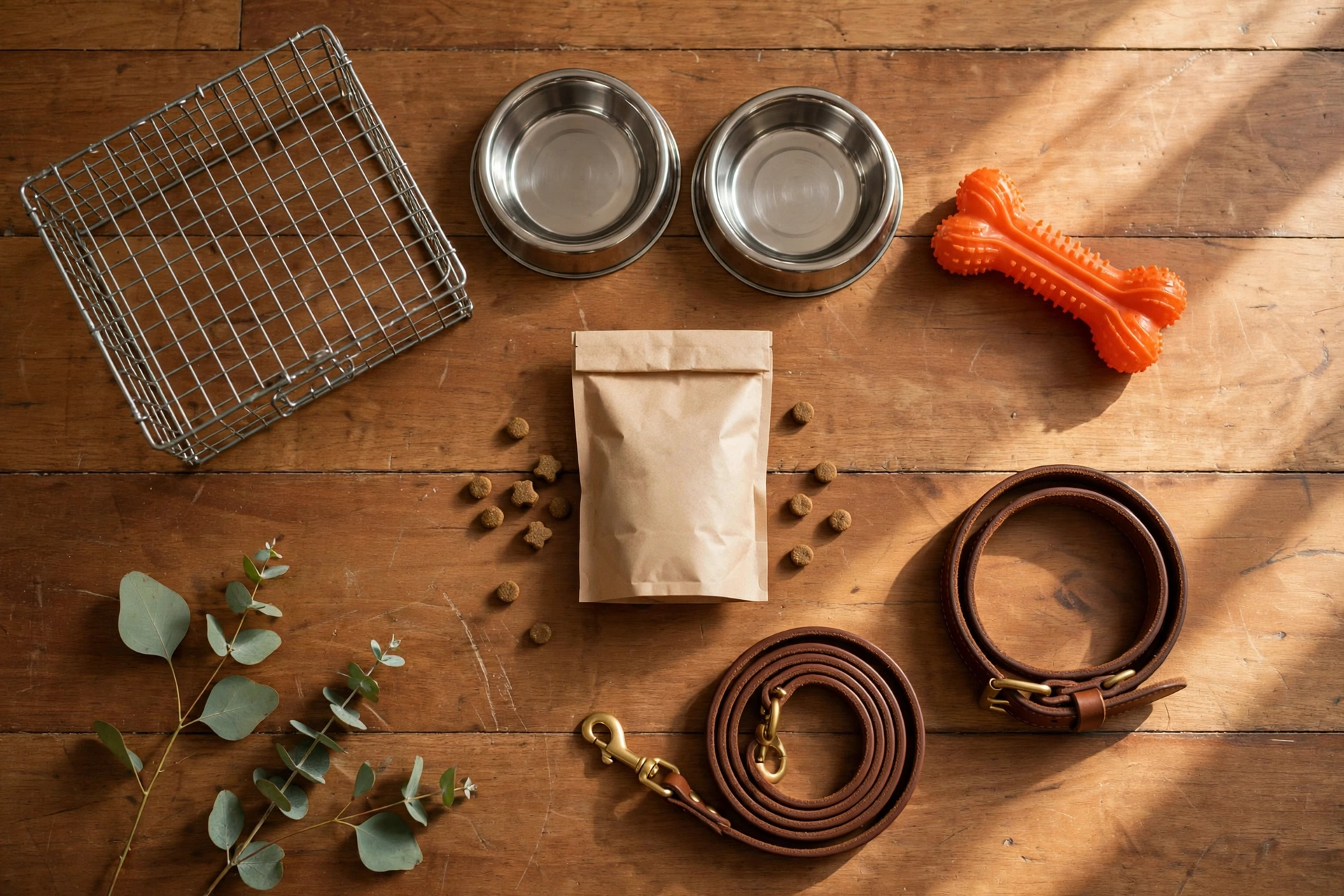
Puppy Starter Kit: The Realistic Essentials Checklist
Less than the pet store suggests, more than 'just bring a collar.' The dozen items that actually matter in month one, and what to deliberately buy later.