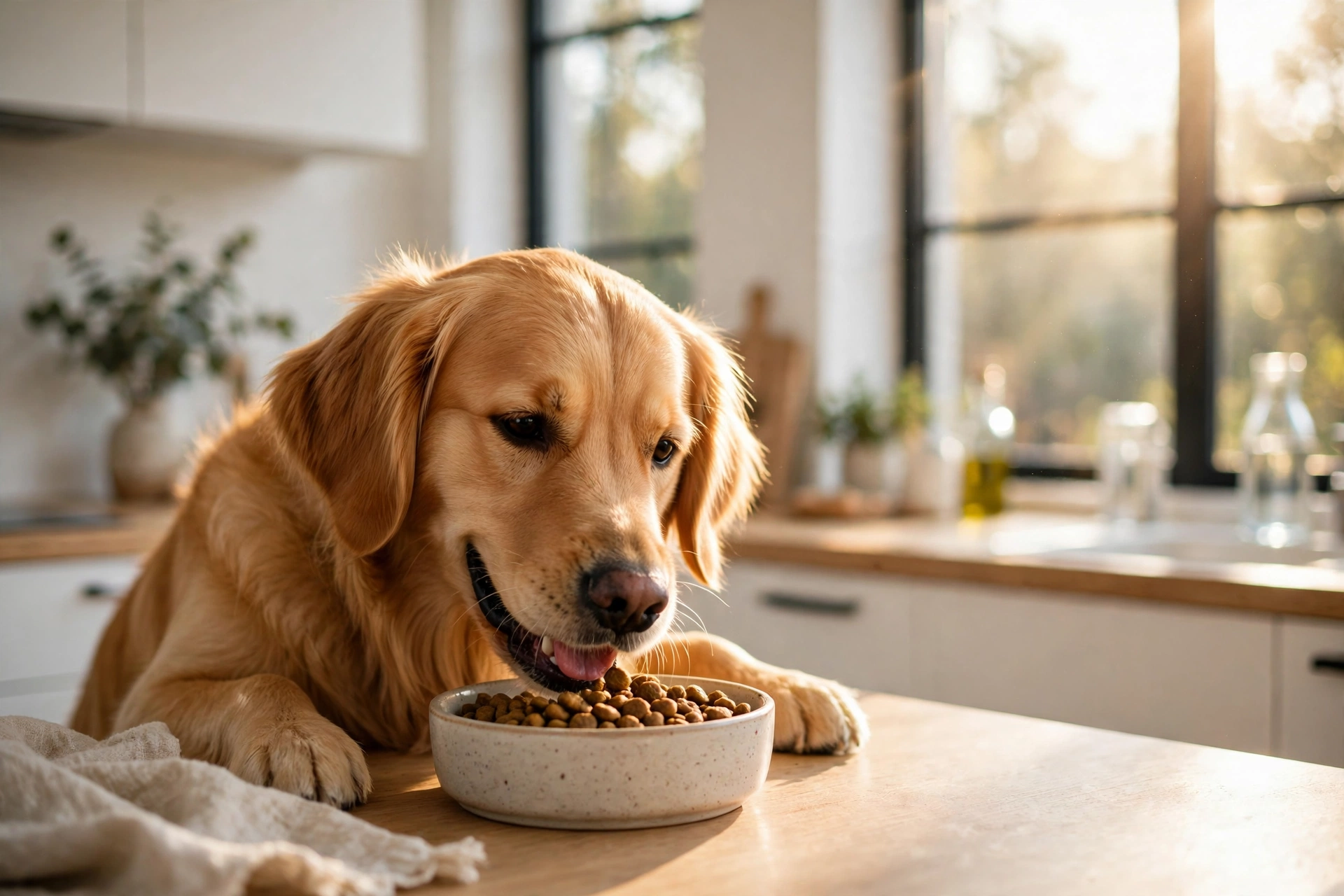
Quick verdict
Probiotics are genuinely useful for a narrow set of dog problems — soft stools after a diet change, an upset stomach following antibiotics, and travel stress — and mostly a waste of money outside them. They won't fix chronic digestive disease on their own. For the short-term situations where the evidence is real, a probiotic in any format (chew, powder, or paste) is a reasonable, low-risk buy — but buy it for the right reason, and know when to call the vet instead.
The real-life scenario
You switched your dog's kibble over the weekend. By Monday his stools are soft, and the pet store shelf is offering you seventeen boxes of "digestive health" chews promising a happy gut. Or your dog finished a course of antibiotics for an ear infection, and now everything about mealtimes is... loose. You want to do something. Probiotics feel like doing something.
That instinct is half right. Antibiotics and abrupt diet changes really do disrupt the gut. But the shelf of chews is built on a bigger promise than the evidence supports — so first, sort out which problem you actually have.
What probiotics actually are (and aren't)
A probiotic is a live microorganism — usually strains like Lactobacillus, Bifidobacterium, or Enterococcus faecium — meant to temporarily add "good" bacteria to the gut. Temporarily is the key word: most strains don't permanently colonize. They pass through, and while they're there they may crowd out troublemakers and help the gut lining recover.
That's not a dismissal — it just sets expectations. A probiotic is a support act, not the headliner. It can't fix a food intolerance, heal inflammatory bowel disease, or replace treatment for a gut infection — it smooths the recovery window while the gut restabilizes.
Watch the label vocabulary too: "prebiotic" is different — it's fiber that feeds existing good bacteria. Products labeled "probiotic" that contain only prebiotics are selling you fiber. Look for actual strain names and CFU counts (live bacteria per serving).
When they genuinely help
After antibiotics. Antibiotics kill gut bacteria indiscriminately. A short probiotic course alongside or after the round can help stool firmness return faster — space the probiotic a few hours from each antibiotic dose so the drug doesn't wipe it out immediately.
After a diet change gone too fast. Soft stools from an abrupt switch are the textbook use case: a few days to a week of support while you finish the transition properly.
Mild stress-related soft stools. Boarding, travel, a move — routine disruptions can loosen stools for a day or two. If your dog tends to get an upset stomach whenever the routine breaks, starting a probiotic a few days before the stressful event is one of the more sensible preventive moves.
Recovering from mild food indiscretion. The classic "ate something from the trash, vomited once, seems fine now but stools are soft" scenario. Once the dog is otherwise acting normally, a short course can help the gut bounce back.
Formats: chews vs powders vs pastes
The delivery format matters less than consistency — the best probiotic is the one your dog will actually take for the full course.
Chews are the easiest to dose: one chew, done. The trade-off is that they're often the most caloric option — check the label if your dog is on a weight plan — and some brands bake the chews, which raises questions about how many live bacteria survive.
Powders get sprinkled over food: if the dog eats the meal, the dog gets the dose. They also tend to have the highest CFU counts per serving for the price. The downside: a fussy eater who walks away from a new-smelling bowl gets nothing, and you can't easily re-dose without wasting a serving.
Pastes come in a syringe for acute situations: the just-finished-antibiotics dog, the travel-stress day. Priciest per day, but the easiest way to dose a dog that's off its food — worth keeping in the cupboard if your dog is prone to occasional digestive drama.
Storage matters too: live bacteria die in heat. Keep probiotics cool and dry, and treat "stable at room temperature" claims skeptically in a hot kitchen. Refrigerated products generally retain potency better — a sign the maker takes the "live" part seriously.
What to look for before you buy
Strain names and CFU counts on the label. "Probiotic blend" with no specifics is a red flag. Look for named strains and a CFU count per serving — products typically range from 1 to 10 billion CFU. More isn't automatically better; the right strains matter more than the number.
A quality seal. Pet supplements are lightly regulated. An NASC (National Animal Supplement Council) quality seal means the company passed third-party manufacturing audits — it doesn't prove the product works, but it proves the label is honest.
Dog-specific formulation. Human supplements use strains and doses calibrated for human guts, and some contain xylitol, which is toxic to dogs. Never substitute from your own medicine cabinet without checking every ingredient.
No miracle claims. "Cures leaky gut," "eliminates allergies," "boosts immunity 300%" — any product promising to fix chronic conditions is selling the fantasy version. The honest products talk about digestive regularity and stool quality, nothing more.
When to skip probiotics and call the vet
Probiotics are a support tool for mild, self-limiting problems. They are the wrong tool when:
- Blood in the stool or vomit. That's a vet visit, full stop.
- Symptoms persist beyond a few days. Soft stools that don't improve within 3–5 days of supportive care need investigation, not a longer probiotic course.
- The dog is lethargic, dehydrated, or refusing food. Digestive symptoms plus systemic symptoms mean something bigger is happening.
- The dog is immunocompromised or very young. Live bacteria in a weakened immune system should be a veterinary decision, not a pet-store impulse.
- There's a known chronic condition. IBD, pancreatic insufficiency, or chronic pancreatitis need diagnosis and management — probiotics may be part of the vet's plan, but they aren't a plan on their own.
One more honest note: if you find yourself buying probiotics every month for the same recurring problem, that's not a supplement routine — that's an undiagnosed condition. Chronic soft stools deserve a vet workup.
FAQ
Do probiotics work for dogs, or is it all marketing?
They work for specific short-term situations: soft stools after antibiotics, abrupt diet changes, mild stress. The evidence there is reasonable. The marketing version — daily probiotics as general wellness for healthy dogs — has much thinner support.
Chews or powder — which is better?
Whichever your dog will reliably take. Chews are easiest for cooperative dogs; powders hide in the food for picky eaters; pastes are best when the dog is off its food.
How long until I see a difference?
For mild upset, firmer stools typically show up within 3–7 days. No change after a week means the problem probably isn't one probiotics can fix.
Can I give my dog my own probiotics?
Not recommended — human formulations use human-calibrated strains and doses, and some contain xylitol or other ingredients unsafe for dogs.
Should my dog take probiotics every day forever?
For a healthy dog, no. Probiotics are for recovery windows and specific situations, not daily maintenance. Ongoing use for a chronic condition is a vet's call.
My dog is on antibiotics now — when should I start the probiotic?
During the course is fine: give the probiotic a few hours apart from each antibiotic dose so the drug doesn't kill it. Continuing for 1–2 weeks after the antibiotics finish is the common approach.
The bottom line
Keep a probiotic in the cupboard, but buy it for the right job: the post-antibiotics recovery, the too-fast food switch, the stressful trip. Pick a format your dog will actually take, check for named strains and a quality seal, and skip anything promising miracles. If the same digestive problem keeps coming back, the answer isn't a bigger tub of chews — it's a vet visit. And the fundamentals still matter most: a consistent diet, a proper transition when you switch foods, and storing kibble so it stays fresh.
More in Feeding & Treats
Homemade Dog Treats for Beginners: Safe Recipes, Ingredients to Avoid, and Storage That Actually Works
Three beginner recipes, the ingredients that are never safe, the 10% portion rule, and storage that keeps a batch fresh — everything you need to start baking for your dog.
Pet Water Fountains: Encouraging Healthy Hydration
Moving, filtered water stays fresher and draws dogs to drink more. We cover how fountains work, the maintenance they demand, and which materials hold up best.
Dog Food Storage Containers: Keeping Kibble Fresh for Weeks
Kibble starts going stale the moment the bag opens. Here's how airtight containers work, what makes a seal actually airtight, and how to size one to the bag you buy.