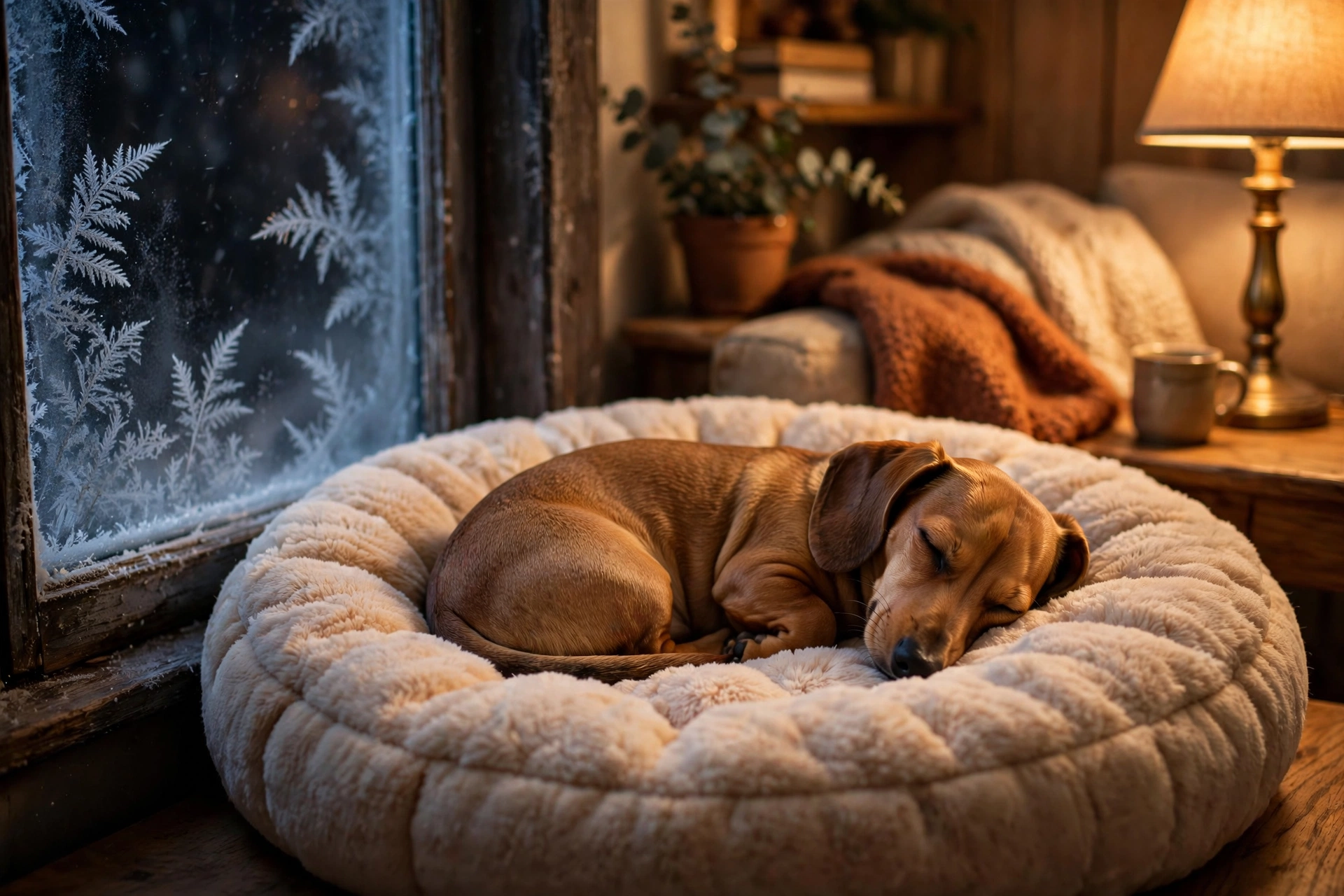
Quick verdict
A heated dog bed is a genuinely useful piece of winter kit for the dogs that need it: seniors with stiff joints, short-coated breeds, and any dog that sleeps in a cold room, garage, or porch. The heat is gentle — most warm only a few degrees above ambient or the dog's own body temperature — and the best designs use low-wattage thermostatically controlled pads rather than anything that gets truly hot. They're not a substitute for a warm room, but for cold-sensitive dogs they're the difference between a restless night and a deep sleep. Pick the type that matches where your dog sleeps, and always give the dog the option to move off the heat.
The real-life scenario
It's January, and the heating is set back overnight. Your elderly lab, the one with the creaky hips, used to sleep through anything — but lately you've been hearing her shift and sigh at 3 a.m., repositioning on her bed like she can't find a comfortable angle. In the morning she takes a few steps to loosen up, and you can see the stiffness in the way she rises.
Cold is hard on old joints, and it's hard on short-coated and small dogs generally. A greyhound or a whippet in an unheated hallway is essentially a thin-skinned animal trying to sleep on a cold surface in a cold room. Heated beds address this directly: a low, steady warmth that relaxes muscles and keeps the sleep surface a few degrees above the room. Owners of senior dogs often report the morning stiffness visibly easing once the dog starts sleeping warm — which makes sense, since nobody's joints feel good after eight hours in the cold.
The other classic case is the dog that sleeps somewhere the heating doesn't fully reach: the tiled mudroom, the garage kennel setup, the drafty corner by the back door. A heated bed turns those marginal sleeping spots into genuinely comfortable ones.
How it works
There are two families of heated dog beds, and they work differently.
Electric heated beds and pads contain a low-wattage heating element under the sleeping surface. Based on published specifications, most quality models use thermostatic controls that keep the surface at a safe, modest temperature — typically only warm to the touch — and draw very little power, comparable to a small night light. Some, like the K&H Lectro-Soft, are designed to warm to the dog's normal body temperature only when the dog is on the bed, using pressure-activated thermostats. Outdoor-rated models add chew-resistant cords and weatherproof housings.
Self-warming beds use no electricity at all. They contain a layer of heat-reflective material — the same principle as an emergency foil blanket — that reflects the dog's own body heat back at them. They're simpler, cheaper, and can't malfunction electrically, but they don't generate warmth in a truly cold room; they only conserve what the dog produces.
The honest summary: electric beds actively warm; self-warming beds retain. A healthy adult dog in a normal room probably needs neither. A senior with arthritis, a thin-coated dog, or a dog sleeping somewhere cold genuinely benefits from the electric kind, per the manufacturer's own guidance that they're designed for exactly those cases.
What to look for before you buy
Thermostat control, not constant heat. This is the safety line. A quality electric bed regulates itself and shuts down or holds a safe surface temperature; a cheap pad that just heats continuously is a burn risk. Look for explicit thermostatic or pressure-activated control in the published specifications. If the product description doesn't say how it regulates temperature, keep shopping.
The dog must be able to leave. This is non-negotiable and applies to every heated product: the bed should be one option in the sleeping area, not the whole area. A dog that can't move off the heat can't self-regulate. Overheating is the real hazard with heated beds, especially for puppies, flat-faced breeds, and dogs with heart conditions.
Cord safety. Chewers and electric cords are a dangerous combination. Outdoor and kennel models typically have steel-wrapped or chew-resistant cords; indoor beds rely on placement. If your dog chews bedding, an electric bed isn't for them unless the cord is genuinely protected and the dog is supervised.
Washability. Heated beds live on the floor and collect the usual — drool, dirt, shed fur. A removable, washable cover extends the bed's life enormously. Check whether the heating element itself can be spot-cleaned or must stay dry, because that determines how realistic the washing routine is.
Size and the dog's sleeping style. A curler needs less surface than a sprawler. Measure the dog in their natural sleeping position, not standing. An undersized heated bed means the dog hangs off the warm zone, which defeats the purpose.
If the dog in question is a senior, it's worth reading our guide to orthopedic dog beds for seniors — the support question and the warmth question often go together, and some beds solve both. For anxious dogs who struggle to settle at night, our calming beds guide covers the security side of the equation.
K&H Pet Products Lectro-Soft Outdoor Heated Bed by K&H Pet Products
Best for: Senior dogs with stiff joints, Thin-coated breeds sleeping in cool rooms
- Low-wattage heated sleeping surface, per manufacturer specs
- Pressure-activated thermostat warms when the dog lies down, per manufacturer specs
- Soft, orthopedic-style foam base, per manufacturer specs
- Removable washable cover, per manufacturer specs
What we like
- Thermostatically controlled for safer unattended use
- Combines gentle heat with supportive padding
- Low power draw suitable for overnight use
Tradeoffs
- Requires a power outlet near the sleeping spot
- Cord must be kept out of reach of chewers
Based on published specifications · Last checked 2026-10-08
PetSafe Heated Wellness Sleeper by PetSafe
Best for: Indoor dogs that seek warm spots at night, Owners wanting a simple plug-in heated bed
- Low-wattage internal heating element, per manufacturer specs
- Heats only a few degrees above ambient room temperature, per manufacturer specs
- Soft plush sleeping surface, per manufacturer specs
What we like
- Simple plug-in operation with no settings to manage
- Gentle warmth suited to everyday indoor use
- Lightweight and easy to move between rooms
Tradeoffs
- Indoor use only
- Dogs that chew bedding need supervision
Based on published specifications · Last checked 2026-10-08
FAQ
Are heated dog beds safe to leave on overnight?
Models with thermostatic controls are designed for unattended use per the manufacturer, and low-wattage pads draw minimal power. But "designed for" assumes the bed is intact, the cord is protected, and the dog can move off the heat. Inspect cords and surfaces regularly for damage, and replace anything chewed or frayed.
Can a heated bed burn my dog?
A properly functioning thermostatic bed shouldn't — the surface stays at a modest warmth. Burns happen with malfunctioning or unregulated pads, or when a dog with limited mobility can't shift off the heat. This is why thermostatic control and the ability to leave the bed matter more than any other features.
Do I need an electric bed, or is self-warming enough?
It depends on the room. In a normally heated home, a self-warming reflective bed often does the job for a mildly cold-sensitive dog. In a cold room, garage, or outdoor kennel in winter, self-warming can't create heat that isn't there — you need the electric kind. Match the product to the actual sleeping conditions.
What about puppies?
Puppies can't regulate body temperature well and also chew everything, which makes electric beds a poor combination for unsupervised use. For a young puppy, a self-warming bed or simply a warm draft-free spot is the safer choice until the chewing phase passes.
How do I clean a heated bed?
Most have removable covers that machine-wash normally. The heating pad or element underneath usually can't go in the machine — check the manufacturer's care instructions, because getting the electrical components wet is how heated beds die young. Spot-clean the pad and wash the cover regularly.
The bottom line
Heated dog beds are a niche product that does exactly what it promises for the dogs that need it: gentle, regulated warmth for cold-sensitive, senior, or thin-coated dogs sleeping in cool spaces. Buy thermostatic, size it to the dog's sleeping position, keep the cord out of chewing range, and always let the dog choose whether to sleep on the heat. For the right dog in the right room, it's one of the kindest winter upgrades you can make.
More in Home & Sleep
Enzymatic Cleaners for Pet Stains and Odors
Urine odor that keeps coming back isn't a cleaning failure — it's chemistry. How enzymatic cleaners digest the residue regular cleaners leave behind, and how to apply them so they finish the job.
Dog Gates and Playpens: Creating Safe Home Zones
Pressure-mounted or hardware-mounted? Gate or playpen? How to divide your home into safe zones for a puppy — matching the barrier to the location, the athlete, and your daily routine.

Puppy Starter Kit: The Realistic Essentials Checklist
Less than the pet store suggests, more than 'just bring a collar.' The dozen items that actually matter in month one, and what to deliberately buy later.