Quick verdict
A GPS tracker won't stop your dog from bolting — but it turns a lost-dog panic into a phone screen with a moving dot, and that difference is enormous. The category has matured: modern trackers pair GPS with cellular networks, add activity and sleep monitoring, and last days to weeks on a charge depending on the model. The catch is the subscription — nearly every tracker needs a monthly or annual cellular plan, so the "price" is really price-plus-plan. For escape artists, off-leash hikers, and newly adopted dogs with unknown recall, a tracker is cheap insurance. For a dog with reliable recall in a fenced yard, it's a nice-to-have.
The real-life scenario
The gate latch didn't catch. You turned around for ten seconds — a delivery, a phone call, the cat doing something — and the yard is empty. Your husky mix, the one with the prey drive and the selective hearing, is gone. You shout, you run the block, you drive the neighborhood with the window down, and with every silent minute the radius of where she could be doubles. Forty-five minutes later a neighbor three streets over has her, and you're shaking for the rest of the day.
Now replay it with a tracker on the collar: the phone buzzes with an escape alert two minutes after she slips out, the app shows her moving steadily east, and you drive straight to her instead of canvassing the zip code. Same dog, same gate, completely different afternoon. That's the entire value proposition — not prevention, but minutes. In traffic-heavy areas, minutes are everything.
How it works
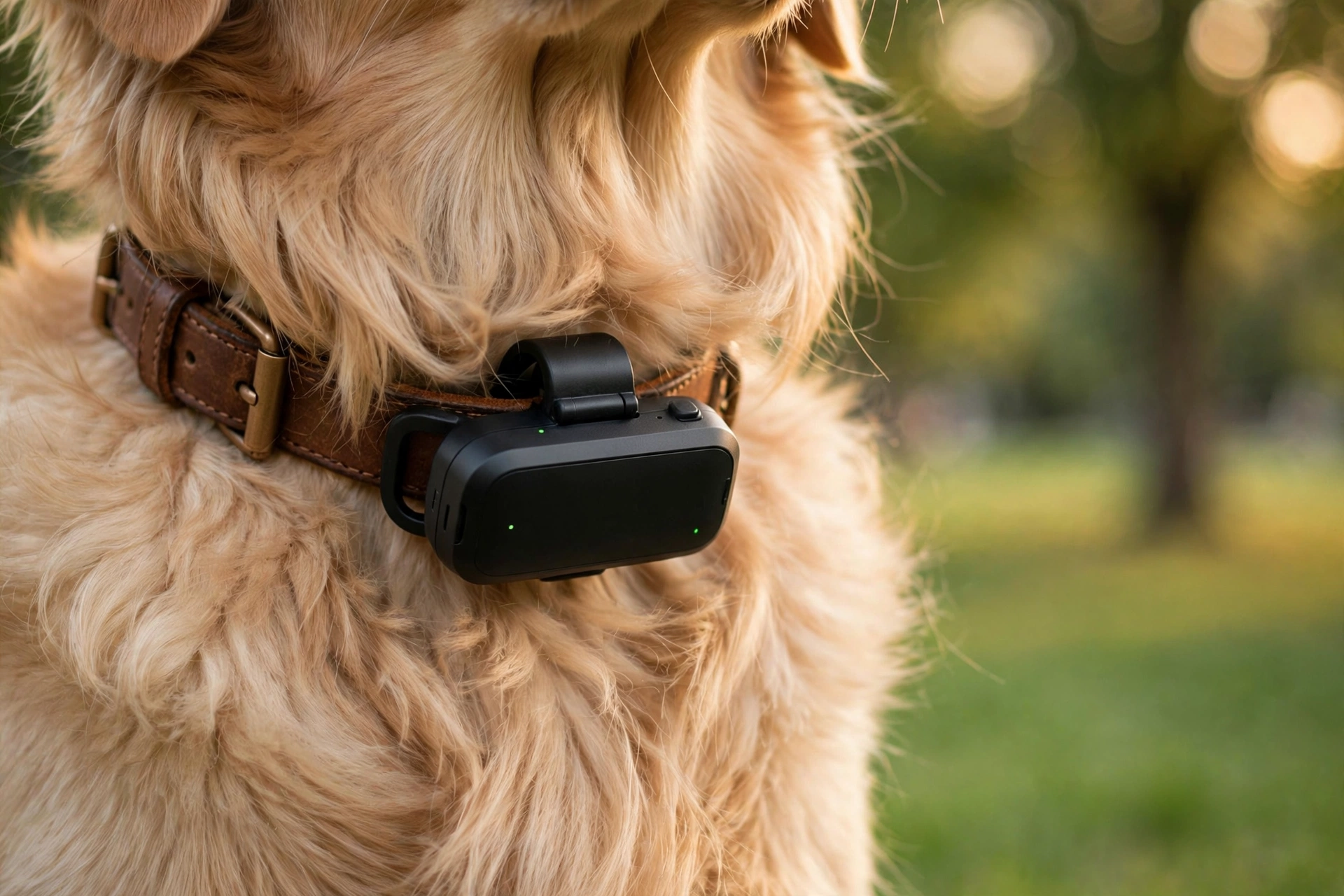
A GPS dog tracker is a small module that attaches to the collar. It determines its position from GPS satellites and reports that position to your phone via cellular networks (LTE-M or similar low-power bands in current models). Open the app and you see your dog's location on a map, updated every few seconds in live-tracking mode. Based on published specifications, most units also include:
- Geofence / safe-zone alerts — you draw a virtual boundary (home, yard, dog park) and the app notifies you when the dog leaves it. This is the feature that actually matters in the gate-left-open scenario.
- Activity and sleep tracking — the same sensors that detect movement log daily activity, which is genuinely useful for spotting the subtle slowdown that precedes illness, especially in seniors.
- Light and sound — some models add an LED or buzzer you can trigger from the app for finding the dog in the dark or at the dog park.
The subscription exists because the tracker is a cellular device: it needs a data plan to send locations. Some brands bundle the first months or year; after that it's typically billed monthly or annually. Factor it in honestly — a cheap device with a pricey plan can cost more over two years than the "expensive" alternative.
Battery life is the other honest tradeoff. More frequent location updates drain faster; manufacturers quote standby and active-tracking figures separately, per their specs. Live tracking during an actual escape is the heavy-drain scenario, so charge on a routine, not when you remember.
What to look for before you buy
Coverage where you actually go. Check the manufacturer's coverage map for your country and, more importantly, your trails. Cellular dead zones are GPS tracker dead zones — the unit can know where it is but can't tell you. If you hike remote areas, this limitation matters more than any feature list.
Weight and size versus your dog. Trackers range from coin-sized to matchbox-sized. On a 70-pound dog, anything works; on a 12-pound terrier, a heavy module is a welfare issue, not a feature. Check the manufacturer's weight and recommended minimum dog size.
Subscription math. Add up device + plan over two years and compare. Watch for plans that only offer good rates on long commitments, and check whether the plan is tied to one country or works across borders if you travel with the dog.
Escape alert speed. The geofence alert is the killer feature — compare how quickly models report a boundary breach, per published specs and the escape scenario above. A five-minute delay is fine for monitoring; it's not fine for a dog headed toward a road.
Collar compatibility and durability. Most trackers clip to a standard collar, but check width compatibility with yours. Water resistance matters — the dog this is for is exactly the dog that finds water. And if your adventures include running, not just walking, our hands-free running leash guide pairs well with a tracker for off-leash trail days.
Tractive GPS Dog Tracker by Tractive
Best for: Escape-prone dogs and new rescues, Owners who want geofence escape alerts
- GPS + cellular location with live-tracking mode per manufacturer specs
- Virtual fence alerts when the dog leaves a safe zone per manufacturer specs
- Activity and sleep monitoring in the companion app per manufacturer specs
What we like
- Lightweight module fits most collar sizes
- Worldwide coverage options depending on plan
- Escape alerts are fast and reliable
Tradeoffs
- Requires a subscription plan for tracking
- Battery drains faster in live-tracking mode
Based on published specifications · Last checked 2026-10-08
Fi Smart Dog Collar by Fi
Best for: Owners who want tracker built into the collar, Off-leash hikers wanting long battery life
- GPS tracker built into a chew-resistant collar band per manufacturer specs
- Weeks of battery life in normal use per manufacturer specs
- Lost-dog mode with faster updates and LED light per manufacturer specs
What we like
- Nothing clipped on — hardest for the dog to lose or chew
- Long battery life reduces charging chores
- Escape alerts with owner-network assist in lost mode
Tradeoffs
- Heavier than clip-on trackers — check minimum dog size
- Subscription required; collar sizing is fixed increments
Based on published specifications · Last checked 2026-10-08
Whistle Go Explore by Whistle
Best for: Health-conscious owners who like data, Multi-dog households
- GPS location with geofence alerts per manufacturer specs
- Detailed activity, licking, scratching, and sleep reports per manufacturer specs
- Night light for visibility on evening walks per manufacturer specs
What we like
- Richest health-behavior data in the category
- Useful for spotting early illness signs via activity changes
- Rugged, water-resistant build
Tradeoffs
- Subscription required on top of device cost
- Bulkier than the lightest trackers
Based on published specifications · Last checked 2026-10-08
FAQ
Will a GPS tracker work without cell service?
The tracker can receive GPS signals anywhere with sky visibility, but it needs cellular coverage to send that location to your phone. In a dead zone, most models store positions and upload them once back in coverage — useful for retracing, not for real-time rescue. Bluetooth-only tags have no subscription but only work within tens of meters; they're finder aids, not trackers.
Can the tracker replace a microchip or ID tag?
No — and this is important. A tracker tells you where your dog is; a microchip and tag tell a stranger who your dog is. The tracker battery can die, the collar can slip off. Microchip + tag + tracker is the full stack: identity, contact, and location. Don't drop the first two.
How accurate is the location?
Consumer GPS is typically accurate to a few meters in open sky — enough to find a dog in a park, not enough to tell which side of a fence it's on. Accuracy degrades near tall buildings and under dense tree cover. Live-tracking mode refreshes every few seconds; power-saving modes can lag by minutes, per the manufacturer's specs.
Do I really need the subscription, or can I use it offline?
For any true GPS-over-cellular tracker, the subscription is mandatory — without it, the device can't transmit. That's the business model of the category. If a subscription is a dealbreaker, a Bluetooth tag is the honest alternative, with the honest limitation of short range.
Is the tracker comfortable for all-day wear?
Modern ones are light enough that most dogs ignore them within a day — check the weight against your dog's size, and give the neck a rest the same way you would with any collar attachment: check for rubbing under the module for the first week. If your dog scratches at it persistently, the fit or weight is wrong for that dog.
The bottom line
If your dog has ever slipped a leash, cleared a fence, or just has the kind of curiosity that worries you, a GPS tracker plus its subscription is one of the highest-value purchases in dog ownership — not because you'll use it daily, but because the one day you need it, nothing else substitutes. Do the two-year subscription math, check coverage where you roam, and keep the microchip and tag as the foundation.
More in Walk Gear
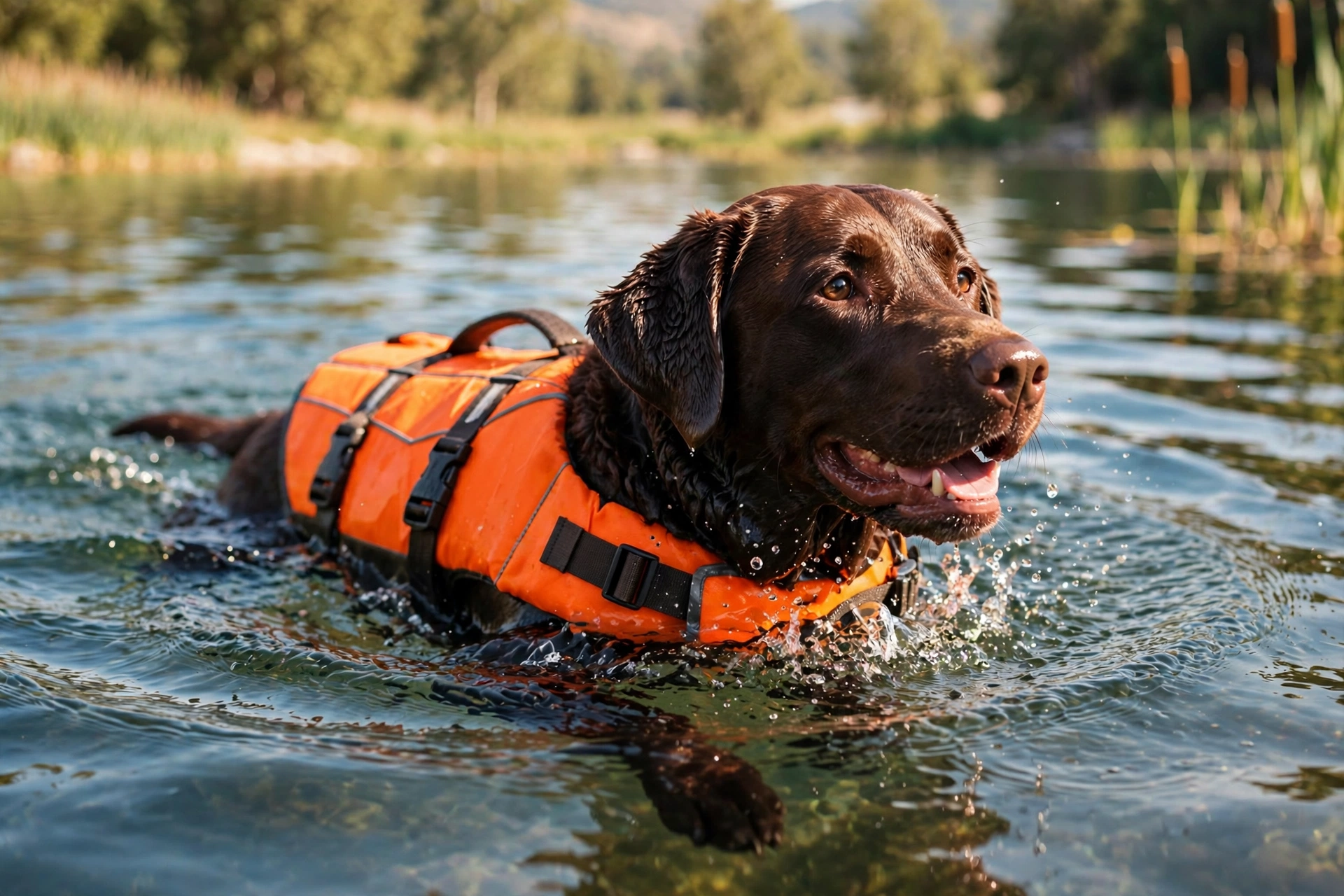
Dog Life Jackets: What Matters for Swimming Safety
Most dogs can swim, but not all swim well. Fit, buoyancy distribution, and a sturdy grab handle are what separate a real life jacket from a costume.
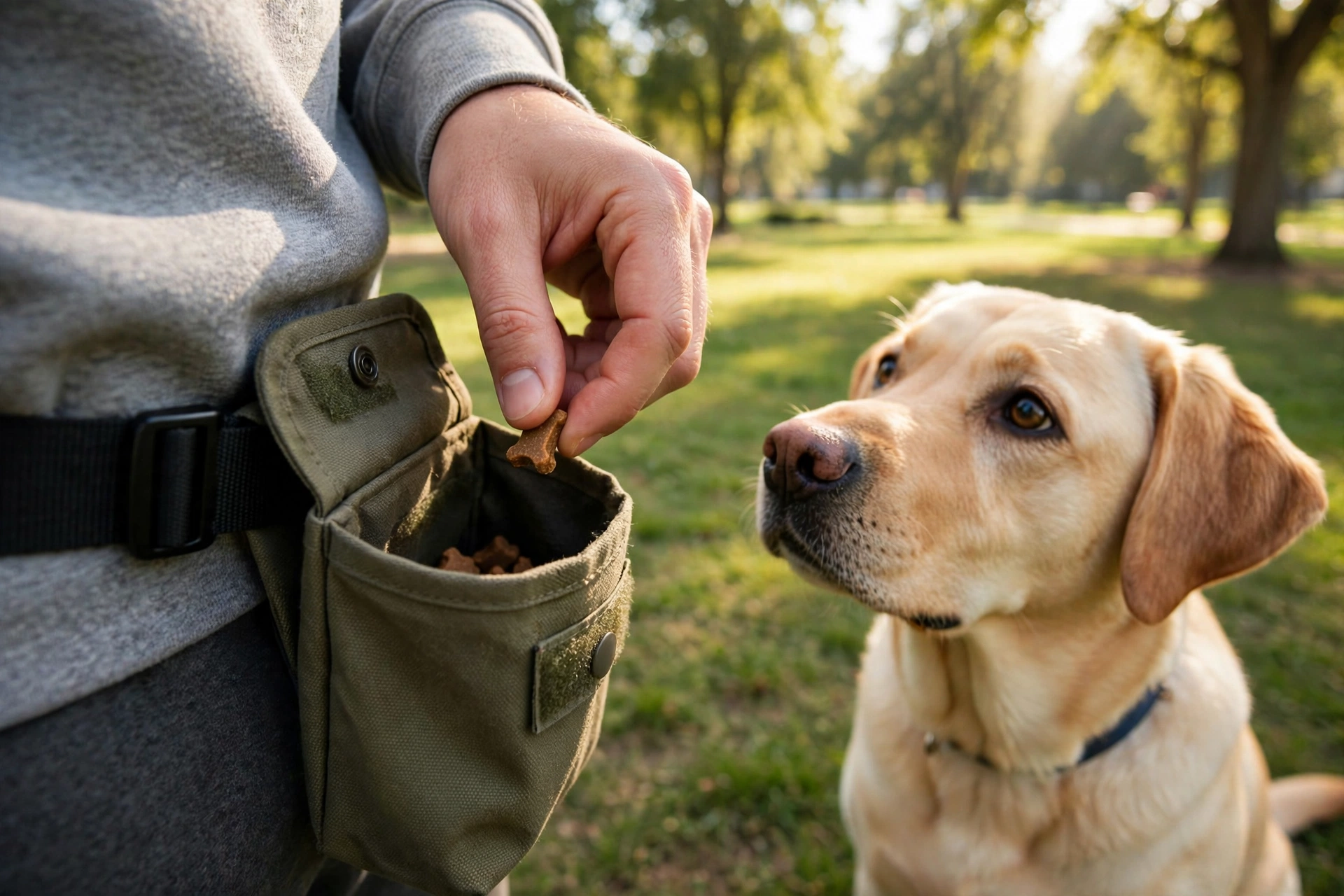
Treat Pouches for Training: What Trainers Actually Use
Trainers wear one on every session for a reason: a treat pouch fixes reward timing. What separates a good pouch from a pocket.
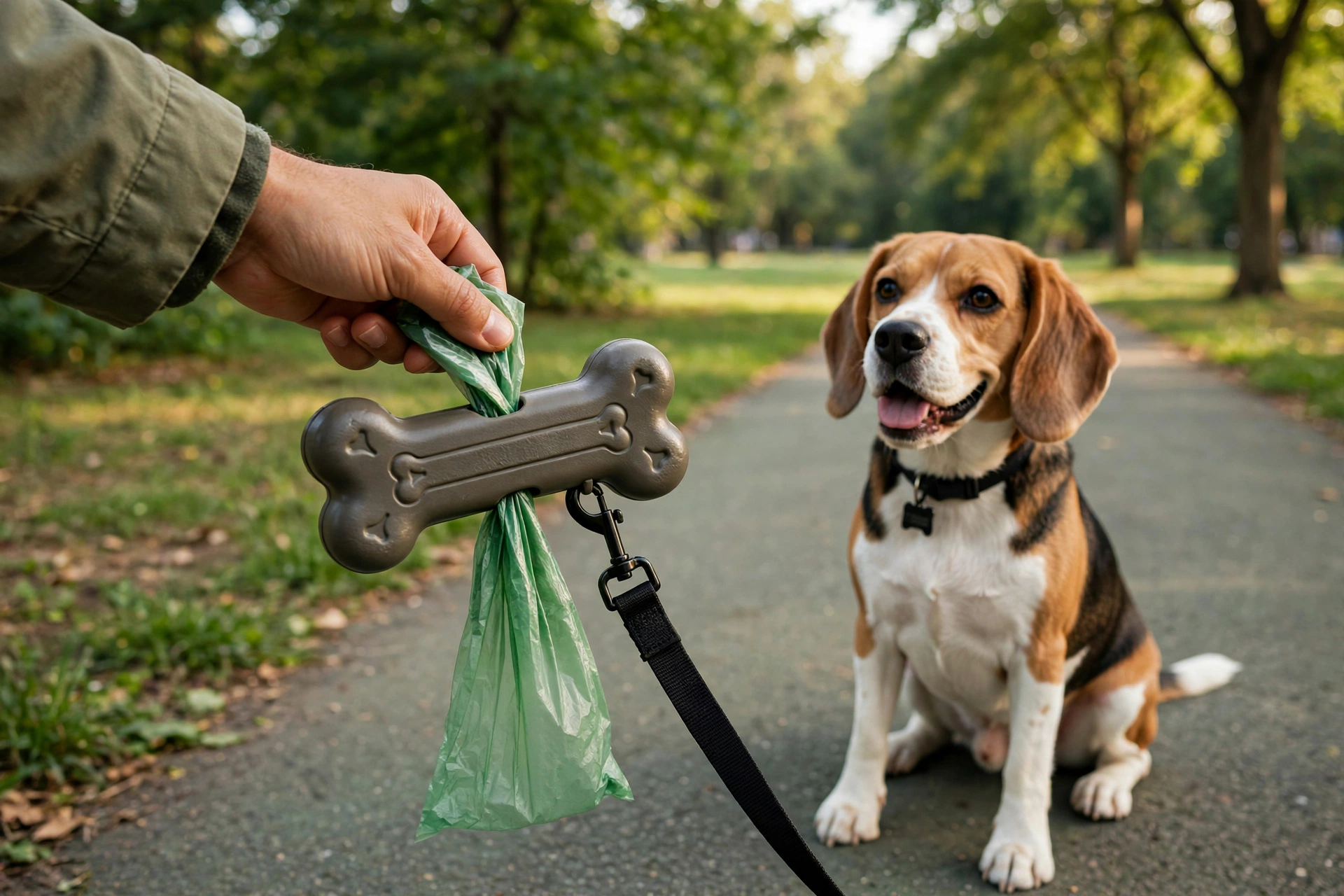
Biodegradable Poop Bags and Dispensers
Certified compostable versus merely biodegradable, scented versus unscented, and the dispenser that keeps bags on the leash: the honest comparison for 700+ bags a year.