Quick verdict
A pressure wrap can take the edge off a nervous dog's stress, but it is a support tool, not a cure. For dogs that get mildly to moderately anxious during storms, fireworks, or car rides, a well-fitted wrap is worth trying: it costs far less than most anxiety solutions, has no side effects worth worrying about, and some dogs visibly settle within minutes of putting it on. For dogs with severe anxiety — the ones that panic, destroy things, or injure themselves trying to escape — a wrap on its own will not be enough, and it should never delay a vet visit. Try it, judge it by your own dog's behaviour over several stressful events, and treat it as one piece of a wider calm-down plan, not the whole plan.
The real-life scenario
It is the first thunderstorm of the summer. Your dog starts pacing before you even hear the thunder — ears back, tail low, panting even though the house is cool. Then the shaking starts, and for the next hour she follows you from room to room and will not eat the treat you hold out. You have heard that a snug vest can help, and you wonder whether it is real or just clever marketing. That question is fair, because pressure wraps sit in an awkward middle ground: they are not medicine, they are not training, and the claims around them can sound too good. Understanding what they actually do — and what they cannot do — is the key to using one well.
How a pressure wrap is supposed to work
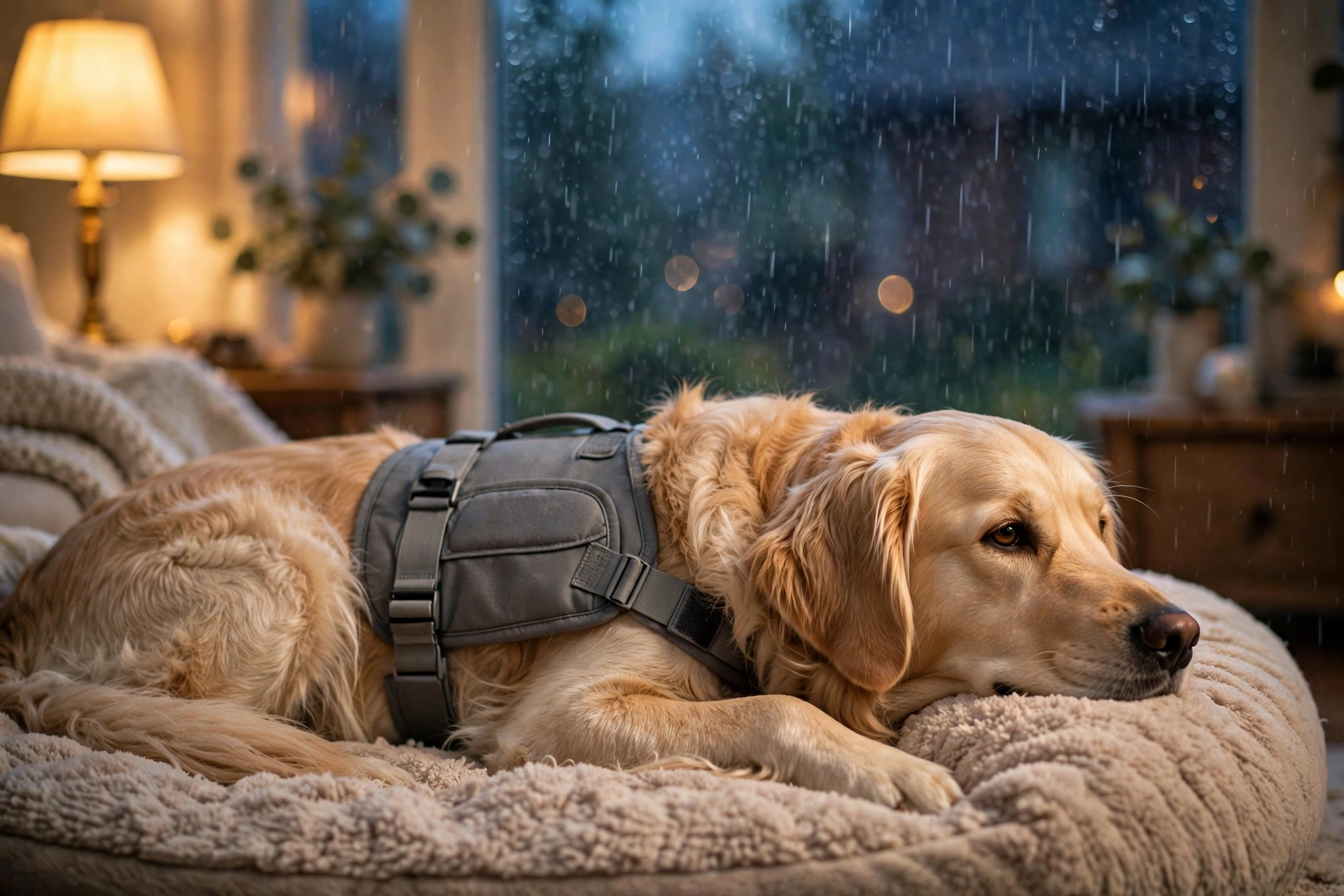
A pressure wrap is a snug garment, usually a vest or shirt made from stretchy fabric, that applies gentle, even pressure around the dog's torso. The idea is borrowed from a familiar human experience: a weighted blanket, a firm hug, or a baby being swaddled. Sustained, gentle pressure is thought to activate the calming side of the nervous system and damp down the fight-or-flight response — slower heart rate, less panting, less restlessness.
Most wraps fasten with adjustable straps or hook-and-loop panels, so the fit can be tuned. The pressure should feel like a firm hug, not a squeeze: you should still be able to slide two fingers under the fabric, and the dog should be able to breathe, walk, and lie down normally. One thing to be clear about up front: a pressure wrap does not block sound. A dog terrified of fireworks will still hear them. What the wrap may do is lower the dog's overall arousal so the noise feels slightly less overwhelming.
What the evidence actually says
The honest answer is that the evidence is mixed and modest, not decisive in either direction. Small studies and owner surveys have reported improvements in some dogs — less pacing, less panting, less hiding during storms — while other dogs showed no measurable change at all. Results vary a lot from dog to dog, which is itself a useful finding: pressure seems to help a subset of dogs noticeably, leave others unchanged, and rarely makes things worse, provided the wrap fits and the dog tolerates wearing it.
That variability is why personal testing matters more than any general claim. Anxiety has many causes — noise phobia, separation distress, general nervousness, pain — and a wrap aimed at one mechanism will not fix a problem rooted in another. Be sceptical of any product page that promises a fixed success rate: studies are small, and owner reports are coloured by hope and by the fact that owners usually try several things at once. A wrap is a low-risk experiment, not a proven treatment.
Which dogs it helps most — and least
Most likely to benefit. Dogs with mild to moderate, situational anxiety: the dog that pants and paces during storms but still responds to you, the dog that trembles in the car but settles after a few minutes, the rescue dog that needs a little extra reassurance in a new home. For these dogs, a wrap can be the difference between a bad evening and a manageable one.
Less likely to help on its own. Dogs with severe panic: breaking out of crates, injuring themselves trying to escape, vomiting or losing bladder control, or panicking the moment you pick up your keys. These dogs need a vet-led plan — which may include medication, behaviour modification, or both — and a wrap can at most be an add-on to that plan.
Dogs it may not suit at all. Dogs that hate being dressed, dogs with skin conditions or wounds under the wrap area, dogs that overheat easily, and dogs that chew or panic when restricted. If putting the wrap on becomes a struggle, you have added a new stressor on top of the old one, which defeats the purpose.
Getting the fit right
Fit is where most pressure wraps fail, and it is almost entirely in the owner's control. A wrap that is too loose does nothing; a wrap that is too tight restricts breathing and movement and will make an anxious dog more anxious.
Measure, don't guess. Measure the chest girth at the widest point, just behind the front legs, and check it against the manufacturer's size chart. If your dog sits between sizes, size up and use the adjustable straps to snug it down — a wrap that is slightly loose can be tightened, but one that is too small cannot be fixed.
The two-finger test. Once it is on, slide two fingers flat under the fabric at the chest and belly. They should fit snugly but without forcing. Watch the dog breathe for a minute: breathing should stay normal and easy, not shallow or laboured. The wrap should not ride up into the armpits, rub the inside of the front legs, or press on the neck. If the dog's gait changes, or she freezes and refuses to move, the fit or the garment itself is wrong.
Fit it when calm. Never introduce a wrap for the first time in the middle of a storm. Put it on during a quiet evening, pair it with treats and calm praise, and let the dog wear it around the house for short periods first, so it becomes a familiar, boring object before it is ever asked to do a job.
Types of pressure wraps
Vest-style wraps are the most common: a vest around the chest and belly with adjustable straps, easy to put on and fine-tune, and the best choice for most first-time buyers. Shirt-style wraps are stretchy shirts the dog steps into, with more even pressure; some dogs tolerate these better because there are fewer straps, while others dislike the step-in process. Wraps with ear covers add a snood for noise-sensitive dogs, but they are the hardest to get a dog to accept and should never be forced on a dog that paws at its ears constantly.
How to test whether it works for your dog
Because the evidence is mixed, the only result that matters is your dog's. Before the wrap arrives, note what she normally does during a storm or fireworks: how long the pacing lasts, whether she eats, where she hides, how long it takes her to settle. A few notes on your phone are enough.
Then use the wrap consistently, putting it on before the stressful event starts if you can — once a dog is already in full panic, anything new is harder to accept. Keep everything else the same for the first few tests, and score the same behaviours each time. Look for a pattern across three or four events, not a single good night. If there is no change after several fair trials, or if the dog clearly dislikes the wrap, retire it without guilt.
The wider calm-down plan
A wrap works best as one layer among several, and the other layers are usually more important. A safe retreat — a quiet room away from windows, with a familiar bed and something to chew or lick — gives an anxious dog somewhere to go instead of pacing the house. A comfortable calming bed in that room helps the dog settle once the worst of the event passes. Sound masking and a calm owner also help: background music or white noise softens the contrast between silence and each bang, and calm, boring behaviour from you genuinely helps, because dogs read their owners closely. Desensitisation — recorded sounds at very low volume while the dog eats treats, built up slowly over weeks — addresses the fear itself rather than just the symptoms, and it is the only approach that can actually reduce the underlying fear over time. Medication when needed, for severe anxiety, should come from your vet: needing medication is not a failure, and a wrap can still be used alongside it.
When to ask the vet first
See your vet before relying on a wrap if the anxiety is new or suddenly worse (pain and illness can masquerade as anxiety), if the dog injures itself during panic, if anxiety is constant rather than tied to specific events, or if you are considering any calming supplement or medication alongside the wrap. A vet can also check whether a behaviourist referral would help: for deep-rooted fear, a qualified behaviourist's plan is worth far more than any single product.
FAQ
How long should my dog wear a pressure wrap?
For the duration of the stressful event, plus a little time either side — typically a few hours at most. Do not leave a wrap on all day: the dog needs time without pressure, and prolonged wear risks skin irritation and overheating. Take it off once the dog has settled.
Can my dog sleep in a pressure wrap?
Only if the dog is comfortable, breathing normally, and you are nearby. Most dogs do better with the wrap removed once they have settled for the night.
The bottom line
A pressure wrap is a sensible, low-risk experiment for a mildly to moderately anxious dog: affordable, harmless when fitted well, and genuinely helpful for a meaningful minority of dogs. It is not a cure, not a substitute for vet care in severe cases, and not something to judge on a single storm. Fit it carefully, introduce it on a calm day, test it honestly over several events, and build the rest of the plan around it — a safe retreat, sound masking, and, where needed, training or medication. If your dog is one of the ones it helps, you will know within a few storms: the pacing shortens, the panting eases, and the bad evenings become manageable. If not, you have ruled something out and can move on to the next step with a clearer picture of what your dog actually needs.
More in Grooming & Care
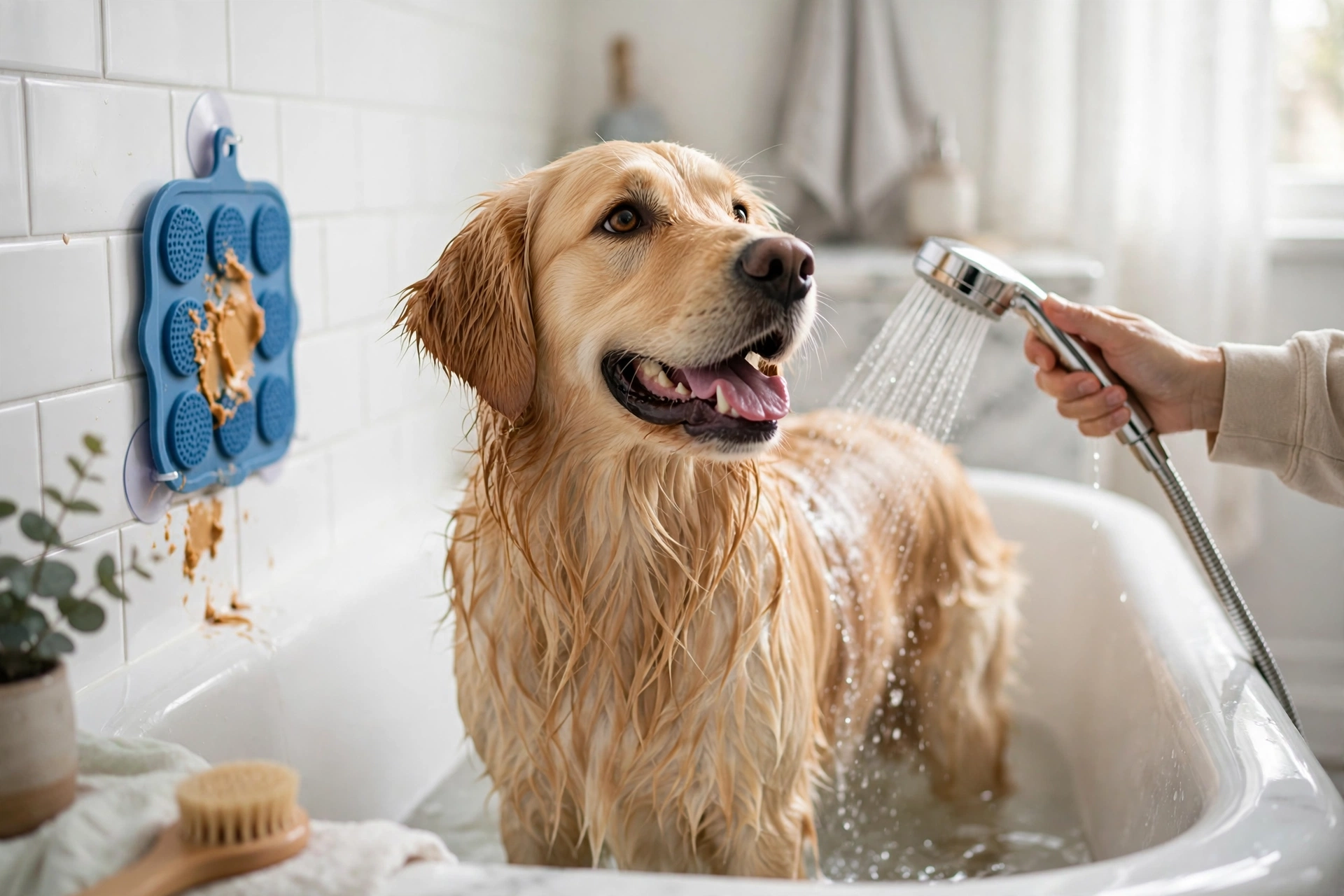
Dog Shower Attachments: The Right Sprayer, and a Lick-Mat Setup That Makes Bath Time Bearable
The right shower attachment turns a wrestling match into a five-minute rinse: sprayer types, pressure and fit checks, and a lick-mat setup that keeps bath-haters still.
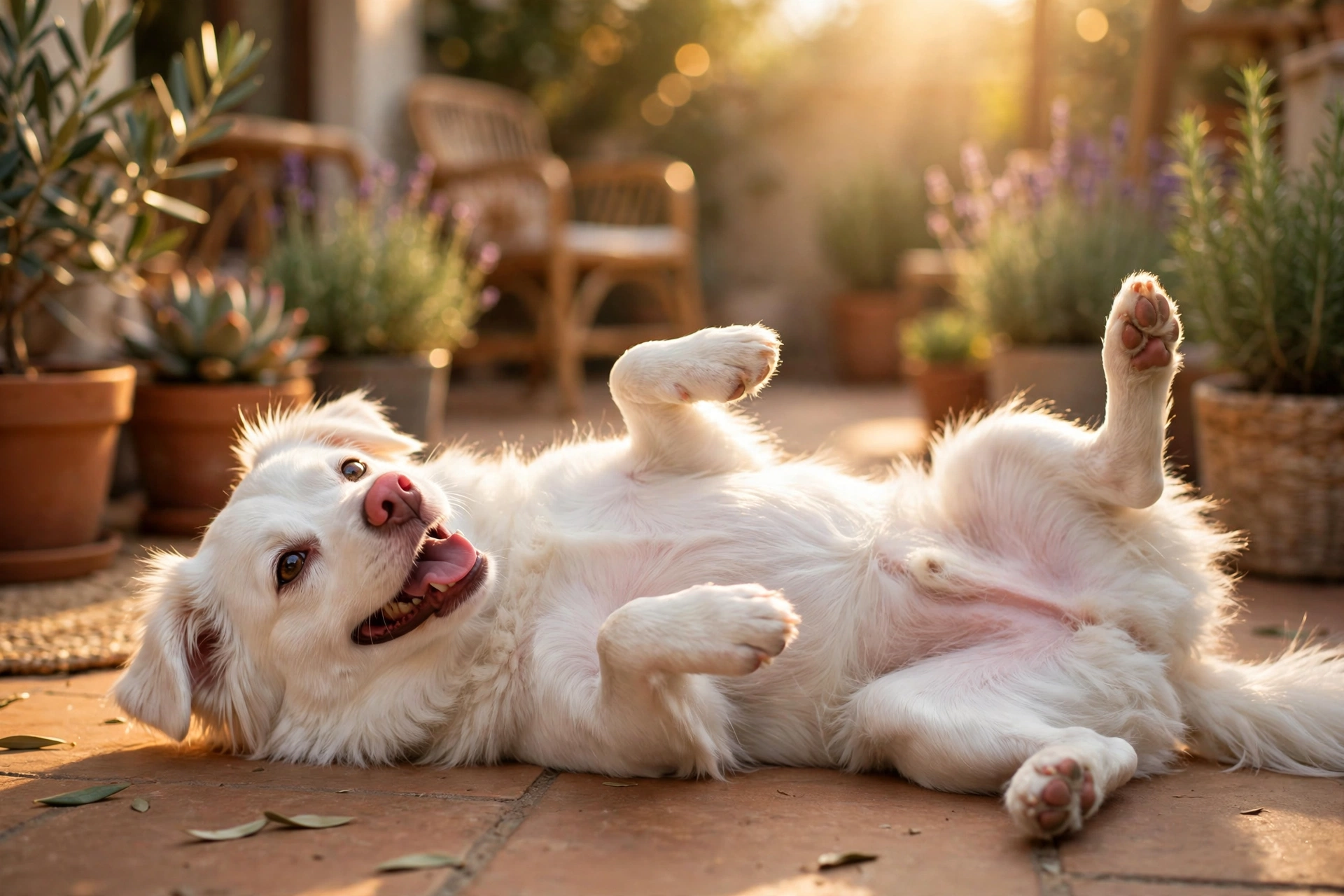
Dog Sunscreen: Which Dogs Actually Need It (and What Never to Use)
Most dogs don't need sunscreen — but white, thin-coated and hairless dogs do, and human sunscreen is unsafe for them. Which dogs are at risk, what to look for in a dog formula, and how to apply it so it survives the licking.
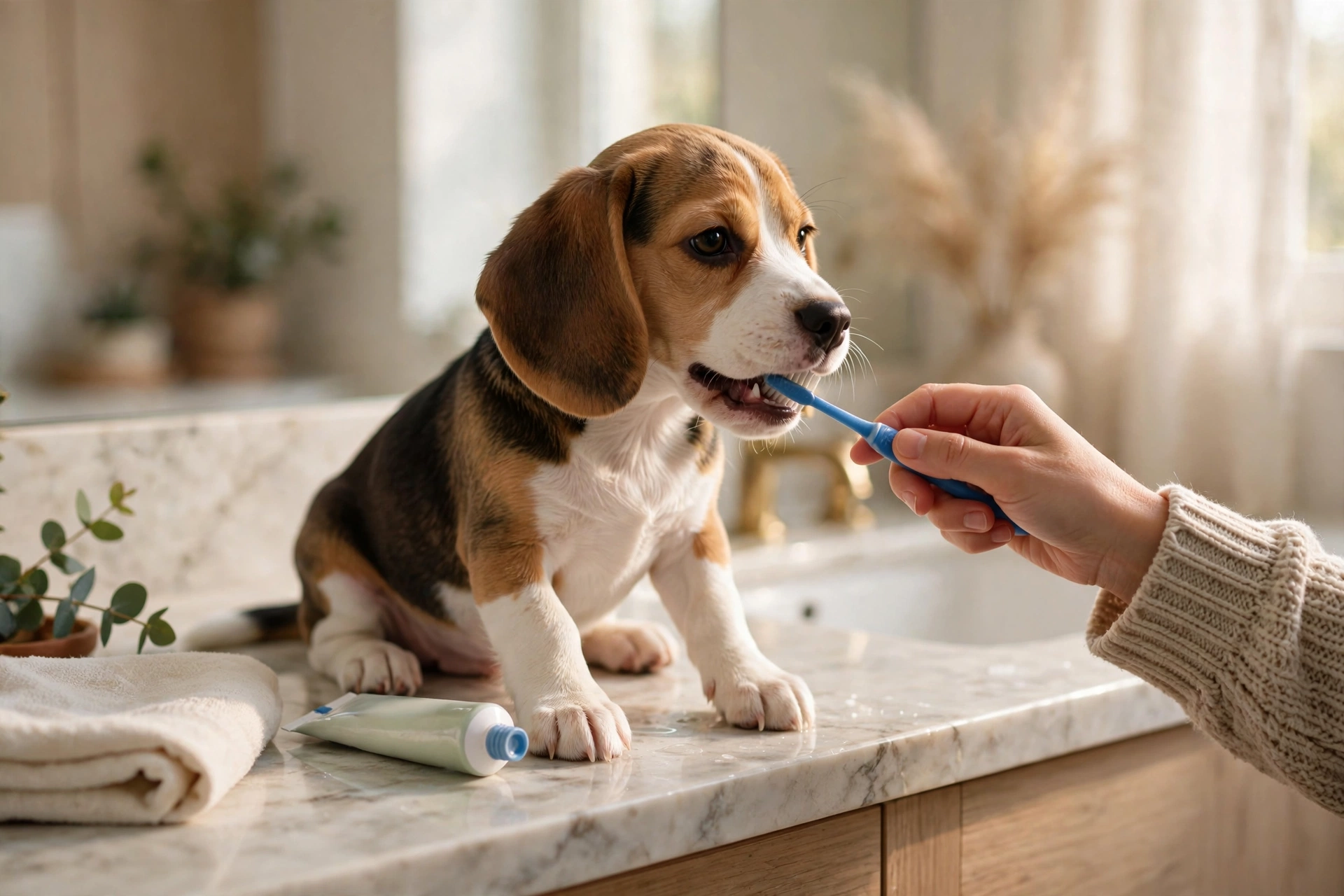
Dog Dental Care: Toothbrushes vs. Dental Chews
Brushing removes plaque directly; chews win on compliance. We compare toothbrushes and dental chews honestly — and explain why most households should use both.