
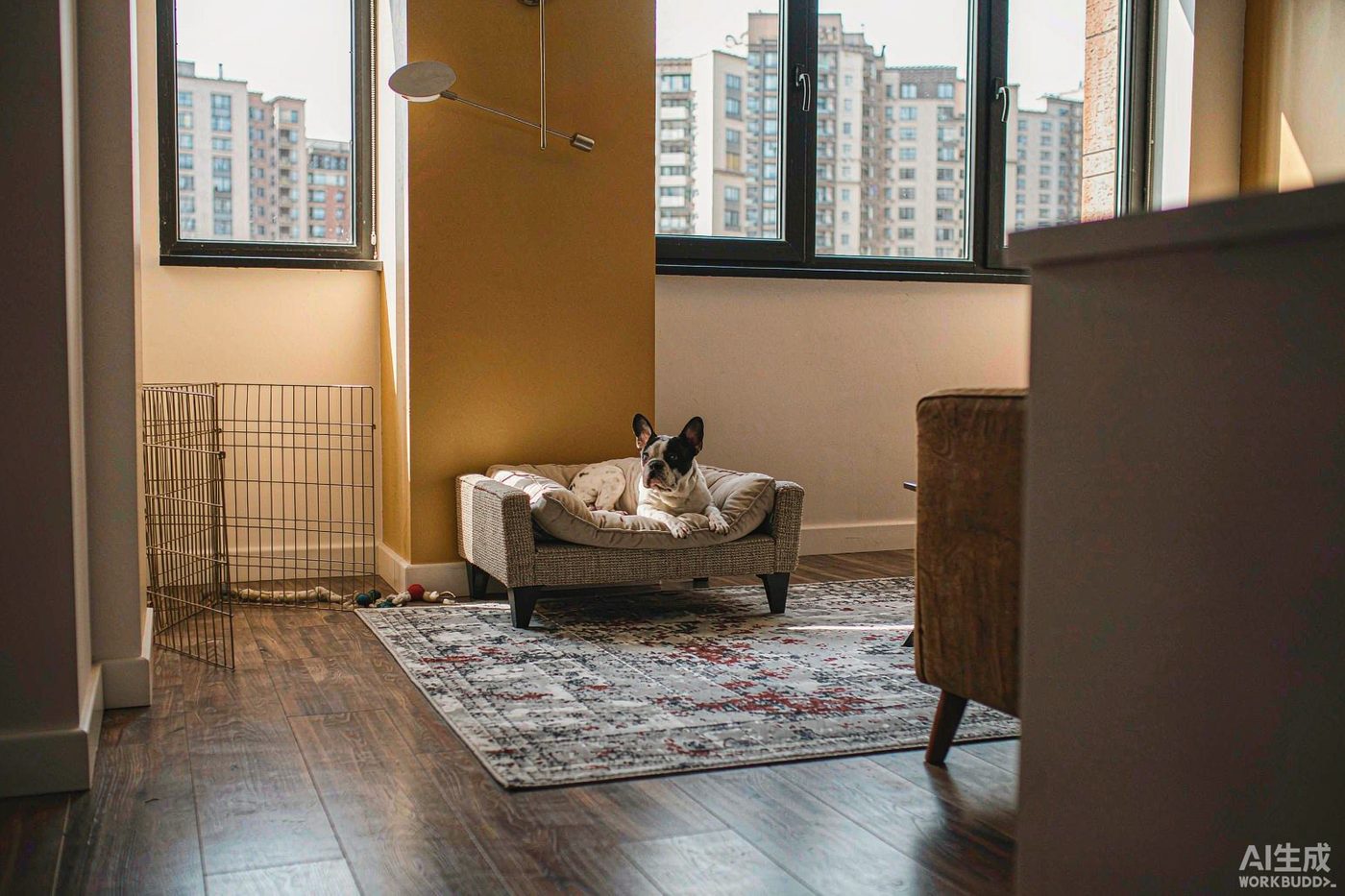
Apartment dogs live great lives — walkies three times a day, a window office, a human always in the next room. What makes it work isn’t luck; it’s a short list of gear choices that fit small spaces and close neighbors. This is the list we’d hand a friend signing a lease with a dog in tow.
The core list
1. Crate or pen that fits your floor plan. A crate sized to the dog (room to stand, turn, lie flat — no penthouse), placed away from the door and radiator. Foldable wire crates flatten behind the couch for guests. The crate is a bedroom, not a punishment box; feed meals in it for the first month.
2. Enrichment that replaces yard time. No yard means the dog’s brain needs a garden:
- A snuffle mat for at least one meal a day,
- Treat-dispensing toys that stretch out breakfast,
- A rotation of 2–3 toys rather than a flooded basket (see our toy comparison).
A tired mind is a quiet neighbor.
3. A quiet-ish chew outlet. Bully sticks and natural rubber last longer and sound less like a drumline on hardwood than hollow plastic. Neighbor-relations budget line item: real.
4. Bowl setup on a washable mat. Stainless bowls (why stainless) on a silicone feeding mat that catches the water-splash — because the bowl zone is next to your kitchen island, and you’re the one walking through it in socks.
5. The door kit. Towel + paw wipes by the door for wet weather; poop bag dispenser clipped to the leash by the door, because “I’ll grab bags downstairs” is how the elevator becomes a hostage negotiation.
6. An apartment-appropriate bed. Machine-washable cover is non-negotiable in small spaces (smell concentration is real), and a chew-resistant build if you have a puppy. Sized to the dog, not the room — a big bed dominates a studio.
7. Sound management. A white-noise machine or leaving a radio on softens hallway noises for noise-reactive dogs; a “dogs live here” mat outside your door is surprisingly effective at slowing down delivery knockers.
8. Window film or furniture placement that gives the dog a window perch without a direct line of sight to the street-level squirrel highway — if barking at passers-by becomes a hobby.
The potty logistics
The apartment-specific question every new owner asks: how do potty breaks work?
- Adult dog: 3–4 trips daily on a schedule (morning, midday if possible, evening, before bed). Midday dog walkers or a lunch-break trip make this humane for workdays.
- Puppy: the math is rougher — roughly one hour of bladder capacity per month of age, plus a first-floor plan for the 2 a.m. phase. Elevator buildings: pads by the door as a bridge during the vaccination window.
- Emergency backup: enzyme cleaner designed for pet messes. It breaks down odor molecules instead of masking them, which is the difference between a one-time accident and a “that spot is my bathroom now” situation. Enzyme cleaner, always — regular spray leaves a scent map.
Apartment Starter Bundle Picks
Snuffle mat + stainless bowl mat set + enzyme cleaner + washable bed covers: the four highest-impact apartment buys.
Building the quiet neighbor dog
Gear aside, three habits do most of the work:
- A settled-place command (mat or bed, down, stay) trained in five-minute sessions. The single most valuable apartment behavior — it answers the doorbell, the elevator ding, and dinner guests.
- Departure neutrality: low-key exits and returns, with a stuffed rubber toy left behind. Separation noise usually starts in the first fifteen minutes of absence.
- Scheduled quiet enrichment at your noisiest hours of need (meetings, movie night): a frozen stuffed toy beats “shush” in every language dogs speak.
FAQ
What breeds suit apartments?
Better question: what energy level and noise profile? Plenty of large breeds (greyhounds are famous couch potatoes) thrive in apartments, and some small breeds are terrible neighbors. Judge the individual dog's exercise needs and barking tendency.
How do I handle barking complaints?
Address the trigger (boredom, noise reactivity, separation anxiety) rather than suppressing the symptom; talk to neighbors before they talk to the landlord — a "we're working on it" goes far. A certified trainer beats a shock collar, every time.
Do I really need a crate in a small apartment?
Strongly recommended for puppies and helpful for most dogs — it's a den, housetraining accelerator, and management tool. It folds flat when you're past the phase.
Small space, big routine: enrichment instead of a yard, enzyme cleaner instead of regret, and a dog that settles on cue. That’s the whole game. See our senior dog comfort guide for how the list evolves as dogs age.