
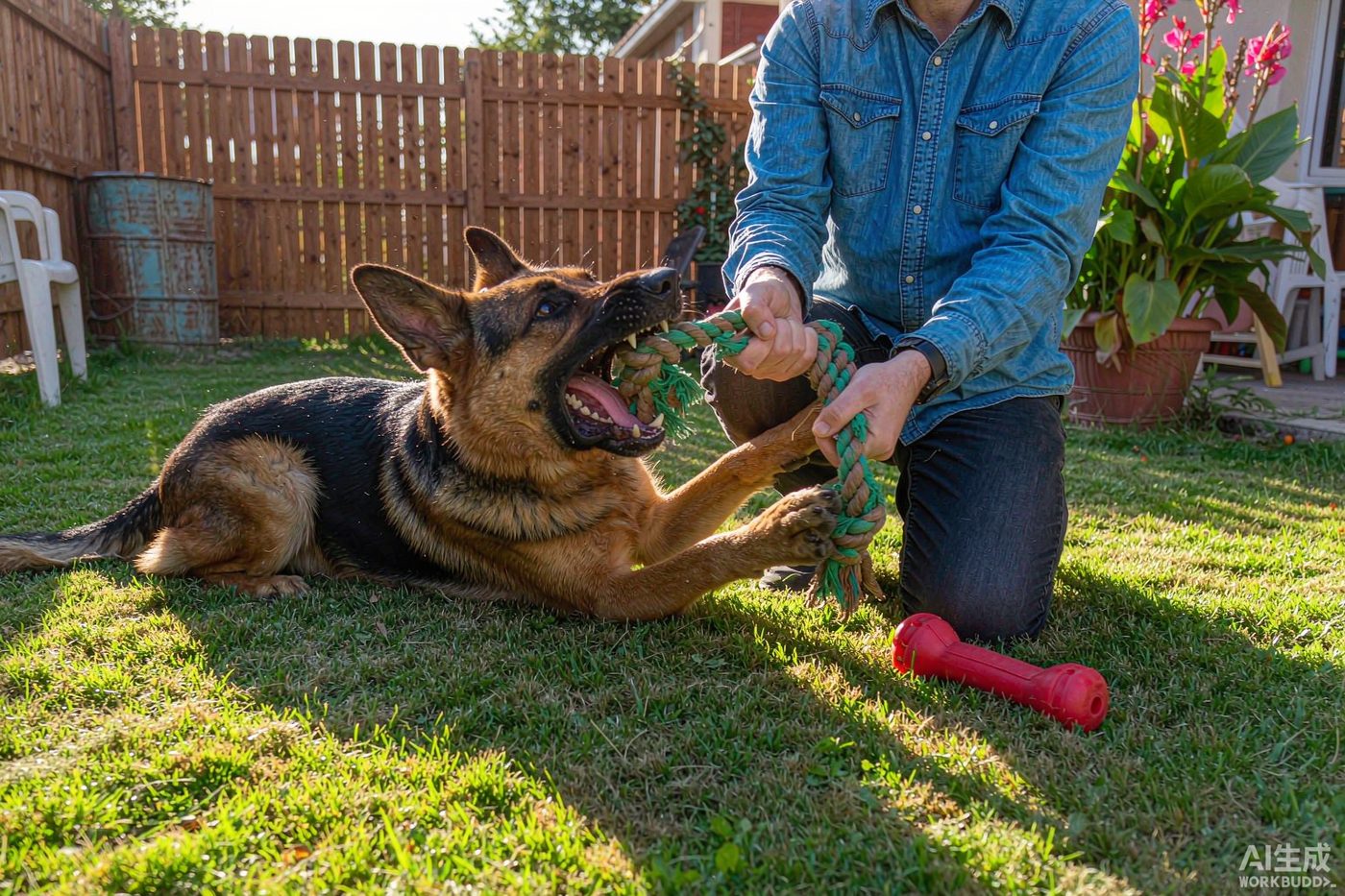
Every dog owner eventually stands in the toy aisle facing the same two buckets: rope toys and rubber chews. They look interchangeable; they’re not. The right choice depends on how your dog chews — and choosing wrong isn’t just wasted money, it’s a swallowed-string emergency.
First, know your dog’s chew profile
- The Nibbler — mouths toys gently, keeps them for years. Any toy is safe.
- The Shredder — has a project: unstuff, unknotted, de-string. Destroys for the joy of destruction.
- The Crusher — bites through things. Splinters bones, flattens tennis balls, opens “indestructible” toys like cans.
- The Tugger — lives for the fight, loses interest once the pulling stops.
Rope and rubber serve these profiles very differently.
Rope toys: the honest assessment
What they’re great at: tug-of-war (a legitimate, popular training and bonding game — tugging doesn’t “cause dominance,” that myth died long ago), flossing action as fibers scrub between teeth, fetch with a twist, and inexpensive variety.
The real risk: strings and fibers. When rope toys fray, dogs swallow strands. Small amounts usually pass; occasionally they don’t — and intestinal blockage from string is a surgical emergency. Owner reports consistently show the failure mode: the toy gets ragged, the owner means to replace it, the dog works on it unsupervised.
Rope rules:
- Shredders don’t get rope — or get it only under supervision, and it’s confiscated when frayed, not “when destroyed.”
- Wash rope toys in a laundry bag monthly (they harbor slobber and grime).
- Replace at first serious fraying. Rope is the one toy category where “still basically fine” is a lie.
Rubber chews: the honest assessment
What they’re great at: surviving. Natural rubber (the stuff the classic black cone-shaped chews are made from) flexes instead of shattering, can be stuffed with food (see our treat-dispensing guide), and lasts years even for Crushers — in the right size.
The real risks: pieces. Rubber toys do fail — usually at the ends — and a swallowed chunk is the same surgical emergency as string. Sizing is the whole game: a rubber toy must be big enough that it cannot sit fully inside the dog’s mouth. The #1 owner error in every review corpus is buying a size too small for a big dog.
Rubber rules:
- Size up, especially for Crushers.
- Natural rubber over plastic/PVC — no brittle fracture, no mystery chemicals.
- Inspect weekly — when the surface cracks or pieces go missing, replace. Track the missing pieces question seriously: “where did that chunk go” is not rhetorical.
- Dishwasher-safe variants make cleaning trivial; rubber gets a slime film too.
| Profile | Rope | Rubber |
|---|---|---|
| Nibbler | ✅ Fine | ✅ Fine |
| Shredder | ⚠️ Supervised only | ✅ Good fit |
| Crusher | ❌ Swallow risk | ✅ Size up, inspect weekly |
| Tugger | ✅ Purpose-built | ✅ Stuffed rubber wins |
| Puppy teething | ⚠️ Monitor | ✅ Soft puppy rubber |
Natural Rubber Chew Toy (treat-stuffable)
Natural rubber, sized up for your dog, stuffable for enrichment hours. The buy-it-for-years toy.
The 15-second weekly toy audit
Run your hands over every toy: anything fraying, cracked, missing pieces, or small enough to swallow goes to the trash (not the “fix later” pile). For most dogs a rotation of three toys (one rubber, one rope or fabric, one puzzle) beats a basket of thirty — novelty comes from rotation, not volume.
FAQ
Are rope toys bad for dogs' teeth?
Generally no — the flossing action is mild. The dental risk is hard chewing on anything hard enough to fracture teeth (bones, antlers, nylon bones), not rope.
My dog swallowed a string. Now what?
Don't pull at anything hanging from mouth or rear — cutting off dangling string can cause more damage. Call your vet promptly, especially if you see vomiting, lethargy, or appetite loss. String blockages are serious but treatable when caught early.
What about tennis balls?
The fuzz is abrasive on teeth with obsessive chewers, and the ball itself is a choke hazard for large dogs (it can lodge in a throat). For fetch, purpose-made balls sized to your dog are safer.
Rope for supervised tuggers, rubber for everyone else, size up, audit weekly. That’s the whole strategy — your vet’s emergency fund thanks you.