
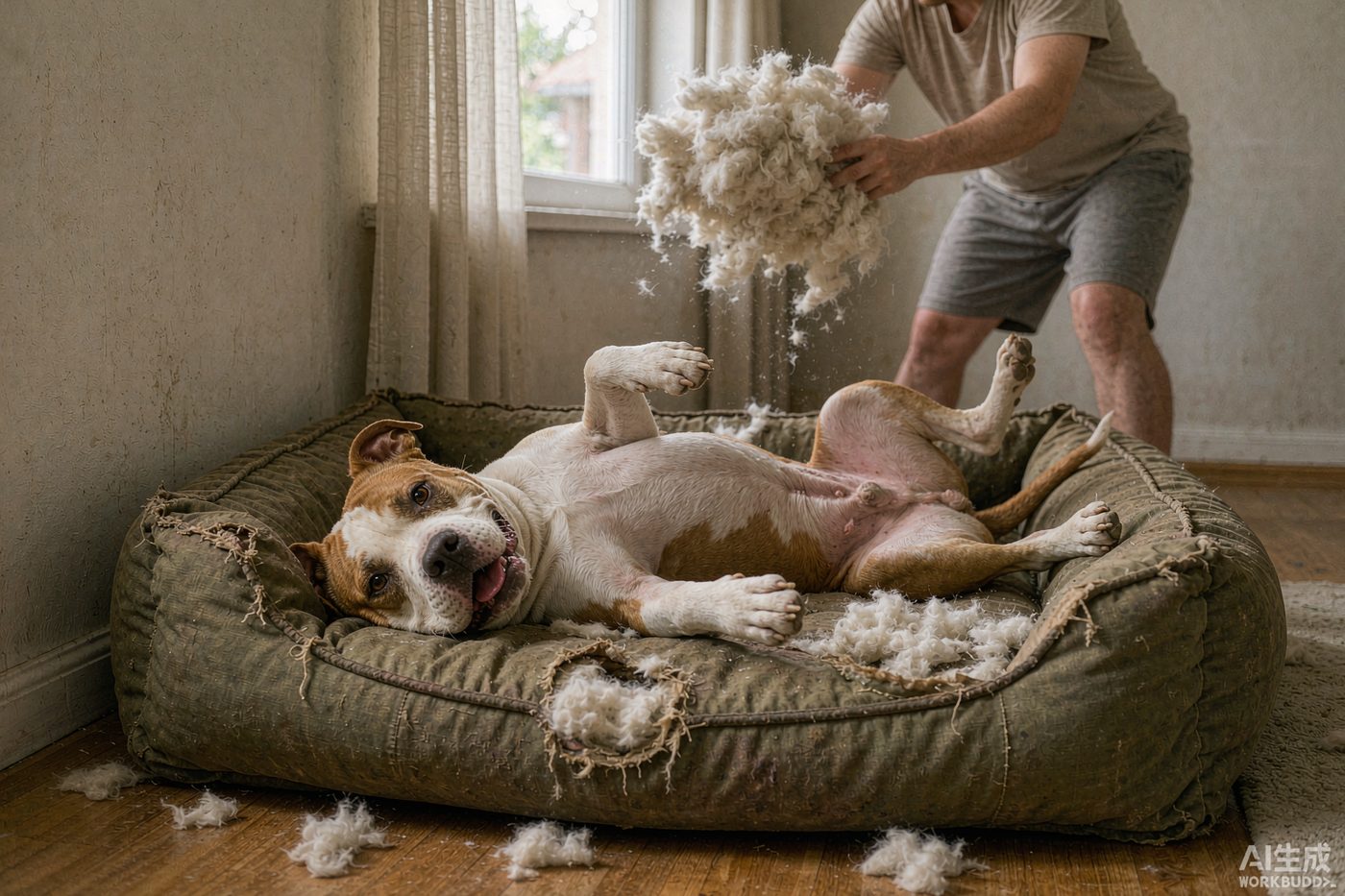
Every bed-chewing dog owner has the same origin story: you bought a plush bed, it lasted nine days, and the stuffing looked like snowdrifts across the living room. Here’s the honest truth about “chew-proof” dog beds: nothing on the market is truly indestructible to a determined power chewer — but material choice plus management strategy gets you from weeks to years.
Why beds get chewed (fix the cause first)
Bed chewing is usually one of four things:
- Boredom — an under-exercised dog with a job opening: interior destruction.
- Anxiety — especially separation-related; the bed is “yours,” and chewing it is self-soothing.
- Teething — puppies between 4–7 months need appropriate targets (see our rubber chew toy guide).
- Nesting behavior — some dogs dig and fluff as a wind-down ritual; they don’t mean to destroy, but plush doesn’t survive the ceremony.
If you don’t address #1–#3, no material wins. The strategy that works: appropriate chew outlets, exercise, and then a tougher bed.
Materials, ranked by chew resistance
| Material | Chew survival | Comfort | Notes |
|---|---|---|---|
| Plush / faux fur | ❌ Days to weeks | Highest | Only for proven non-chewers |
| Standard polyester/canvas | ❌~⚠️ Weeks to months | Good | Seams fail first |
| Ballistic nylon (luggage-grade) | ✅ Months to years | Good | Best all-round chewer fabric |
| Heavy canvas / vinyl-coated | ✅ Long | Fair | Kennel-grade; wipe-clean |
| Raised mesh (cot-style) | ✅✅ Longest | Fair | Nothing to bite but the frame; best breathability |
Design details that outlive the marketing claims
- Hidden or no zippers. A zipper pull is a tooth hook and the first thing destroyed. Velcro closures under a fabric flap survive longer; fully sewn covers longest of all.
- Tight, tailored fit. Excess fabric flapping at the edges invites paws, digging, and chewing. A fitted cover with minimal slack is boring — which is the point.
- Reinforced seams, double-stitched. Seams are where every bed dies. Look for explicit “double-stitched” or “seam-locked” construction claims.
- Replaceable covers. The smartest economics in the category: a quality insert that outlives covers, with covers sold separately, beats rebuying whole beds.
- Elevated / cot-style beds deserve a second look for serious chewers — there’s simply less bed to destroy, airflow keeps them cool, and they double as outdoor beds.
Chew-Resistant Dog Bed (canvas or ballistic nylon)
Prioritize ballistic or heavy canvas cover, hidden closure, and — ideally — a replaceable cover system.
The management layer (this is what actually saves beds)
- A trade on the bed: heavy-duty rubber chew toy on the bed, so the bed becomes the location of approved chewing, not the object of it.
- Supervised access at first. Bed available when you’re home; when you leave, a stuffed rubber toy (see treat-dispensing ideas) and the bed temporarily out of rotation.
- Exercise before long absences. A tired dog naps; an under-tired dog renovates.
- Anti-chew spray as a speed bump, not a solution — bitter apple on the bed’s corners teaches “this doesn’t taste good” while better habits form.
- For puppies: cheap mats for now, nice bed after teething. This is a phase; budget accordingly.
FAQ
Are there truly indestructible dog beds?
Not against a committed adult power chewer — aluminum-frame cots come closest. The realistic goal is "survives years with management," not "survives anything."
My dog only chews the bed when alone.
That pattern points at separation anxiety rather than boredom — worth addressing with a trainer or your vet, because the destruction is a symptom. Tougher beds just relocate the symptom.
Do waterproof beds help?
Waterproof linings help with seniors and puppies (accidents), and vinyl surfaces resist digging damage somewhat. They're a comfort/cleanliness choice, not a chew solution.
Buy ballistic, hide the zippers, keep a rubber toy on the bed, and wear the dog out — that stack outperforms any single “indestructible” claim on the market. See also our apartment dog essentials for the rest of a chewer-safe home.