
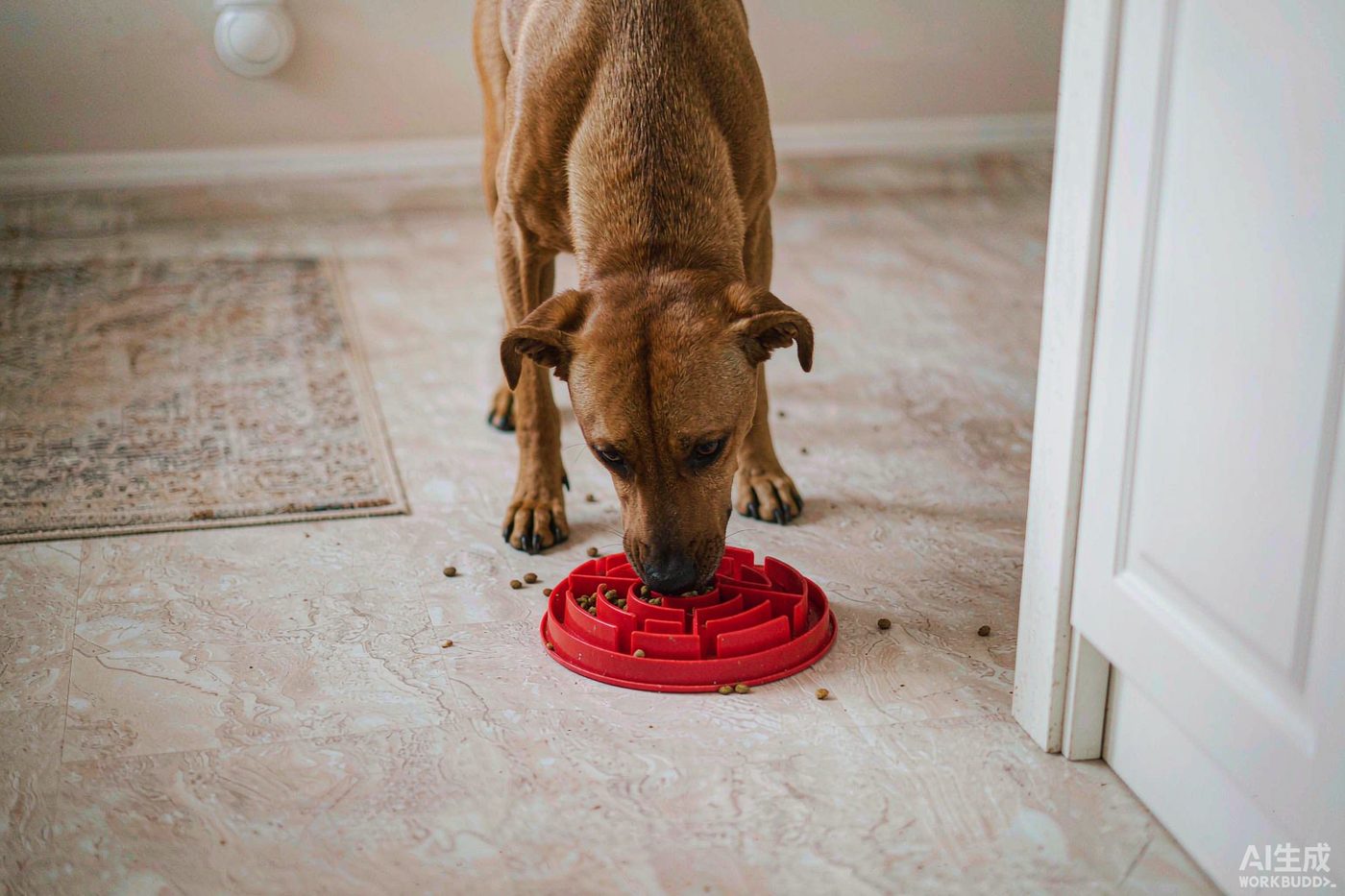
If your dog finishes dinner before you’ve finished saying “good girl,” you’ve probably wondered whether a slow feeder bowl is a gimmick or a genuine fix. Based on how these bowls work — and on consistent owner feedback patterns across thousands of reviews — the short answer is: for most fast eaters, they genuinely help. But the design you choose matters more than the brand.
Why dogs eat too fast in the first place
Speed eating usually has one of three causes:
- Competition history. Dogs from large litters or shelter environments often learned that food disappears if you hesitate.
- Arousal. Some dogs are just thrilled about food — arousal speeds up everything, including swallowing.
- Medical issues. Occasionally, ravenous appetite has an underlying cause (diabetes, thyroid issues, some medications). If speed eating started suddenly or comes with weight loss, talk to your vet before buying anything.
The problem with gulping isn’t just manners. Dogs who inhale food also swallow air, which contributes to bloating and discomfort — and in deep-chested breeds, rapid eating is one of the discussed risk factors around gastric dilatation. Slowing down is genuinely worthwhile.
How slow feeder designs actually differ
Most slow feeders fall into four design families:
| Design | Best for | Watch out for |
|---|---|---|
| Spiral / swirl | Most dogs, first slow feeder | Deep spirals frustrate flat-faced breeds |
| Maze / grid | Determined fast eaters | Harder to clean; kibble gets stuck |
| Matrix / honeycomb | Maximum slowdown | Not ideal for wide heads — snout can’t reach center |
| Sloped channel | Brachycephalic breeds (pugs, bulldogs) | Least slowdown of the four |
The pattern’s job is simple physics: ridges and channels physically prevent the jaw from taking a full scoop of food. A bowl that stretches a 20-second meal to 3–4 minutes is doing its job.
What owners consistently report
Across marketplace reviews and forum threads, a few patterns repeat:
- Flat-faced dogs struggle with deep ridges. If you have a pug or Frenchie, choose a sloped or shallow-channel design.
- Material matters. Flexible plastic bowls get chewed at the edges by bored power chewers. Rigid, food-grade plastic or stainless designs hold up longer.
- Non-slip bases are non-negotiable. Without one, the bowl becomes a hockey puck and the “slow” part disappears entirely.
- Supervise the first week. A few dogs try to flip the bowl entirely — pick it up when that happens and retry; most give up flipping before they give up eating.
We haven’t run a lab test of specific brands, and we don’t claim to. But the category is one of the rare cases where the mechanism is visible: if the dog physically can’t scoop, the dog physically can’t gulp.
When a slow feeder isn’t the right tool
- Food bloat or regurgitation that continues even with slowed eating → vet, not shopping.
- Multi-dog households with resource guarding → slow feeders can increase frustration at close quarters; feed in separate rooms.
- Raw or wet food diets → ridged bowls are awkward to wash with wet food; a lick mat or snuffle mat works better.
Slow Feeder Bowl (spiral or maze design)
Look for a non-slip base, food-grade material, and a ridge depth matching your dog's snout length.
Pros and cons at a glance
What owners love
- Immediate effect — meal time stretches from seconds to minutes
- Cheap relative to the problem it solves
- Doubles as light mental enrichment
- Most are dishwasher-safe (top rack)
What to watch
- Deep ridges frustrate flat-faced breeds
- Edges can get chewed by determined power chewers
- More nooks to clean than a flat bowl
FAQ
Are slow feeder bowls safe?
Yes, when sized correctly. The main risks are choosing a design too aggressive for your dog's face shape, and cheap plastics with sharp mold lines — run a finger over the ridges before first use.
Can I use a slow feeder for water?
Technically yes, but there's little benefit — dogs don't typically "gulp" water problematically the way they do food, and the ridges just make refills awkward.
My dog gave up and walked away. Now what?
That's usually frustration, not pickiness. Switch to a shallower pattern, or mix in a few high-value pieces of kibble on top to restart motivation. Most dogs adapt within a week.
If speed eating is your dog’s only quirk, a spiral slow feeder with a non-slip base is the cheapest, lowest-risk upgrade you can make this month. For dogs who need more than a bowl can give, see our snuffle mat review and beginner puzzle toy guide.