
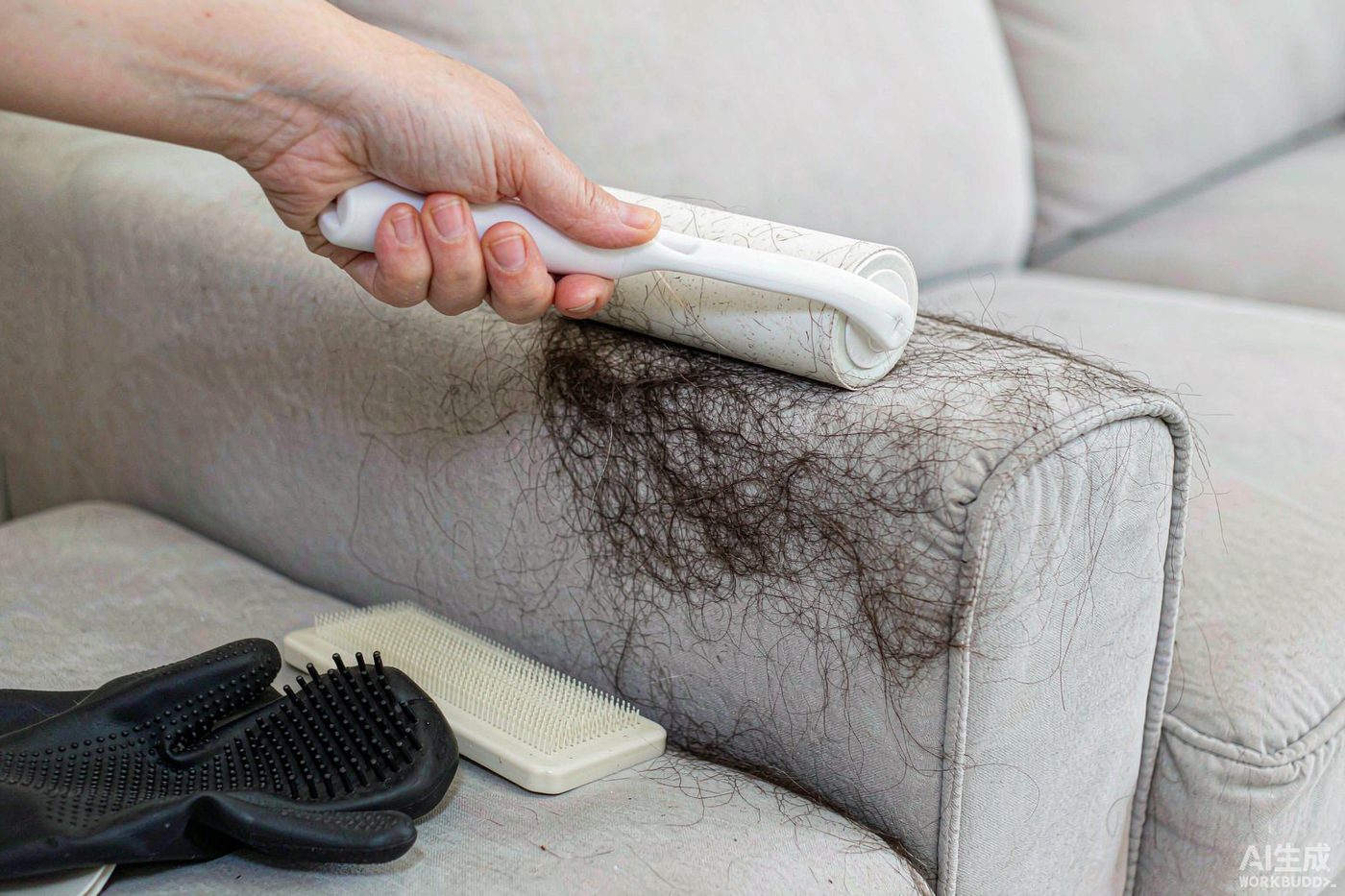
There are two seasons for double-coated dog owners: shedding season, and the other shedding season. You can’t stop the fur (that’s the deshedding brush ‘s job — reducing it), but you can absolutely build a cleanup system that keeps the house presentable in twenty minutes a day instead of an all-weekend war.
The kit, in order of usefulness
1. Rubber bristle brush / broom (the MVP). Rubber attracts pet hair electrostatically. On carpet, short rubber-bristle brushes gather fur into pullable mats. On hard floors, a rubber broom works wet or dry and gets the hair that a vacuum pushes around. If you buy one tool, buy this.
2. A vacuum that actually handles hair. The features that matter for pet households: strong suction with a motorized brush head (fur wraps around passive brush bars), a tangle-resistant design, and washable filters. Owner feedback consistently flags one failure mode — cheap vacuums clog at the hose with hair wads. It’s the biggest-ticket item here, but it’s the difference between vacuuming weekly and vacuuming religiously.
3. Lint roller (for clothes and quick fixes). The honest workhorse. Buy in bulk — shedding season consumption is measured in “rolls per week.” One in the car, one by the door, one at work. Don’t fight this; don’t be the person in black wool at the office.
4. Reusable sponge / fur-lift sponges. Dampened rubber sponges lift fur from upholstery, stairs, and car seats where rollers are slow. Rinse, wring, repeat. Near-zero cost per use.
5. Microfiber cloths for hard surfaces. Damp microfiber on baseboards, crates, and window sills collects the fine dust-fur blend that everything else misses.
6. Anti-static spray or a 1:1 water-fabric-softener mist (light!). A barely-damp wipe-down reduces static cling on fleece blankets and car upholstery, so the next vacuum pass holds onto hair instead of repelling it.
Pet Hair Remover Set (rubber brush + lint roller + sponge)
The three-tool core of the kit: rubber brush for floors and carpet, roller for clothes, sponge for upholstery.
The order of operations (why it matters)
- Dry before wet. Never mop or wipe fur while it’s dry and loose — vacuum or rubber-brush first, then damp-clean. Wet fur sticks to everything and clumps in mop heads.
- Top to bottom. Furniture and crates before floors; the fur you dislodge upstairs becomes tomorrow’s floor pickup.
- Fabric zones get barriers. Washable blankets over the dog’s favorite sofa corner (see our washable rug guide) turn a deep-clean job into a laundry cycle.
The weekly rhythm that works
| Cadence | Task | Time |
|---|---|---|
| Daily | Rubber brush over the main rug; roller on the car seat | 5 min |
| 2× weekly | Vacuum traffic areas with the brush head | 10 min |
| Weekly | Sofa: sponge → vacuum with upholstery head; wash dog blankets | 20 min |
| Monthly | Crate, baseboards, window sills with microfiber | 15 min |
The secret isn’t any tool — it’s frequency. Fur never builds past “two minutes of removal” if the daily pass happens.
FAQ
Do robot vacuums handle pet hair?
Mid-range and up models with rubber roller brushes do daily maintenance genuinely well; they still need their bins emptied and brushes de-furred weekly. They maintain; they don't deep-clean.
Are lint roller sheets wasteful?
Somewhat — hence the sponge for big surfaces. But for clothing, rollers remain the fastest tool ever invented. Balance, not purity.
Will an air purifier help with fur?
Air purifiers catch dander and fine dust, not hair (hair is too heavy to stay airborne). Allergy sufferers: yes, get one. Fur problem: no.
Brush the dog more, clean in the right order, keep the roller in the car. Shedding season becomes a background hum instead of a lifestyle. For the coat-side of the equation, see deshedding brushes and shampoo for sensitive skin.